


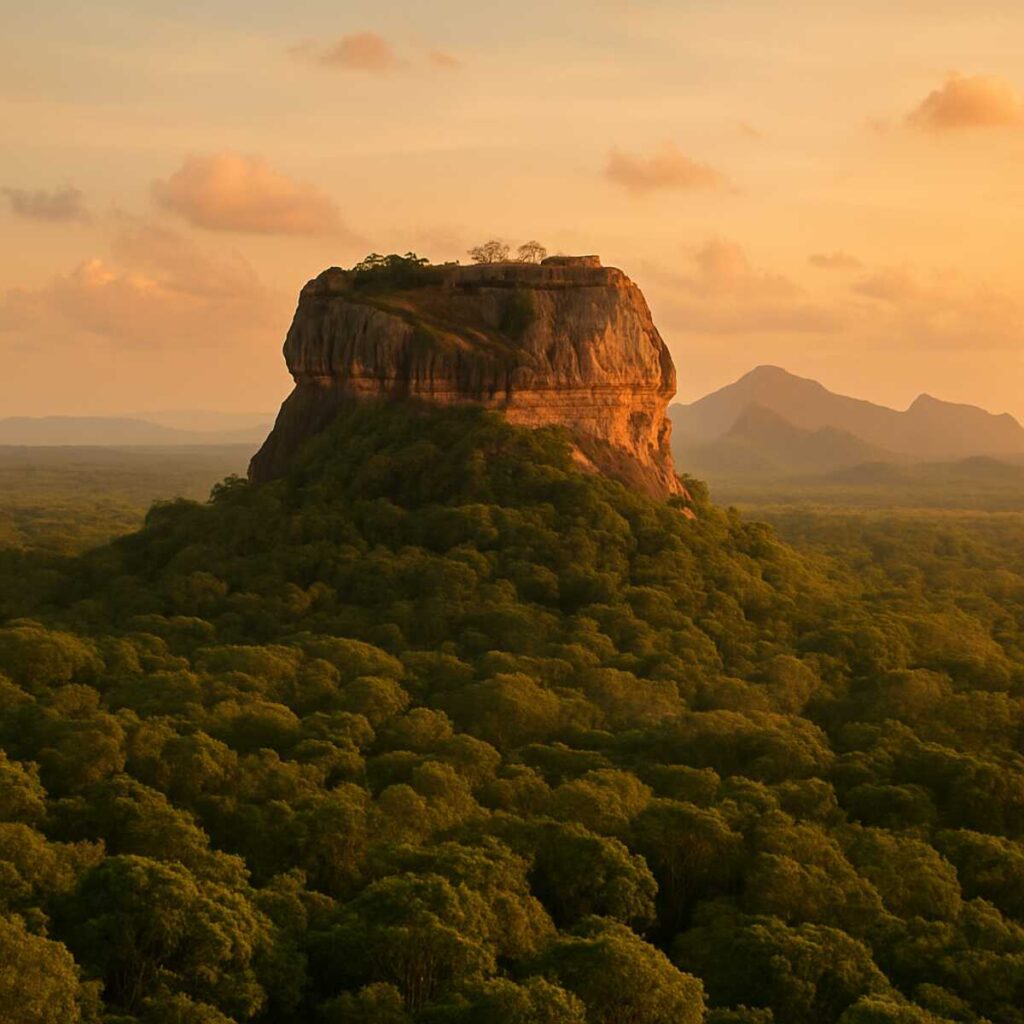
You’ve probably seen the photo: a colossal rock fortress rising dramatically from a sea of green jungle, a line of tiny-looking people climbing its flank. That incredible place is Sigiriya, often called the Lion Rock, and it stands as one of Sri Lanka’s main attractions. While the image is breathtaking, it barely scratches the surface of what makes this ancient wonder so captivating. Obtain the Best information about sigiriya rock tour.
This isn’t just a stunning natural landmark; it’s the site of a real-life drama. The story goes that in the 5th century, a fugitive king named Kashyapa built an impenetrable palace and capital on top of this 660-foot-tall rock to protect himself from his vengeful brother. He transformed this towering monolith into a sky palace complete with gardens, pools, and throne rooms, creating a fortress that was as much a statement of power as it was a place of refuge.
Today, Sigiriya is recognized as a UNESCO World Heritage site, a designation reserved for the most important cultural and natural places on Earth. This status isn’t just for the dramatic rock itself, but for the genius of the entire complex. The site features some of the oldest landscaped gardens in the world at its base, stunning ancient paintings—the famous Sigiriya Frescoes—preserved on the rock face, and the remnants of an astonishingly advanced city plan.
This guide breaks down everything you need for the perfect Sigiriya day tour, from understanding the climb and what to wear to choosing the right tour and what you can expect to see at the top. That 360-degree view is waiting, and we’ll show you how to get there.
The Climb to the Sky Palace: A Step-by-Step Walkthrough
So, how difficult is the climb to the top? While it looks intimidating, the journey up Sigiriya is more like a very long, very scenic stair-climb than a technical hike. In total, you’ll tackle about 1,200 steps, but the path is broken into manageable sections with incredible sights along the way. Most people take around 1.5 to 2.5 hours for the round trip, including plenty of time for photos.
The journey to the summit happens in three distinct stages, allowing you to catch your breath and soak in the history as you go.
- Stage 1: The Water Gardens. This part is a leisurely walk through the beautiful and symmetrical royal gardens at the base of the rock. The path is mostly flat, giving you a fantastic perspective of the fortress looming above.
- Stage 2: The Spiral Staircase. Next, you’ll climb a modern, caged spiral staircase to a sheltered pocket in the rock. This is your chance to see the famous Sigiriya Frescoes—stunning ancient paintings of graceful women.
- Stage 3: The Lion’s Paws to the Summit. After the frescoes, you’ll walk alongside the famous Mirror Wall to reach a large plateau. Here, you’ll find the gigantic stone paws of a lion that once formed the palace entrance.
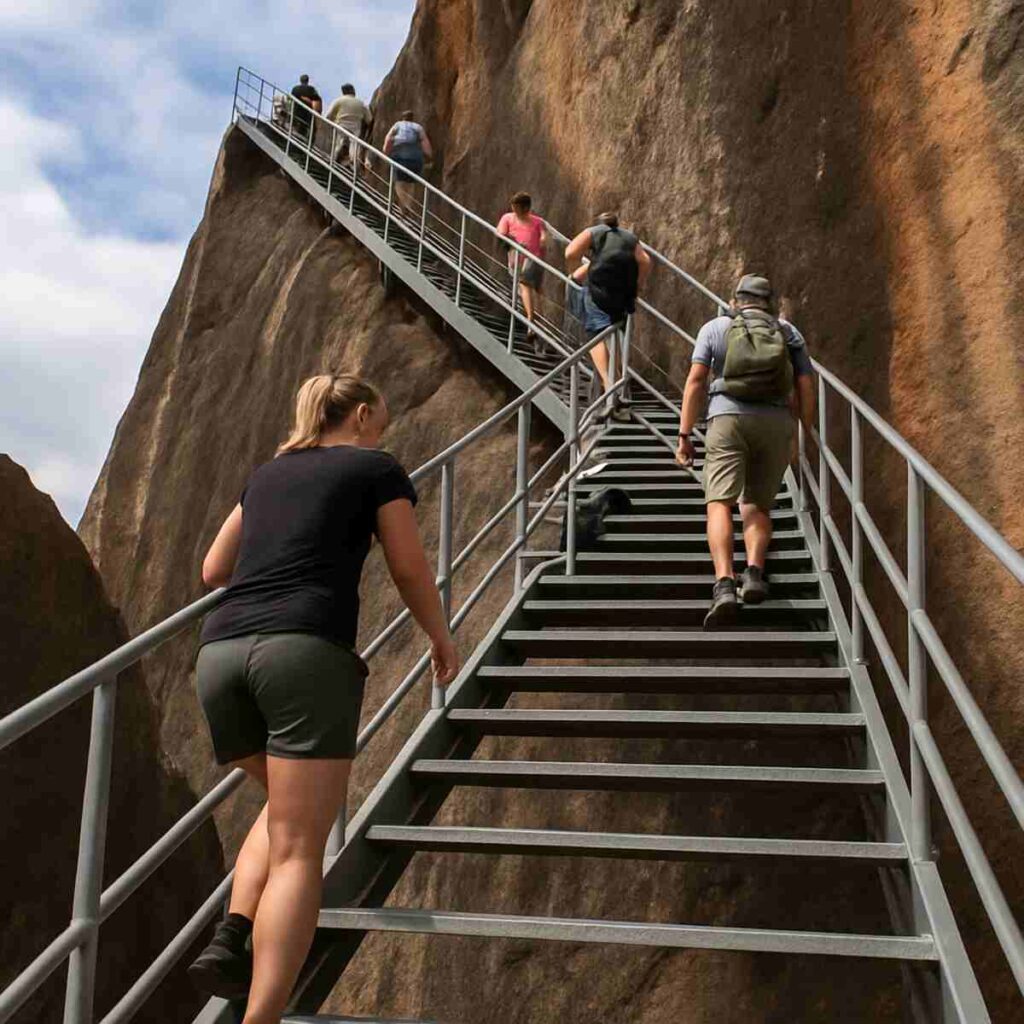
From the Lion’s Paws platform, it’s the final push to the top. This is the steepest part of the climb, involving a series of sturdy metal staircases attached to the side of the rock. While it might look daunting, the stairs are secure and have handrails. The breathtaking 360-degree view from the summit ruins makes every step worthwhile.
What Are the Famous Sigiriya Frescoes?
Halfway up the climb, you’ll discover one of Sigiriya’s greatest treasures: the famous Sigiriya Frescoes. A ‘fresco’ is a type of ancient painting done directly onto a specially prepared wall or rock surface. Sheltered from the elements in a protected alcove, these stunning, colorful portraits depict graceful women adorned with flowers and jewelry. Think of it as a 1,600-year-old art gallery, preserved on the sheer face of the rock.
Finding these masterpieces is part of the adventure. The spiral staircase you climb during the second stage leads you directly to their viewing platform. The detail and vibrancy of the paintings are astonishing, offering a quiet, awe-inspiring moment that contrasts beautifully with the physical climb. It’s a chance to catch your breath and connect with the history of the place before continuing upward.
These paintings are more than just beautiful; they are a precious piece of ancient Sri Lankan art and a window into a lost world. While their exact identity is a mystery—are they heavenly maidens or royal ladies?—their elegant beauty is undeniable. After admiring this ancient wonder, you’ll continue the ascent toward the final prize: the spectacular panoramic view waiting at the summit.
Is the View from the Top Worth It? Here’s What You’ll See
After the final ascent, you step onto the flat summit of Lion Rock, and any doubts about the climb simply vanish. The reward is immediate: a stunning 360-degree panorama that stretches for miles in every direction. A vast green carpet of jungle and distant blue mountains spreads out beneath you, creating the unforgettable feeling that you’re standing on top of the world. It’s a moment of pure awe that makes every step of the journey worthwhile.
From this vantage point, you can finally appreciate the sheer genius of the site’s design. Look down and you’ll see the symmetrical Water Gardens you walked through earlier, now laid out like a perfectly drawn map. To the north, the neighboring Pidurangala Rock rises from the jungle, giving you a true sense of scale for your incredible achievement. It’s a perspective that puts the entire ancient city, from its manicured base to its sky-high palace, into breathtaking context.
More than just a pretty picture, this view connects you directly to the past. You can almost feel what it was like for King Kashyapa to survey his kingdom from this unbeatable lookout. For modern visitors, it’s the ultimate payoff—a powerful sense of accomplishment mixed with the humbling scale of history. The photos you’ll take are fantastic, but the feeling of earning that view is the real prize.
Tour vs. DIY: How Should You Plan Your Visit?
With the incredible view in mind, your next big decision is how to structure your day. Should you book an all-inclusive tour or go it alone? The answer depends entirely on your travel style, budget, and where you’re staying. Both options are great, but they offer very different experiences.
For travelers who value convenience above all, a pre-booked Sigiriya tour package is the most straightforward choice. You can find dozens of options when booking a tour to Sigiriya online through platforms like Viator or GetYourGuide. These packages typically bundle everything together: hotel pickup and drop-off in an air-conditioned vehicle, your entrance tickets, and sometimes a guide to explain the history. This is an especially smart option if you’re traveling from farther cities like Colombo or Kandy, as it completely removes the stress of navigating public transport.
If you prefer more freedom and flexibility, a “Do-It-Yourself” trip is easily manageable, especially if you’re staying nearby in Dambulla, Habarana, or Sigiriya village. The most popular way to do this is to hire a private driver for your Sigiriya tour. This gives you a dedicated car for the day, allowing you to set your own start time, decide how long you linger at the top, and even add spontaneous stops. It’s the perfect middle ground between a rigid tour and the complexities of public buses.
Ultimately, the choice comes down to ease versus independence. A tour offers set-it-and-forget-it simplicity for one clear price, making it ideal for those who want a guaranteed, hassle-free day. A DIY approach with a private driver puts you in control of the schedule and can sometimes be more budget-friendly, but requires a bit more coordination.
How to Plan Your Day Trip from Colombo, Kandy, or Dambulla
Your starting point in Sri Lanka will dramatically shape your Sigiriya experience. Many travelers wonder if a one day trip to Sigiriya from Colombo is feasible. While technically possible, it means a grueling 8-10 hours of round-trip driving, leaving you to climb during the hottest, most crowded part of the day. A Sigiriya tour package from Kandy is more manageable, but still requires about 2.5-3 hours of travel each way, again putting you at the site during peak times.
For a far more pleasant and strategic visit, consider staying in the nearby town of Dambulla. Located in the heart of the Cultural Triangle, Dambulla is only a 30-minute drive from the Lion Rock. This proximity is a game-changer. Instead of rushing, you can wake up at a normal hour, enjoy the site, and still have a full afternoon for other activities. It transforms the journey from a frantic race against the clock into a relaxed and memorable part of your adventure.
With this advantage, a perfect Sigiriya day trip itinerary becomes easy. You can arrive at the ticket counter right as it opens, allowing you to make the climb in the cool, quiet morning air. After descending and enjoying a well-earned lunch, you have the entire afternoon free. Many visitors use this time to explore the incredible Dambulla Cave Temple, another nearby UNESCO World Heritage site, effectively seeing two of Sri Lanka’s greatest treasures in one easygoing day.
Choosing your base is about more than convenience; it’s about the quality of your visit. By staying closer, you gift yourself the flexibility to see Sigiriya at its absolute best. This is key to avoiding the two biggest challenges at Lion Rock: crowds and heat.
The Secret to Avoiding Crowds and Heat at Lion Rock
The secret to beating both the intense sun and the thick crowds is simple: the best time of day to visit Lion Rock is right when the gates open at 7 AM. Arriving early transforms the entire visit. Instead of battling for space under a blazing sun, you get to experience the magic of the gardens in the cool, quiet morning light. The climb feels less like an obligation and more like a peaceful pilgrimage, allowing you to soak in the atmosphere.
This early start is a game-changer for two reasons. First, you’ll be well on your way up the rock before the tropical heat truly kicks in, making the many stairs far more manageable. Secondly, you’ll stay ahead of the large tour buses that begin arriving from farther cities like Kandy and Colombo around 9 AM. Imagine reaching the summit and enjoying the panoramic views with only a handful of other visitors, then descending past the long lines of people just starting their hot, crowded ascent.
While timing your day is crucial, timing your year can also help. The ideal window to visit Sigiriya is during the region’s dry season, which typically runs from late December through April. During these months, you can expect clearer skies and less chance of rain, ensuring that your reward for the climb is a spectacular, unobstructed view.
What to Wear and Pack for a Comfortable Climb
Choosing the right gear for your Sigiriya excursion is all about staying cool and moving easily. The sun is strong and the climb is active, so opt for light, breathable clothing like cotton or linen. Most importantly, focus on your footwear. You’ll be navigating a mix of modern metal stairs and ancient, uneven stone steps, so comfortable walking shoes or sturdy sandals with good grip are essential—this is definitely not a good time for flip-flops.
Beyond your basic attire, a few key items in your day bag will make a world of difference. Your goal is to protect yourself from the sun and stay hydrated.
- Light, breathable clothing (cotton/linen is perfect)
- Comfortable walking shoes with good grip
- Sun hat and sunglasses
- High-SPF sunscreen to reapply
- Reusable water bottle (at least 1 liter)
- Cash for tickets and snacks (Sri Lankan Rupees)
- Your camera or smartphone for the incredible views
The point about money is crucial. While you might be used to paying for everything with a card, the ticket counter at Sigiriya and the small shops at its base primarily operate on a cash basis. Be sure to have enough local currency, the Sri Lankan Rupee (LKR), to cover your costs for the day. This avoids any last-minute stress and helps you budget for your entrance fee.
Understanding the Sigiriya Entrance Fee
One of the most important things to budget for is the Sigiriya entrance fee for tourists. Like many major world heritage sites, Sri Lanka has a different price for foreign visitors. The Sigiriya ticket price is currently around $36 USD, payable in local currency (LKR). While this is one of the pricier tickets in the country, the experience is well worth the cost.
The fee covers the entire Sigiriya archaeological complex. It includes entry to the sprawling Royal Gardens at the base, a visit to the on-site museum for historical context before your climb, and of course, the main event: the full ascent of the Lion Rock itself. Think of it not just as a fee for a climb, but as a comprehensive ticket for a half-day’s worth of incredible exploration.
You’ll purchase this ticket on the day of your visit at the official Foreigner Ticket Counter, located near the main entrance. They typically accept cash (Sri Lankan Rupees) and major credit cards, but having enough cash on hand is always a reliable backup plan. Be sure to buy only from this official window to avoid any scams or issues.
Sigiriya vs. Pidurangala Rock: Which Hike is Right for You?
Looming nearby is Sigiriya’s lesser-known sibling: Pidurangala Rock. While Sigiriya is a historical marvel, Pidurangala offers a different kind of magic, famous for one thing in particular: the jaw-dropping, postcard-perfect view of Sigiriya itself. Many travelers face the question of which rock to climb, and the answer depends entirely on the experience you’re looking for.
The journey up each rock could not be more different. The Sigiriya climb is a structured ascent up metal staircases and ancient stone steps, guiding you past historical points of interest like the Mirror Wall and Frescoes. In contrast, the Pidurangala hike is a more rustic, adventurous path that involves a bit of scrambling over boulders at the very end. It feels less like a museum visit and more like a true hike.
Financially and visually, the trade-offs are also clear. Pidurangala’s entrance fee is a tiny fraction of Sigiriya’s, making it a fantastic budget-friendly option. While the view from Sigiriya is of the surrounding landscape and the palace ruins at your feet, the view from Pidurangala is the main event. Climbing it for sunrise is a legendary experience, as you watch the light hit the immense Lion Rock across the valley—delivering what many consider the single best photo opportunity in the area.
So, which one should you choose? If you crave history, archaeology, and the prestige of climbing the main attraction, Sigiriya is unmissable. If you want an adventurous hike, a spectacular view on a budget, and that iconic photo of Lion Rock, Pidurangala is your answer. For the truly ambitious, doing both—Pidurangala for sunrise and Sigiriya later in the morning—offers the complete picture of this incredible landscape.
How to Create a Full Day Trip: Combining Sigiriya with More Sights
After an exhilarating morning climb, your adventure doesn’t have to end. A classic Sigiriya day trip itinerary pairs the rock fortress with a visit to the nearby Dambulla Cave Temple, another UNESCO World Heritage site. Unlike Sigiriya’s open-air grandeur, Dambulla offers a different kind of wonder. It’s a vast, ancient temple complex located deep inside a series of caves, filled with hundreds of beautifully preserved Buddha statues and vibrant ceiling frescoes that have been marveled at for centuries. This combination of an upward climb followed by an inward journey creates a perfectly balanced cultural day.
For those who prefer wildlife to ancient history, there’s an equally spectacular afternoon option. Instead of heading to the caves, you can embark on a thrilling jeep safari in either Minneriya or Kaudulla National Park. These parks are world-famous for hosting “The Gathering,” an awe-inspiring natural spectacle where hundreds of wild elephants congregate around reservoirs, especially during the dry season (roughly May to October). Seeing these gentle giants in such vast numbers is an unforgettable experience and a highlight for any animal lover visiting Sri Lanka.
Your perfect day depends on your interests. A popular Dambulla cave temple and Sigiriya tour offers a deep dive into the region’s rich history, while a Minneriya National Park safari provides a dose of wild adventure.
Is a Guide Necessary for Sigiriya?
One of the most common questions travelers ask is, “Is a guide necessary for Sigiriya?” The short and simple answer is no. The pathway from the entrance gardens to the summit is well-defined, and it’s impossible to get lost. You can absolutely explore the entire site on your own and still be rewarded with the same breathtaking 360-degree views from the top. For many visitors, a solo climb is a perfectly fulfilling experience.
However, what a guide offers isn’t navigation—it’s narration. While you can see the ruins for yourself, a good Sigiriya licensed guide can make them come alive. They transform your visit from a beautiful but silent climb into a compelling story, pointing out the faint, centuries-old graffiti on the Mirror Wall or explaining the genius behind the water gardens. Without a guide, you see a magnificent rock; with one, you understand the ambition, fear, and ingenuity of the king who built his palace in the sky.
If you decide a guided tour is right for you, hiring an official, licensed guide is straightforward at the site itself. You’ll find them near the main ticket entrance. The most important tip is to politely agree on the total price for your group before the tour begins to avoid any miscommunication later. This ensures you can simply relax and immerse yourself in the history of this incredible place.
Your Perfect Sigiriya Day Tour: A Final 3-Step Plan
That towering rock fortress you once saw in a photo can be an unforgettable part of your trip to Sri Lanka. With a small amount of planning, your Sigiriya day tour becomes a manageable and incredibly rewarding adventure. Just focus on these three final steps:
- Choose Your Base: Decide if you’ll stay in Dambulla for convenience or travel from Kandy.
- Pick Your Style: Book an all-inclusive tour for ease or hire a private driver for flexibility.
- Go Early & Prepared: Pack your day bag the night before and aim to be at the gate by 7 AM.
This preparation is all it takes to stand where a king once surveyed his kingdom. The view from the top is more than just a photo—it’s a memory that will stay with you long after you’ve descended the final step.