


Do you have a game closet filled with dusty boxes you dread opening? Maybe you can still feel the sting of landing on Boardwalk with a hotel, or the boredom of sitting on the sidelines after going bankrupt. For many, that’s what game night means. But what if a game could be engaging for everyone, from the first turn to the last? The secret isn’t luck; it’s a fundamental shift in modern game design that puts you in control. To find more, check on okervip
This shift is the difference between being a passenger on a train that only follows one track versus being the conductor who chooses the path at every junction. Many classic games put you on that single track—you roll a die or draw a card, and the game tells you what to do. Modern strategy games, however, put you in the conductor’s seat. They are built around providing meaningful choices that shape your entire experience.
In a game like Sorry!, for example, drawing a “4” card means you must move four spaces. In a modern classic like Catan, however, gathering resources gives you options: should you build a road, trade with a neighbor, or save for a city? This focus on interesting decisions is what makes these games so compelling. Your success is tied to your strategy, not just a random roll, making every game a unique and rewarding puzzle to solve.
Games #1 & #2: Where You Build Something Instead of Bankrupting Friends
If the goal of many classic games is to tear your opponents down, the goal of many modern games is to build something impressive. Instead of the sting of losing your property, you get the satisfaction of watching a plan come together. This constructive approach is at the heart of what makes today’s board games so rewarding, turning meaningful choices into visible accomplishments.
A perfect first step into this world is a game like Ticket to Ride. Here, the goal is simple: collect sets of matching colored train cards. It feels a bit like collecting stamps or baseball cards. Once you have enough of one color—say, four red cards—you can cash them in to claim a red train route on the map. This core loop of gathering resources to claim a piece of the board is a set collection mechanic, and it provides a wonderfully straightforward and satisfying objective.
Taking that idea a step further, some games let you build an “engine.” Imagine starting a task with a basic tool, and then upgrading it so every future action becomes more powerful. This is the core of an award-winning game like Wingspan. When you play a bird card, you aren’t just scoring points; you’re often adding a new special ability to your board. A bird in your forest might help you gather more food on future turns, while a bird in your wetlands might let you draw more cards. This style belongs to a popular category called engine-building games, where your choices snowball into bigger, more exciting turns.
Both of these approaches offer a powerful sense of progress. You aren’t just trying to outlast everyone else; you are actively creating something unique to you. But what if you’re not a competitive person at all? What if you want to win with your friends, not against them?
Game #3: A Game Where You All Win (or Lose) Together
That feeling of wanting to work with your friends is at the heart of one of the most popular innovations in modern gaming: cooperative play. Instead of plotting against each other, all players form a single team working together to defeat the game itself. Think of it less like a duel and more like being on a sports team facing a common opponent. This shift completely changes the table dynamics, replacing competitive tension with communication and teamwork. It creates an experience with no player elimination, meaning no one gets knocked out early and left to watch from the sidelines.
The most famous example is the nail-biting thriller, Pandemic. In this game, you and your fellow players are a team of disease-fighting specialists, racing across the globe to discover cures before outbreaks spiral out of control. On every turn, the game fights back by spreading infections. You have to strategize together, share resources, and use your unique character abilities to win. It’s a tense, story-driven puzzle where you either all celebrate a shared victory or are defeated together by the board.
These cooperative board games offer a powerful sense of shared accomplishment. When you finally find that last cure in Pandemic with only moments to spare, the “we did it!” moment is something everyone at the table can feel proud of. Whether you’re competing or cooperating, the cards you hold are often key to your success. But what if the game wasn’t just about playing the hand you’re dealt, but about building a better one as you go?
Game #4: The Game Where You Build Your Deck As You Play
Building a better hand as you go is the brilliant twist behind a genre called “deck-building.” In most card games you’ve played, like Uno or Poker, you’re stuck with the luck of the draw from a single, static deck. Deck-building games flip that script entirely. Imagine starting a project with only a hammer and a saw, but as you work, you earn money to buy drills, sanders, and other advanced tools. In a deck-builder, you begin with a small, weak deck of cards, and you use those cards to “buy” better ones, shuffling them in to make your future hands more powerful.
The game that started it all is Dominion. Here, each player is a monarch of a small kingdom, starting with a handful of useless “Estate” cards and a few “Copper” coins. On your turn, you use your copper to buy more interesting cards from a shared marketplace—perhaps a “Village” that lets you take extra actions, or a “Smithy” that lets you draw more cards. This simple process creates a fantastic feeling of growth. Your deck starts off clunky but, turn by turn, you sculpt it into a lean, efficient engine for generating wealth and, ultimately, buying the “Victory” cards you need to win.
What makes this concept so engaging is that building your deck is the game. It’s a dynamic puzzle where you constantly adapt your strategy based on the cards available and what your opponents are doing. Unlike games where you build a deck before the match starts, here everyone begins on a level playing field. This idea of carefully selecting cards to improve your options is a cornerstone of modern design. But what happens when that choice becomes a lightning-fast, social activity?
Games #5 & #6: The Art of the ‘Pick and Pass’—Fast, Fun Choices
That fast-paced social choice is the heart of some of the most engaging modern card games. Instead of waiting for your turn, what if everyone chose a card at the exact same time? Picture a conveyor belt at a sushi restaurant. A set of plates comes to you, you pick your favorite, and then pass the remaining plates to the person next to you. Everyone is grabbing, passing, and revealing their choices simultaneously. This is the core idea behind a wonderfully simple mechanic that eliminates waiting around.
The genius of this system is that there’s virtually no downtime. The perfect introduction to this style is the adorable and quick-playing game ***Sushi Go!***. In it, you are dealt a hand of cards featuring cute, smiling maki rolls, sashimi, and tempura. You secretly choose one card to keep, place it face down, and then pass your entire remaining hand to your neighbor. Once everyone has chosen, you all reveal your cards at once. The game is a fast, funny scramble to collect the best combinations for your sushi platter.
For a game that takes this simple idea and adds a layer of grandeur, look no further than 7 Wonders. Here, the “pick and pass” mechanic is used not for collecting a meal, but for building an entire civilization and its ancient wonder. You’ll still pick one card and pass your hand, but the cards you choose might represent scientific discoveries, military strength, or new resource production. It feels bigger and more strategic, but the core action is just as simple and simultaneous, keeping every player involved on every single play.
This clever “pick and pass” system is known as card drafting. It transforms the act of getting new cards from a solitary luck-of-the-draw into a dynamic group puzzle. You’re not just thinking about what you want, but also what you’re passing along to your opponent and what might be coming your way next. It’s a constant, engaging flow of new opportunities.
Which is for You? The Builder (Wingspan) vs. The Optimizer (Dominion)
On the surface, both Wingspan and Dominion seem to share a goal: start with very little and build it into something great. The way they get there, however, creates two completely different experiences. The best way to choose between them isn’t to compare rules, but to ask what kind of satisfaction you’re looking for. Do you enjoy the steady pleasure of creating something beautiful, or the clever thrill of cracking a complex puzzle?
Playing Wingspan feels like tending a garden. You are a constructive builder, carefully choosing which birds to add to your wildlife preserve. Each new card adds to your little ecosystem, making future turns more powerful and productive. It’s a game of accumulation and tangible growth; you end with a board full of beautiful cards that you’ve nurtured from the beginning. The primary joy comes from watching your personal engine come to life.
In contrast, Dominion feels more like being a sharp-witted optimizer. You aren’t just adding powerful cards to your deck—you’re actively getting rid of the weak, inefficient ones. The game is a fast-paced puzzle where you constantly refine your hand into a lean, mean, point-scoring machine. The satisfaction here is less about the final picture and more about the “aha!” moment when your streamlined deck works perfectly. Your answer—patient creator or clever strategist—will point you to the right box.
Games #7 & #8: Brilliant Party Games That Don’t Involve Shouting
When you think “party game,” your mind might jump to frantic sketching or shouting out trivia answers. While those can be a blast, a new wave of top party games with cards for adults trades chaos for cleverness. These games create laughter not from loud noises, but from the suspense of trying to read your friends’ minds.
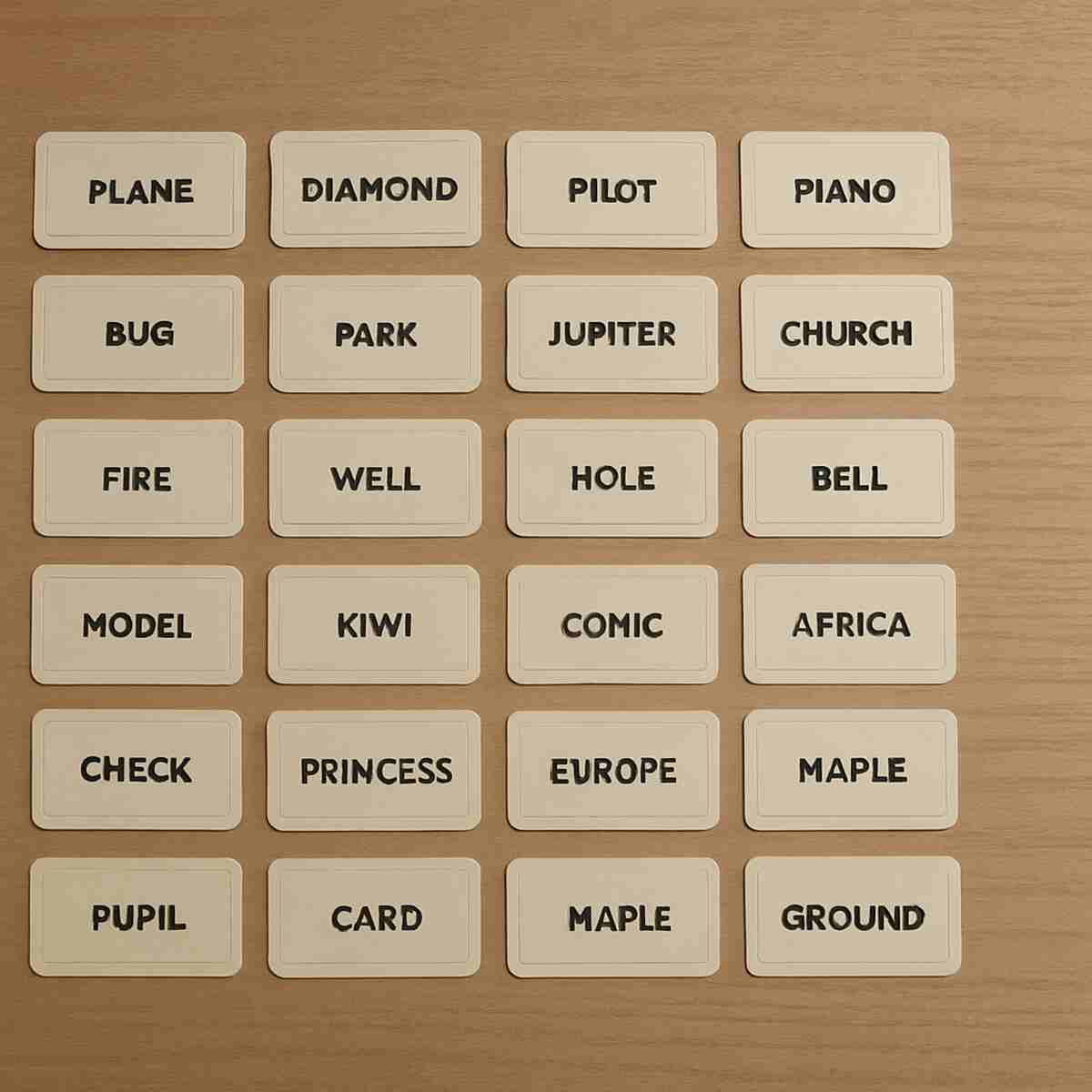
A perfect example is the mega-hit Codenames. In this game, two teams face a grid of 25 word cards. One player on each team—the “spymaster”—knows which words their team needs to guess. The catch? They can only give a one-word clue followed by a number. A clue like “Animal: 3” might lead their team to guess LION, CAT, and SQUIRREL, but they risk accidentally picking an opponent’s word, or worse, the instant-loss “assassin” card.
This clever puzzle of trying to say a lot with a little is a core ingredient in many cooperative party games. You’ll find a different version of it in The Crew: The Quest for Planet Nine, a card game where all players work together. The team must complete 50 increasingly difficult missions, which usually involve one player winning a specific card. The twist is that you can’t talk about what cards are in your hand. This limited communication creates wonderfully tense and triumphant moments based on trust and smart plays.
Both of these games prove that a get-together doesn’t have to be loud to be memorable. They build connection through shared “aha!” moments and the hilarious agony of a clue gone wrong. But what if your ‘party’ is just one or two people? For those who want a rich story, your next stop is a game that feels like choosing your own adventure.
Games #9 & #10: Your Own Adventure, With or Without Friends
Sometimes you want a game that feels less like a quick match and more like diving into a great book or TV series. This is the magic of “campaign” or “legacy” games, where the story continues from one session to the next. Your decisions can permanently change the game board, add new rules, and unlock secret components, creating a unique world shaped by your actions. The story isn’t just a backdrop; it’s something your group builds together over weeks or even months.
For a pure storytelling experience, a game like Legacy of Dragonholt acts as a guided fantasy novel in a box. You and your friends create characters and simply make choices as a narrator reads from a storybook. There are no dice to roll or complex rules to master, just a sprawling adventure that responds to your every decision. It’s the ultimate “choose your own path” experience, shared with friends around a table.
This kind of rich, immersive experience isn’t just for groups. A surprising and growing part of the hobby is playing games solo. Many modern games are specifically designed with a dedicated “solo mode” that pits you against a clever, automated opponent. It’s not about feeling lonely; it’s about engaging your mind with a satisfying puzzle, much like doing a crossword or playing a single-player video game.
A fantastic example is Wingspan, a beautiful and relaxing game about attracting birds to your wildlife preserve. When playing alone, you compete against a simple card-based system that simulates another player. It provides a challenging and peaceful way to enjoy the game’s strategy at your own pace. With games now offering everything from party-starting laughter to deep, personal adventures, the biggest challenge is figuring out where to start.
The Overwhelming Store Aisle: How to Actually Pick Your First Game
Walking into the board game aisle can feel like being asked to choose a movie based on a thousand different posters. It’s a wall of colorful boxes, and it’s easy to feel lost. The secret to how to choose a board game isn’t about picking the coolest-looking box; it’s about matching the game to the moment. To cut through the noise, simply ask yourself three quick questions:
- WHO are you playing with? (Family with young kids, competitive friends, just you and a partner?)
- WHAT vibe do you want? (Laughing at a fast party game, working together on a puzzle, or building something impressive?)
- HOW much time do you have? (Under 30 minutes, a full hour, or a whole evening?)
Answering these questions turns a confusing shelf into a curated list. If your answer is “work together with family for an hour,” you know a cooperative game like Pandemic is a great fit. If it’s “build something with a friend,” you might look for Ticket to Ride or Carcassonne. This simple framework is the key to finding the best board games for beginners and ensuring your first pick is a hit. Of course, once you’ve brought that perfect game home, there’s one more crucial step: getting it to the table without anyone’s eyes glazing over.
How to Teach a New Game Without Anyone’s Eyes Glazing Over
You’ve brought the perfect game home. Now comes the moment of truth: explaining how to play. Nothing kills the mood faster than someone reading a rulebook out loud for 20 minutes. The secret isn’t to know every rule by heart; it’s to get people playing as quickly as possible.
Instead of a lecture, turn your explanation into a quick, hands-on tutorial. Most modern games can be taught in under five minutes using a simple “goal-first” method. Just follow these four steps:
- 1. Explain the Goal. Before anything else, tell everyone how to win. This gives context to all the other rules.
- 2. Show a Single Turn. Don’t list every possibility. Just explain the one or two things a player typically does on their turn.
- 3. Play a Practice Round. Deal the cards but play with them face-up. This lets people ask questions and see the flow of the game without pressure.
- 4. Reset and Start for Real. Once everyone nods, you’re ready. Shuffle up and begin the real game.
This approach bypasses that feeling of being overwhelmed and replaces it with active learning. It’s the difference between reading a recipe and cooking alongside a chef. By focusing on the fun first, you’ll find that even your most hesitant friends will be asking for a rematch. Once you’re all hooked, you’ll want to make sure your new favorite game can handle all that playtime.
Love Your Game? Here’s How to Keep Your Cards Looking New
After a few game nights, your favorite game’s cards will start to show some love—bent corners from shuffling or the occasional fingerprint. To keep them fresh, players often use thin plastic pockets called card sleeves. Think of them as tiny screen protectors. This is the easiest way to protect board game cards from damage, ensuring your game is ready for years of play.
You don’t have to sleeve every card, however. A great starting point is to protect only the cards that are shuffled and handled constantly, like a starting deck or a central draw pile. This targeted approach is cost-effective and keeps the most important components in great shape without a big investment.
Beyond the cards, a little prep work makes game night even smoother. To speed up setup, use small sandwich bags to organize game components. Instead of a jumble of tokens and dice loose in the box, separating them into bags means you can start playing in seconds. This simple habit turns setup from a chore into a quick step before the fun begins.
Your New Game Night Awaits
You no longer have to look at that game closet with dread. The world of board games is far bigger than you knew, filled with experiences designed not to break friendships, but to build them. You now see how a modern card board game can be a tool for teamwork, creativity, and genuine connection.
Your first step in getting started in board games isn’t to become an expert. It’s simply to be curious. Use this board game guide to pick one game that sounds exciting—whether it’s building routes in Ticket to Ride or saving the world in Pandemic. Don’t worry about getting the rules perfect on your first try.
The goal isn’t just to win; it’s about the shared experience you create. When you open that box, you’re not just starting a game. You’re starting a new story with the people you care about. Your next favorite memory is waiting inside.
