


Tired of the same old Solitaire? If you’ve got a standard deck of cards and a few minutes to spare, you have everything you need for Gap Solitaire. It’s a refreshingly simple, fast-paced puzzle game that is perfect for a quick mental break, offering a satisfying challenge without a complicated rulebook. You can learn the entire game in the time it takes to brew a cup of coffee. To find more, check on login monata189
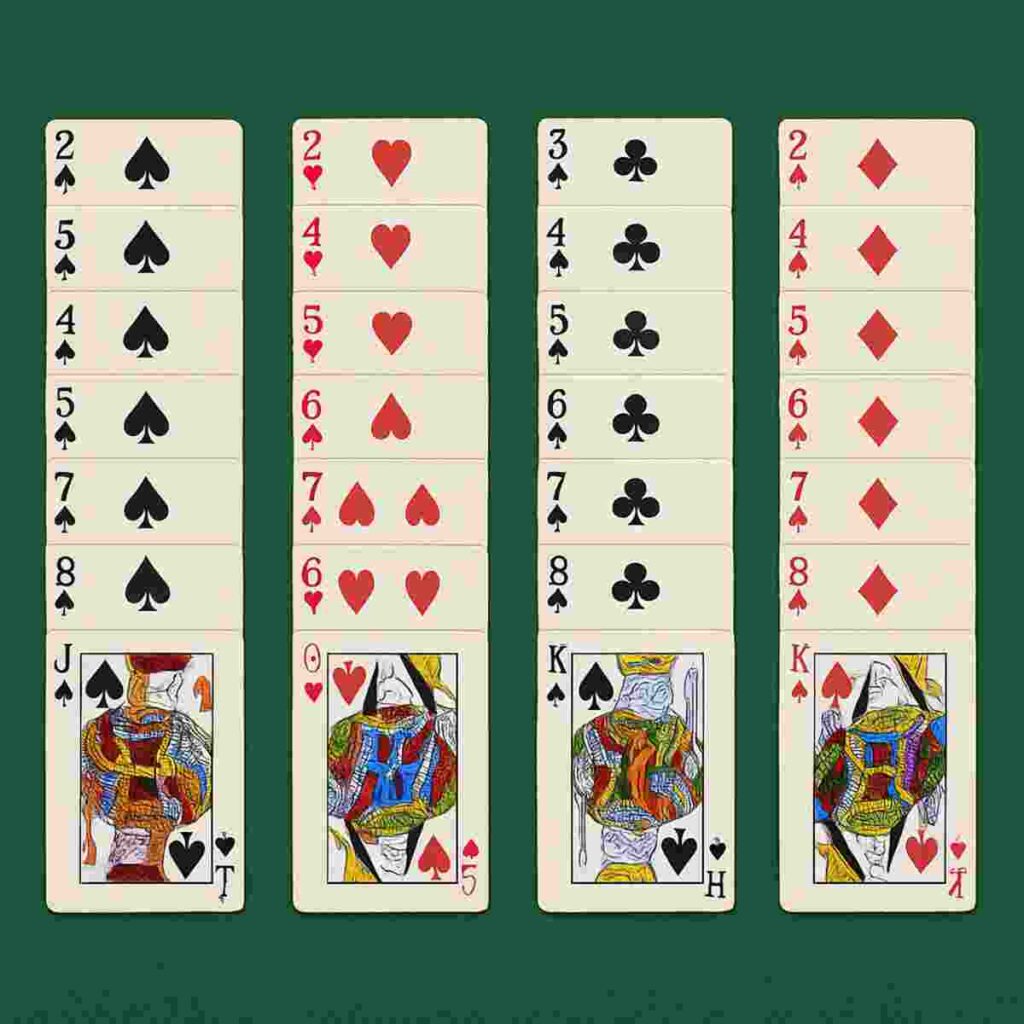
The objective of the Gaps solitaire card game is beautifully straightforward: to create perfect order out of chaos. Your mission is to arrange all the cards into four neat rows, one for each suit, with the cards lined up in order from 2 to King. Seeing a shuffled deck transform into four perfectly harmonized sequences is one of the most rewarding parts of the game.
This guide covers everything you need to know. We’ll explore the simple setup, the easy-to-learn rules for moving cards into the “gaps,” and the special second chance you get if you run out of moves. By the end, you’ll feel confident enough to deal your first hand and enjoy this delightful puzzle.
How to Set Up Your First Game of Gaps Solitaire
Getting started with Gap Solitaire is incredibly simple and takes less than a minute. Unlike other solitaire games that require complicated piles and hidden cards, this one uses a clean, open layout where you can see everything from the very beginning.
To create the Gaps Solitaire card layout, just grab a standard 52-card deck and follow these three steps:
- Shuffle the deck thoroughly.
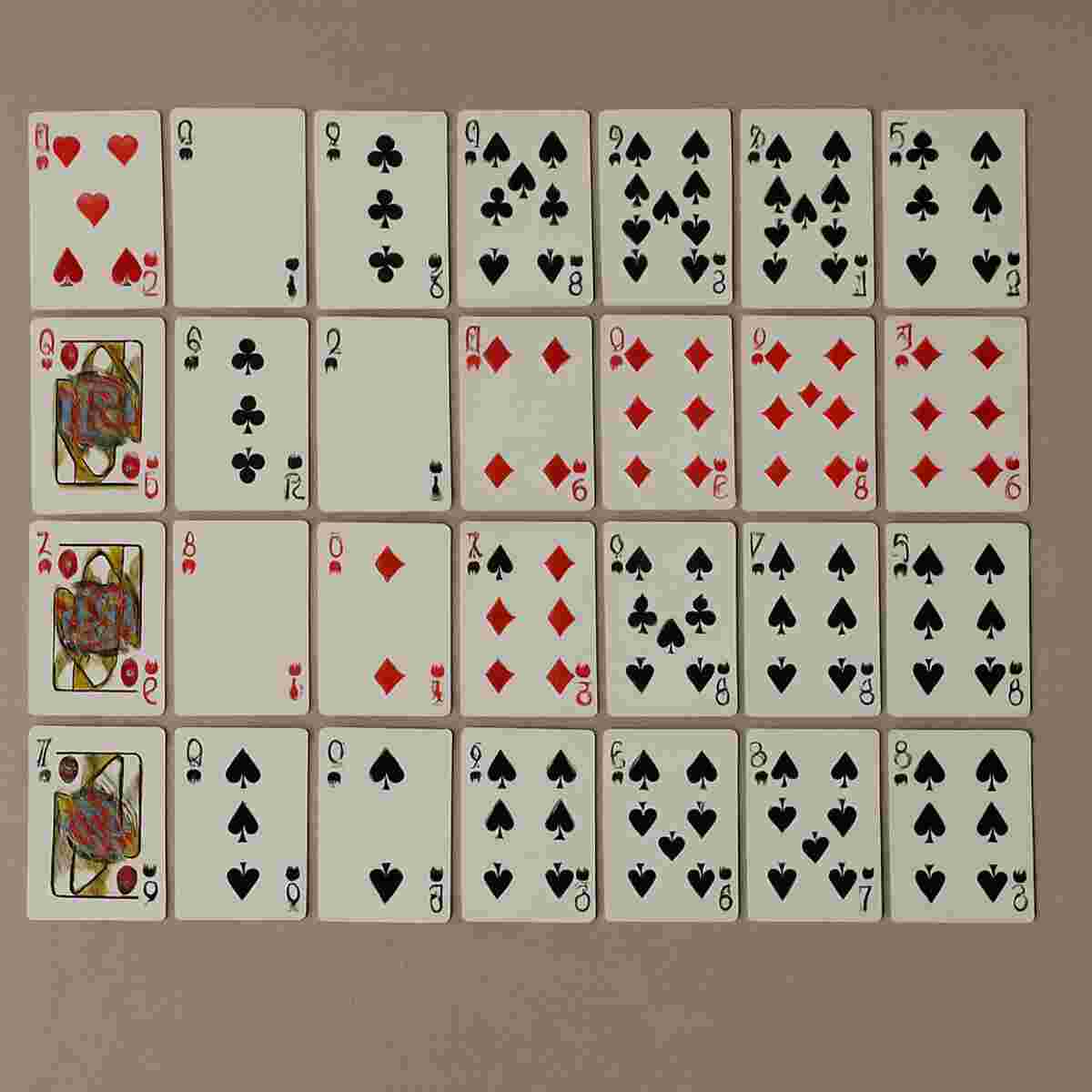
- Deal all 52 cards, face-up, into four rows of 13 cards each. It will look like a neat grid covering your table.
- Find the four Aces. Once you spot them, remove them from the layout and set them aside. They are not used for the rest of the game.
The four empty spaces you just created by removing the Aces are the most important part of the puzzle—they’re your “gaps.” These aren’t just blank spots; they are the key to moving cards around the board and organizing your suits. With your cards dealt and your gaps open, you’re now ready to learn the one simple rule for filling them.
The One Simple Rule for Filling the Gaps
Now that you have your gaps, you can start organizing the cards. The entire game is built around one primary rule. Think of each gap as an opportunity to continue a sequence. You can move a card into an empty space, but only if it is the same suit and one rank higher than the card to the immediate left of the gap. This is the only way to fill an empty space in the middle of a row.
For instance, let’s say you have an empty gap, and the card directly to its left is the 4 of Clubs. You can now scan the entire layout, find the 5 of Clubs, and move it into that gap. The space is now filled, and you’ve created a new gap where the 5 of Clubs used to be. You’ll constantly be making these small, satisfying connections as you play.
Every legal move you make follows this simple logic, which is how you build toward the game’s goal of creating perfectly ordered suits. A 9 of Hearts can only follow an 8 of Hearts; a Jack of Spades can only follow a 10 of Spades. This system works perfectly for nearly every card, but it creates a special situation for the highest card in each suit. So, what do you do with the Kings?
What Do I Do with the Kings?
That one simple rule—filling a gap with the next card in the same suit—works beautifully for almost every card in the deck. You can place a 4 of Spades next to a 3 of Spades, a Jack of Diamonds next to a 10 of Diamonds, and so on. But this creates a logical puzzle for the Kings. Since a King is the highest card in its suit, there’s no card for it to follow. You’ll never find a card that lets you place a King to its right, so Kings need their own special exception.
The King has a unique power: it is the only card that can be moved into an empty space at the very beginning of a row. If the first slot in any of the four rows is empty (for example, you moved a 2 from that spot to its proper home), you can take any King from anywhere on the board and place it in that opening. This is the only way to move a King into a gap.
Be careful, though, as this move comes with a big consequence. Moving a King to the front of a row effectively blocks that row for the rest of the game, since you can no longer place the 2 of that suit there to start the sequence. It’s a move you typically make only when you’ve run out of better options and need to open up a gap elsewhere. Knowing when—and when not—to move a King is a key part of the game’s strategy, especially when you think you might be stuck.
Stuck? Here’s How to Redeal and Get a Second Chance
Sooner or later, you’ll find yourself staring at the board with no legal moves left. The cards you need are trapped, and every gap seems useless. When you’re out of options, don’t just give up! Gap Solitaire has a built-in lifeline for this exact situation: the redeal. Most versions of the game allow you to do this twice, giving you a powerful second (and third) chance to solve the puzzle.
The trick to a redeal is knowing which cards to leave and which to collect. You only want to reshuffle the cards that are currently in the wrong place. A card is “correctly placed” if it follows the card to its left in the proper suit-and-number order, starting with a 2 at the beginning of a row. For example, if a row starts with the 2 of Clubs followed by the 3 of Clubs, both of those cards are correct and should not be moved.
When you’re ready to redeal, follow these simple steps:
- Identify and leave all cards that are already in their correct sequence.
- Gather up all the other, out-of-place cards from the board.
- Shuffle this pile of “wrong” cards thoroughly.
- Deal them back face-up, one by one, into all the empty spaces in the layout.
Once the gaps are filled again, you can resume playing with your newly arranged cards. Use your redeals wisely, as you only get a limited number. After they’re gone, your next move might just be to see if you’ve won.
How You Know You’ve Officially Won the Game
After all the moves, and maybe a redeal or two, you’ll reach the moment the whole game is about. The ultimate goal is to transform the shuffled mess you started with into four perfectly organized rows. This is the satisfying “click” where the puzzle is finally solved, and it’s very easy to spot.
You have officially won Gap Solitaire when every card is in its correct home. This means you will be looking at four complete rows, with each row containing a single suit arranged in order from 2 to King. The 2 of Spades will be followed by the 3 of Spades, and so on, all the way to the King of Spades. The same will be true for Hearts, Diamonds, and Clubs. Once there are no more gaps and every card is in sequence, take a moment to admire your work—you’ve won!
Why Can’t I Win Every Game of Gaps Solitaire?
You’ve followed all the rules, made your moves carefully, and maybe even used the re-deal, but the game still stalls out. It can be frustrating! So, is Gap solitaire always winnable? The short answer is no. Unlike a puzzle like Sudoku, which always has a solution, the random shuffle of cards in Gap can sometimes create a situation that is truly impossible to solve. It’s a game that blends your skill in choosing moves with the pure luck of the deal.
This unwinnable situation is often called a “blocked” game. A block occurs when a card you need is trapped behind a higher-ranked card of the same suit that has nowhere to go. For example, imagine the Queen of Spades is sitting in the layout, but the King of Spades is somewhere in the row in front of it. Since the King can only move into a gap at the end of a completed row (after the Queen), it’s stuck. And because the Queen can’t leapfrog over the King to get to its correct spot, your Spade row can never be finished.
Spotting a blocked game early is a key part of mastering the puzzle. Once you identify that a deal is impossible, don’t waste time trying to find a clever solution—there isn’t one. The best move is simply to scoop up the cards, shuffle, and deal a fresh game. Think of it not as losing, but as recognizing an unsolvable layout and wisely moving on to the next challenge. While you can’t win every hand, there are ways to improve your odds.
Three Simple Tips to Improve Your Winning Chances
While you can’t win an unwinnable deal, a little bit of strategy can turn a tough hand into a victory. Not all moves are created equal, and learning to prioritize is key. These simple tips will help you spot the best moves and give you a fighting chance even when the cards don’t seem to be on your side.
Your first priority should almost always be clearing a space for a King. Remember, a King can only move into a gap that comes after its matching Queen. This makes those four spots the most restrictive and valuable real estate in the game. If you have a choice between two moves, always make the one that helps get a Queen into position or clears out the cards at the end of a row. Think of the Kings as the final, heaviest pieces of the puzzle; you need to make room for them above all else.
Just as important as the Kings are the low-numbered cards. Focus on moving any 3s, 4s, and 5s you see into their correct places as soon as possible. Each suit is built from the 2 upwards, so getting these foundational cards locked in early creates a stable base for the rest of the suit to follow. Moving a 4 of Spades into its spot might not seem as exciting as another move, but it unlocks the potential for the 5, 6, and every card after it.
Finally, if you get stuck and need to use your re-deal, be smart about it. Before you gather the out-of-place cards, do one last scan to see if you can make any final moves to place one more card correctly. Every card you successfully lock in is one less card that goes back into the chaotic shuffle. This slightly improves your odds for the second deal and is a hallmark of the strategic thinking that makes Gaps a unique and satisfying challenge.
Gaps vs. Klondike: What’s the Difference?
If your main experience with solitaire is the classic version that comes with most computers (officially called Klondike), then Gaps will feel like a brand-new puzzle. While both are single-deck patience games, their rules and goals are fundamentally different. Klondike is about building columns down in alternating colors, like placing a red 7 on a black 8. Gaps, on the other hand, is all about creating perfect order within the rows by building up in the same suit, like placing a 7 of Hearts after a 6 of Hearts.
The core mechanics of Gaps solitaire vs. Klondike highlight just how distinct they are. One is about sorting into piles, while the other is about arranging cards in place.
- Klondike Solitaire: You build stacks downward (King, Queen, Jack…) using alternating colors. The goal is to move all cards to four separate “foundation” piles, one for each suit, starting with the Ace. You draw from a stock pile when you’re out of moves.
- Gaps Solitaire: You build sequences upward (2, 3, 4…) using the same suit. The goal is to arrange the cards within the main layout itself. There are no foundation piles or stock pile; instead, you get one or two redeals to help you finish.
Ultimately, Gaps offers a more focused and orderly challenge. You aren’t managing separate piles or worrying about what’s hidden in a face-down stack. Your entire game is laid out in front of you from the start. It’s less about luck of the draw and more about pure logic and planning.
Where to Play Gaps Solitaire for Free Online
The easiest way to try your first game is to play it online, but you might run into a small problem: it’s often called by a different name. To find the best online Gaps solitaire for free, you’ll have much more luck if you search for its most common alternative title, Montana Solitaire. Many of the most popular free game websites, such as Solitaired.com and World of Solitaire, list the game under this name. It’s the exact same game with the exact same rules, just with a different label.
Knowing this alternate name will open up your search results, but there’s one more you might encounter. Less frequently, the game is also known as Paganini. Because the rules are identical, searching for tips on “Montana solitaire strategy” or “Paganini card game instructions” will give you helpful advice that applies directly to Gaps. Playing a few quick rounds on a website or app is the perfect way to practice the rules and get a feel for the game’s unique rhythm before grabbing a physical deck of cards.
Your Next Move: Grab a Deck and Play Your First Game
You now have everything you need to transform a standard deck of cards into a fast and engaging puzzle. You’ve learned the simple flow: deal the rows, remove the Aces to create gaps, and then move cards to build each suit in order. Don’t worry if you run out of moves on your first try; remember that the two redeals are a core part of the game’s strategy and your key to getting unstuck.
The best way to let these rules sink in is to put them into action. The real satisfaction comes from seeing the ordered rows take shape under your own hands. So grab a deck, deal your first layout, and enjoy the simple pleasure of bringing order to the shuffle.
