


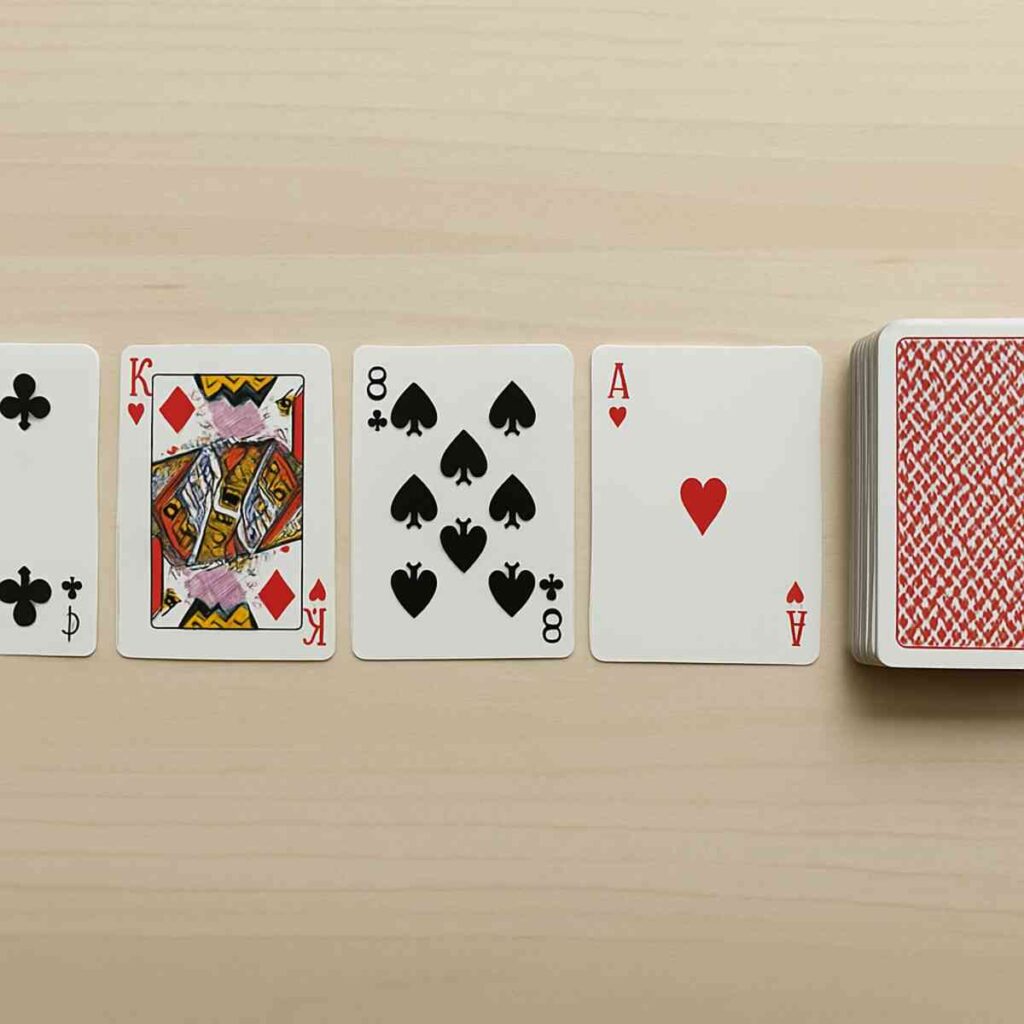
The hardest part of learning the Spit card game isn’t remembering the rules—it’s forgetting to take turns. Get ready for a frantic race where speed is the only thing that matters, and waiting for the other player is a losing strategy. If you’re tired of slow card games, you’ve found your perfect match. To find more, check on gamestopgiftbalance.com
In this lightning-fast game, the goal is refreshingly simple: be the first player to get rid of all your cards. What follows is a fun, chaotic, head-to-head showdown that feels more like a reflex competition than a careful strategy session, making it one of the most engaging two-player card games you can find. The exhilarating pace is what keeps players coming back.
This guide will get you playing immediately, covering everything from the unique setup to the rules of play and how to win your first game. You’ll soon have the confidence to challenge a friend and play a full round of Spit. Ready to start the race?
Your Goal in Spit: How to Win Before You Even Play a Card
Before you shuffle a single card, know that the object of Spit is incredibly simple: be the first person to get rid of all your cards. To get started, you’ll only need two things: a friend and one standard 52-card deck. The game is a head-to-head race, so speed is more important than anything else.
The entire game revolves around playing cards in sequence onto central piles. The only rule is that your card must be one rank higher or one rank lower than the card currently showing. For example, if a pile has a 7 on it, you can legally play either a 6 or an 8 on top of it. This simple “one-up, one-down” rule is the engine of the entire game.
Aces are your most valuable tool because they act as a bridge at both ends of the deck. An Ace can be played on a King or on a 2, connecting the entire sequence in a loop. Likewise, you can play a King or a 2 on top of an Ace. Mastering this “wrap-around” is essential for playing your cards quickly.
How to Deal Cards for Spit: Your Layout and Stock Piles Explained
To begin, shuffle the deck thoroughly and deal all 52 cards out evenly. Each player should have their own face-down stack of 26 cards. Don’t look at them yet! This initial deal ensures both players start on equal footing before the race begins.
From your personal stack of 26 cards, you will now create the piles you’ll be playing from. These are your Layout Piles. You’ll make five of them in a row from left to right, following this simple pattern:
- Place one card down for your first pile.
- Place two cards for your second pile.
- Place three for your third.
- Place four for your fourth.
- And finally, five cards for your fifth pile.
Once all five piles are made, flip the single card on top of each pile face-up. These are the first cards you’ll have available to play.
The remaining 11 cards in your hand form your Stock Pile. Keep this stack face-down off to the side. This crucial pile is your reserve; you’ll use it to start the action and to help you get “unstuck” later in the game. Your opponent should have the same setup on their side of the table. With the table set, the real fun is just a moment away.
3, 2, 1… Spit! How to Kick Off the Game
Now that your cards are in place, the game begins with a burst of action. The famous “no turns” rule of Spit truly comes to life here. On a count of three, or whenever you both agree, you and your opponent shout “Spit!” and simultaneously take the top card from your personal Stock Pile. You both flip that card face-up into the center of the table, creating two new piles side-by-side. This shared, simultaneous action is what kicks off the round.
Those two face-up cards you just played create the central play area, known as the Spit Piles. These are the most important piles in the game, as they are the only place where cards can be played. With one pile started by you and one by your opponent, the race is on to get rid of your cards from your Layout Piles by playing them here.
The #1 Rule of Spit: Playing One Card Up or One Card Down
The real fun begins now. The only rule for playing a card is that its rank must be one higher or one lower than the top card of either Spit Pile. For example, if one of the Spit Piles shows a 7, you can play either a 6 or an 8 on top of it from your available face-up cards. Suits (hearts, spades, etc.) don’t matter at all, and Aces can be both high and low (playable on a King or a 2).
Since there are two Spit Piles in the center, you have double the opportunity to make a play. You can play on the pile you started or the one your opponent started—it makes no difference! Both of you are trying to do this at the same time, grabbing cards from your five face-up Layout Piles and slapping them down as quickly as possible. It’s a head-to-head race to see who can spot the legal plays first.
After you successfully play a card onto a Spit Pile, your work isn’t quite done. You must immediately fill the empty spot you just created in your layout. To do this, simply flip the next face-down card from that same Layout Pile face-up. This gives you a new card to potentially play and keeps your five layout options full. This quick flip is a mandatory part of every single move, keeping the game in constant motion.
Stuck? Here’s the Simple Way to Reset and Keep Playing
Sooner or later, the frenzied card-slapping will grind to a halt. You’ll stare at your face-up cards, then at the Spit Piles, and realize you have no moves. Your opponent will do the same. This isn’t a mistake; it’s a built-in part of the game. When both players are completely out of options, the game simply takes a quick pause.
This is where a moment of teamwork comes into a very competitive game. A reset can only happen if both players agree they are stuck. A quick “Are you stuck?” and a nod from your opponent is all you need. You can’t just decide you’re stuck on your own; the pause must be mutual before you can do anything to get the game moving again.
Once you both agree, the fix is instant. At the exact same time, you and your opponent each take the top card from your personal Stock Pile and flip it face-up directly on top of one of the Spit Piles. With two new numbers in the center, the race is back on! This simple reset keeps the game flowing and gives both players a fresh chance to empty their piles.
Empty Piles and a Fast Hand: How to Win a Round of Spit
The frantic pace of Spit leads to an equally fast finish. You’ll eventually play the final card from your last Layout Pile. Even with your side of the table clear, the round isn’t over until you complete one final, decisive action. The game is still live, and your opponent is still trying to play their cards, so speed is everything.
Once your very last card from your Layout Piles is gone, you must immediately slap your hand down on one of the two Spit Piles in the center of the table. Shouting “Spit!” is optional but highly encouraged! This slap is the finish line. The first player to successfully empty their layout and slap a pile officially wins the round. If your opponent empties their piles first and slaps a pile before you do, they win the round instead, even if you were just one card away.
A bit of strategy comes in here because the pile you slap matters. After you’ve won the round, you must add the Spit Pile you slapped to your own cards. Your opponent, the loser of the round, has to take the other (usually much larger) Spit Pile. Your goal, therefore, is to not only be fast enough to empty your piles but also aware enough to slap the smaller of the two Spit Piles. Winning a round by taking fewer cards is the essential first step toward winning the entire game.
From Winning a Round to Winning the Game
Winning a round feels great, but the game isn’t over yet. You and your opponent now gather the cards from the Spit Piles you each took. These become your new personal decks for the next round. You do not reshuffle the original 52-card deck. Instead, you’ll take only the cards you just collected, shuffle them, and deal your Layout Piles and Stock Pile just as you did at the start. If you won the round by slapping the smaller pile, you’re already in a great position.
This is where the game’s momentum truly builds. Because you start the new round with fewer cards, it’s significantly easier to empty your piles again. Meanwhile, the loser of the round has a bigger deck, making their job harder. This snowball effect is the core of the game’s strategy: winning a round makes it more likely you’ll win the next. The overall object of Spit isn’t just to win one round, but to keep reducing your total card count until you have none left.
So, how does it all end? You continue playing these rounds—dealing, spitting, and slapping—until one player runs out of cards completely. If you start a round with so few cards that you can’t even create the five Layout Piles, you’ve won! The first person to get rid of all their cards is the ultimate winner.
3 Simple Strategies to Play Faster and Win at Spit
While Spit often feels like pure chaos, you can actually steer that chaos in your favor. Winning isn’t just about luck or having the fastest hands; it’s about making smarter, quicker decisions. Mastering a few effective tips will give you a significant edge over your opponent in this fast-paced two-player card game.
Your first instinct might be to play any card that fits, but a simple winning strategy is to focus your attention. Look at your row of face-up cards and identify which of your Layout Piles is the tallest. Prioritize playing cards from that pile whenever possible. Every card you remove from it brings you that much closer to flipping a new card and unlocking more plays, making it the most efficient way to clear your board.
Another tip is to keep one eye on your opponent’s available cards. You don’t need to track everything, but a glance can tell you a lot. If a Spit Pile shows a 6 and you see your opponent has a 7 ready to go, you know you have to play your 5 or 7 immediately. This leads to the golden rule of Spit: speed is more important than the “perfect” play. The moment you see a valid move, take it. The time you waste looking for a slightly better option is often all the time your opponent needs to get ahead.
Ultimately, these strategies shift your focus from simply playing cards to controlling the game’s pace. By targeting your biggest piles and acting decisively, you force your opponent to react to you. This aggressive, forward-thinking mindset is what separates a casual player from a consistent winner.
Spit vs. Speed: How Are These Twin Games Different?
If you’ve played Spit, you may have heard of other fast-paced card games similar to Speed, its famous twin. Both games share the same electrifying goal: play your cards faster than your opponent onto central piles. While they feel alike, a Spit vs. Speed rules comparison reveals key differences that completely change the experience. The main distinction lies in how you handle your cards: in Spit, your playing field is static and visible; in Speed, it’s a constantly changing hand.
The biggest difference is the setup and core gameplay loop. Instead of Spit’s five Layout Piles, the Speed card game rules start each player with five cards in their hand and a personal draw pile on the side. When you play a card from your hand in Speed, you immediately draw a new one to keep your hand at five cards (until your draw pile runs out). This contrasts with Spit, where you only get a new card by flipping the next one in a Layout Pile you just played from.
This small change creates a different path to victory. The differences include:
- Setup: Spit uses five fixed Layout Piles on the table. Speed uses a five-card hand and a draw pile.
- Gameplay: In Spit, you play from static, face-up cards. In Speed, you play from your hand and immediately draw a new card to replace it.
- Winning: In Spit, you empty your Layout Piles and slap a Spit Pile. In Speed, you must empty both your hand and your entire draw pile, then yell “Speed!”
So, while both are about quick reflexes, Spit is a game of clearing a board, while Speed is a game of emptying your hand.
Your Spit FAQs: Can You Play with 3 Players? What if You Tie?
You’re bound to run into a few unique situations as you play. A common question is, can you play Spit with 3 players? The short answer is no. Spit is designed specifically for two players because the entire 52-card deck is split evenly, and the two central Spit Piles create a balanced, head-to-head race. Adding a third player throws off the card count and the game’s core structure, so it’s best to stick to two.
Another classic moment is the frantic tie. If both players finish their Layout Piles and slap a Spit Pile at the same time, resolving a tie in Spit is simple: the player who slapped the pile with fewer cards in it wins the round. They get to take that smaller pile, while their opponent takes the larger one. This gives the winner a nice advantage for the next round.
But what happens when you run out of cards to play on a pile? If one Spit Pile becomes unplayable (for example, if it has a King on it and no one has a Queen), you simply ignore it. Both players must then focus on playing on the remaining active pile. Should the second pile also become unplayable, the game is considered “stuck,” and you both flip a new card from your Stock Pile to get things moving again.
You are now ready for anything the game throws at you. You’ve learned the setup, the rules of the race, and how to handle the inevitable tricky moments. All that’s left is to put your new knowledge into action.
You’re Ready to Play! Grab a Deck and Start Spitting
Just a few minutes ago, the frenetic action of the Spit card game was a mystery. Now, you’re not just a spectator—you’re a player. You know how to deal the cards, arrange your piles, and what to do when the action stalls. You understand the core secret: it’s not about taking turns, it’s about pure speed.
The best way to master this game is simply to play. So grab a standard deck of cards, a friend, and a flat surface to find out who has the quickest hands. The real fun is in the chaotic race to the finish. Ready? 3… 2… 1… Spit!