


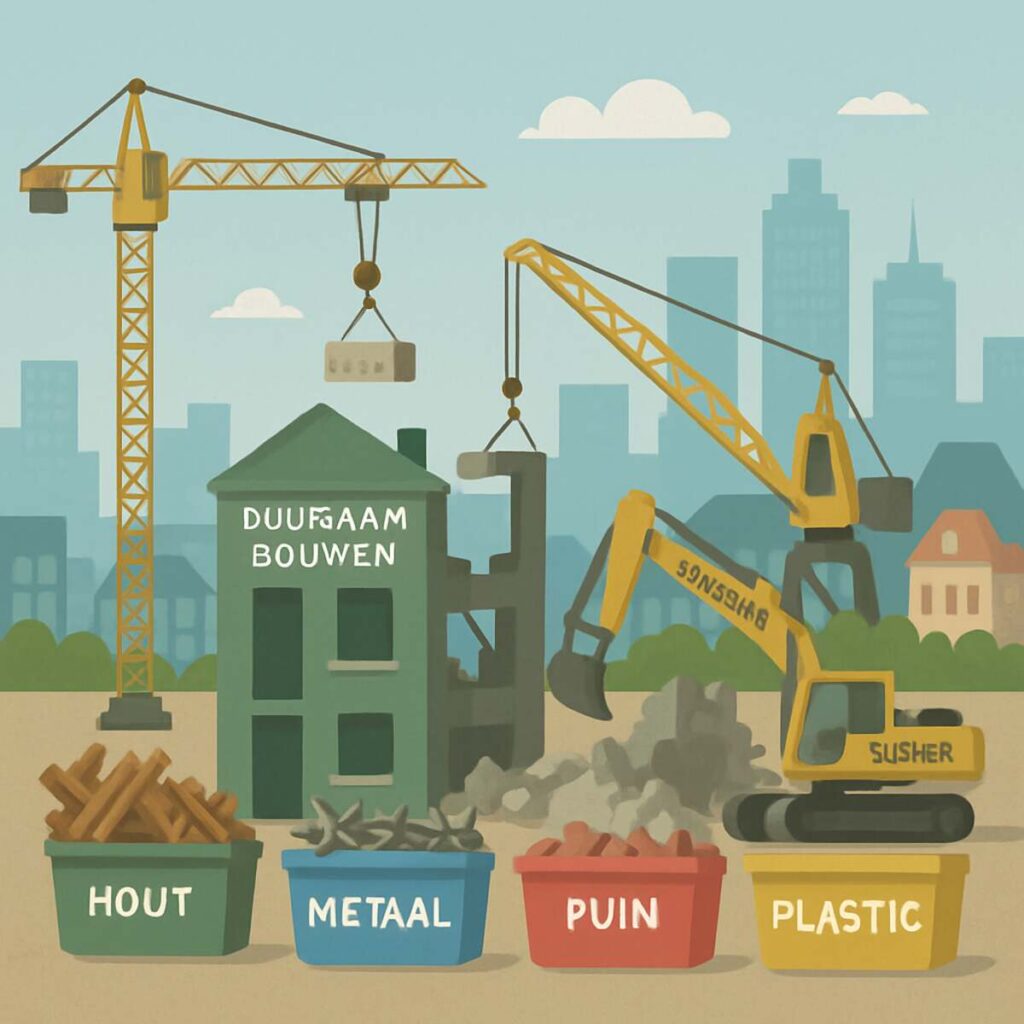
The Netherlands has long been recognized as a global pioneer in environmental sustainability, engineering, and innovative urban development. By 2050, the Dutch government aims to transition entirely to a circular economy—a system in which waste is eliminated, and resources are continually repurposed. This ambitious goal is fundamentally transforming the construction and real estate sectors. Today, tearing down a building is no longer a matter of sending wrecking balls and bulldozers to smash concrete into dust. Instead, the focus has shifted toward highly controlled, meticulously planned deconstruction. Check out the Best info about dismantling works netherlands.
For developers, property owners, and contractors dealing with dismantling works, Netherlands-based projects require a deep understanding of strict environmental regulations, innovative recycling technologies, and specialized safety standards. Whether you are stripping the interior of a historic Amsterdam canal house, decommissioning a massive industrial plant in Rotterdam, or clearing a commercial site in Utrecht, sustainable dismantling is now the gold standard.
In this comprehensive guide, we will explore the methodologies, legal requirements, financial implications, and technological innovations driving sustainable dismantling in the Netherlands. We will also provide actionable advice on navigating this complex ecosystem, ensuring your next project is not only compliant but also environmentally and economically optimized.
The Evolution of Dismantling: A Circular Economy Approach
To understand how dismantling works in the Netherlands operate today, we must first look at the philosophy driving the industry. The linear “take-make-dispose” model is being rapidly replaced by circular methodologies. Buildings are no longer viewed as static structures that end up in landfills at the end of their lifecycle; they are seen as highly valuable “material banks.”
Selective Demolition vs Total Demolition
In the past, total demolition was the default choice for clearing a site. It was fast, brutal, and highly destructive. Heavy machinery would crush a building into mixed rubble, which was then hauled off to a landfill. Today, this method is increasingly frowned upon and often legally restricted due to its massive environmental footprint.
The modern Dutch standard heavily favors selective demolition over total demolition. But what exactly is the difference?
- Total Demolition: The rapid, indiscriminate destruction of a structure. Materials are mixed, making them difficult or impossible to recycle at a high value. It generates significant dust, noise pollution, and carbon emissions.
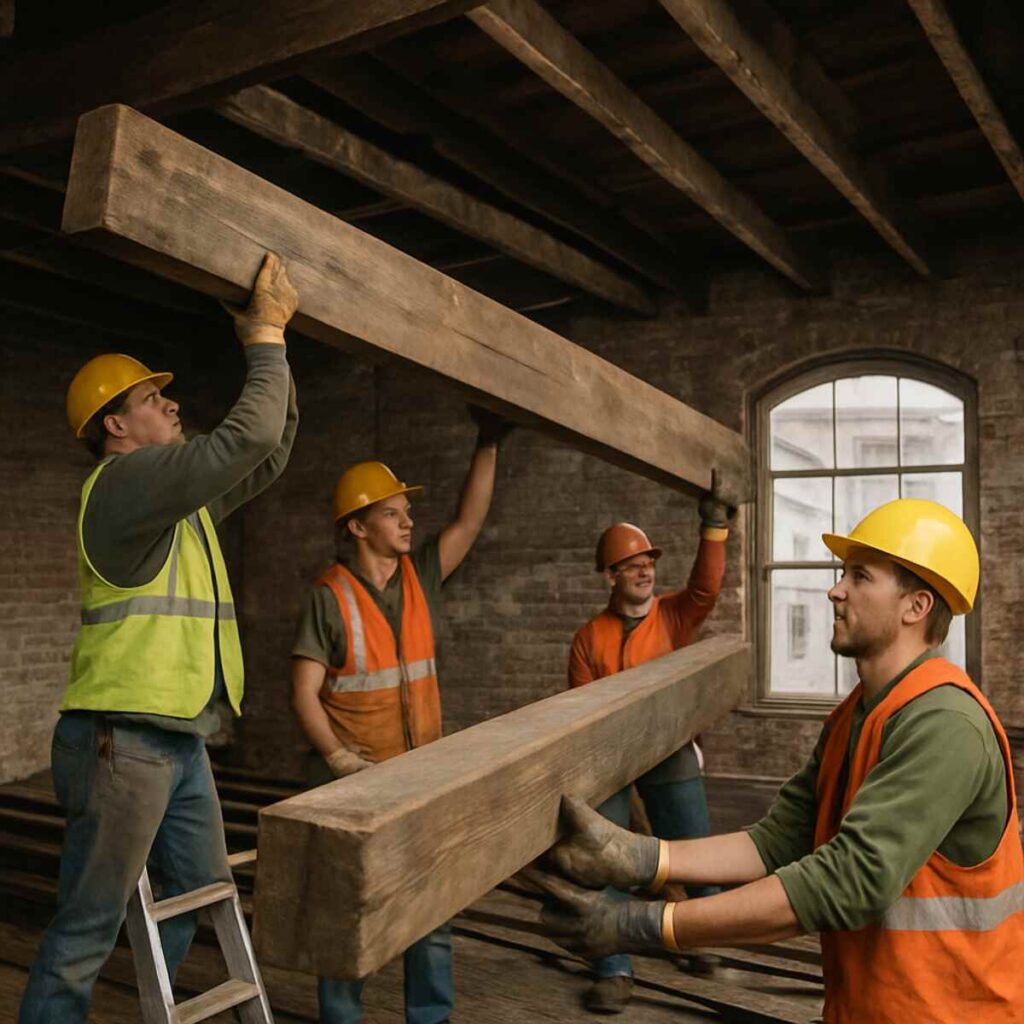
- Selective Demolition (Deconstruction): A strategic, phased approach where a building is taken apart in the reverse order of how it was constructed. Elements like doors, windows, structural beams, and even brickwork are carefully removed intact so they can be reused or recycled.
The debate of selective demolition vs total demolition usually comes down to time versus resource value. While selective demolition takes longer to plan and execute, the recovered materials often offset the increased labor costs. Furthermore, many Dutch municipalities now require a selective approach as a condition for granting project permits.
Benefits of Sustainable Deconstruction Practices
Adopting circular deconstruction and material reuse strategies offers a multitude of advantages that go far beyond basic environmental compliance.
- Environmental Preservation: By salvaging materials, we drastically reduce the need to extract virgin resources (like mining new iron ore or logging forests). This significantly lowers the carbon footprint of both the dismantling phase and the subsequent new construction.
- Economic Returns: High-quality salvaged materials—such as vintage Dutch bricks, hardwood flooring, and structural steel—can be sold on the secondary market.
- Regulatory Compliance: Projects that incorporate sustainable deconstruction are far more likely to receive faster permit approvals and may qualify for government sustainability grants.
- Corporate Social Responsibility (CSR): Real estate developers and corporations boost their public image and ESG (Environmental, Social, and Governance) scores by committing to zero-waste initiatives.
- Reduced Landfill Fees: Mixed construction waste incurs hefty disposal taxes in the Netherlands. By sorting and repurposing materials, companies drastically reduce their waste removal costs.
Urban Mining: Harvesting the City
One of the most fascinating concepts to emerge from the Dutch circular economy is “urban mining.” Instead of looking to traditional mines or forests for raw materials, the industry is looking at the existing built environment.
Urban Mining in the Dutch Construction Sector
Urban mining in the Dutch construction sector treats cities as massive repositories of valuable resources. When a building reaches the end of its functional life, urban miners step in to extract copper wiring, structural timber, glass, concrete, and steel.
The Netherlands is particularly suited for urban mining for several reasons:
- High Population Density: Space is at a premium, meaning buildings are frequently updated, renovated, or replaced.
- Resource Scarcity: As a small, geographically flat country, the Netherlands lacks vast natural resources such as extensive timber forests or metal mines, making the reuse of domestic materials essential.
- Advanced Logistics: The country possesses a highly efficient logistical network of waterways and roads, making the transport of salvaged materials highly cost-effective.
Technology’s Role: Madaster Material Passports
To effectively mine a city, you need to know exactly what materials are in a building. This is where Dutch innovation truly shines. The creation of Madaster material passports for circularity has revolutionized the industry.
Madaster is a centralized, cloud-based public platform that acts as a registry for materials and products used in real estate. A “material passport” contains detailed information about the quality, origin, and location of materials within a specific building.
How it helps dismantling works:
- Pre-Dismantling Audits: Before a contractor even steps foot on site, they can consult the building’s material passport to see exactly how much steel, glass, or concrete is available for harvesting.
- Financial Valuation: The platform calculates the financial value of the materials using current market prices, helping project managers assess the potential ROI of deconstruction.
- Toxicity Tracking: Passports log if and where hazardous materials were used, making safety planning much more accurate.
When architects design new buildings in the Netherlands today, they frequently register them in Madaster, ensuring that when the building needs to be dismantled 50 years from now, the next generation of urban miners will have a perfect treasure map.
Navigating Dutch Regulations and Permits
The Netherlands is known for its meticulous regulatory environment. If you are planning a dismantling project, you cannot simply hire a crew and start swinging sledgehammers. You must navigate a complex web of local and national laws designed to protect public safety, heritage, and the environment.
Securing the Right Permits
Before initiating any significant structural changes or demolition, you will likely need an “Omgevingsvergunning” (All-in-one Permit for Physical Aspects).
If you are renovating a retail space or an office, you must understand the process of obtaining a Dutch building permit for interior strip outs. While minor cosmetic changes do not require a permit, interior strip outs that involve altering load-bearing walls, modifying fire safety compartments, or changing the building’s exterior appearance legally mandate a permit.
Actionable steps for obtaining an interior strip out permit:
- Check Local Regulations: Use the Dutch government’s online portal (Omgevingsloket) to run a permit check (Vergunningcheck).
- Submit Detailed Plans: You will need to provide the municipality with structural drawings showing the current state and the proposed state following the strip-out.
- Provide a Demolition Notification (Sloopmelding): Even if a full permit isn’t required, you must file a “Sloopmelding” with the municipality at least four weeks before starting work if the project produces more than 10 cubic meters of waste, or if asbestos is involved.
Managing Hazardous Substances
A critical part of the permitting process is the environmental and safety assessment. Old buildings in the Netherlands, particularly those built before 1994, frequently contain materials that pose severe health risks.
Managing hazardous substances in old buildings requires meticulous planning. Common hazardous materials include:
- Lead-based paint: Often found in historic buildings, requiring specialized removal to prevent toxic dust.
- PCB-containing sealants: Polychlorinated biphenyls were used in elastic sealants and fluorescent light ballasts until the 1980s.
- Contaminated soil: If the dismantling involves foundational work on former industrial sites, soil remediation is heavily regulated.
Legal Requirements for Asbestos Remediation
Asbestos (asbest) was widely used in Dutch construction for its fire-resistant and insulating properties until it was completely banned in 1993.
The legal requirements for asbestos remediation in the Netherlands are exceptionally strict. You cannot legally remove most types of asbestos yourself; it must be done by certified professionals.
The standard asbestos remediation protocol:
- Asbestos Inventory (Asbestinventarisatie): Before any dismantling begins, a certified and independent assessment company must inspect the building and create a detailed inventory report.
- Risk Categorization: The report will classify the risk of asbestos exposure. Low-risk situations might allow for simpler removal, but high-risk situations require heavily controlled environments.
- Certified Removal: You must hire a contractor with a specialized SC-530 certification to perform the remediation. They will seal off the area, use specialized negative air pressure machines to prevent fiber escape, and wear full protective gear.
- Final Inspection (Vrijgave): Once the asbestos is removed, an independent laboratory must test the air quality and visually inspect the area. Only after they issue a “clearance certificate” can the rest of the dismantling work commence.
Failure to follow these protocols can result in immediate project shutdowns, massive fines from the Dutch Labour Inspectorate (Arbeidsinspectie), and criminal prosecution.
Commercial and Industrial Dismantling Workflows
Dismantling projects vary wildly in scope and complexity. Stripping a boutique retail shop in the center of The Hague is a vastly different logistical challenge than decommissioning a petrochemical plant in the Port of Rotterdam. Let’s break down the specialized approaches for commercial and industrial spaces.
Commercial Facility Interior Dismantling Guide
When retail brands, hospitality businesses, or corporate offices move out of a space, they are usually required to return the property to its original, “bare shell” state. This process requires a highly organized workflow.
Here is a step-by-step commercial facility interior dismantling guide tailored for the Dutch market:
Phase 1: Project Planning and Inventory
- Conduct a site walk-through to identify load-bearing elements, MEP (Mechanical, Electrical, and Plumbing) systems, and salvageable materials like glass partitions, carpet tiles, or specialized lighting.
- Create a detailed project timeline, factoring in strict Dutch municipal rules regarding working hours and noise pollution (especially in high-density areas like the Amsterdam Grachtengordel).
Phase 2: Soft Stripping
- This phase involves the removal of non-structural elements.
- Furniture, fixtures, and equipment (FF&E) are removed.
- Suspended ceilings, raised floors, non-load-bearing drywall, and insulation are carefully taken down.
- At this stage, the focus is heavily on waste removal and sorting materials into dedicated streams (wood, metal, gypsum, plastics) for recycling.
Phase 3: MEP Disconnection and Hard Stripping
- Certified electricians and plumbers safely cap off and disconnect water, gas, and electricity.
- HVAC systems, heavy ductwork, and commercial kitchens are dismantled.
- If required, structural alterations are made (under the guidance of a structural engineer).
Phase 4: Site Clearance and Handover
- The space is thoroughly cleaned. All debris is removed in accordance with strict site clearance and waste management protocols.
- A final walk-through is conducted with the landlord or property manager to ensure the space meets the exact specifications of the lease agreement’s “make-good” clause.
Decommissioning the Heavyweights: Industrial Facilities
Industrial dismantling requires an entirely different level of engineering and safety planning. The industrial equipment decommissioning process is a highly technical endeavor that involves dismantling factories, power plants, refineries, and manufacturing lines.
Key phases of industrial decommissioning:
- Process Cleaning and Decontamination: Before any wrench is turned, all pipelines, tanks, and machinery must be purged of hazardous chemicals, oils, and combustible dust. This is known as the “Lockout/Tagout” (LOTO) and draining phase.
- Asset Recovery: Much of the value in industrial dismantling lies in the machinery itself. Rather than scrapping it, companies often opt for resale. This involves highly complex logistics for the relocation and disassembly of heavy machinery. Machines must be uninstalled, carefully crated, and shipped to buyers worldwide.
- Structural Dismantling: Once the machinery is removed, the structural shell is dismantled. This often involves cutting down massive steel frameworks, silos, and concrete foundations using industrial shears, remote-controlled demolition robots, and heavy-duty cranes.
Industrial sites in the Netherlands, particularly in port areas, are subject to stringent soil and water protection laws. Contractors must ensure that no contaminated water from the cutting processes leaches into the surrounding environment.
Material Recovery and Waste Management
The success of a circular economy relies entirely on what happens to materials after they leave the site. In the Netherlands, sending construction waste to a landfill is heavily taxed and strongly discouraged. Instead, materials enter a sophisticated recycling supply chain.
Structural Metal and Steel Recovery
Steel is one of the most recycled materials on the planet, and its recovery is a cornerstone of sustainable dismantling.
Structural metal and steel recovery involves several pathways:
- Direct Reuse: Structural beams (I-beams, H-beams) that are in good condition are the most valuable. In the Netherlands, there are specialized companies that test, recertify, and resell these beams. By reusing steel directly, the massive energy required to melt it is saved, resulting in up to a 95% reduction in CO2 emissions compared to producing new steel.
- Recycling (Melting): If steel is warped, rusted, or cut into unmanageable pieces, it is sorted by grade and sent to foundries. There, it is melted down in electric arc furnaces to be transformed into new products.
- Copper and Aluminum: Wiring, plumbing pipes, and window frames are stripped and sorted. These non-ferrous metals fetch high prices on the commodities market and are highly recyclable without losing their inherent properties.
Concrete and Masonry Recycling
Concrete makes up the vast majority of demolition waste by weight. Traditionally, crushed concrete was used simply as low-grade road base (fundering). However, Dutch companies have developed advanced “smart crushing” technologies.
These machines can crush old concrete and separate it back into its original components: gravel, sand, and unhydrated cement. This allows the recovered materials to be used to create brand-new, high-quality structural concrete, truly closing the loop on a material that is notoriously carbon-intensive to produce.
Similarly, older Dutch bricks (often highly sought after for their aesthetic appeal) are carefully separated from mortar using specialized vibrating machines and sold to architects looking to give new buildings a historic character.
Site Clearance and Waste Management Protocols
Efficient site clearance is critical to keeping a project on schedule and on budget. To achieve high recycling rates, strict on-site site clearance and waste management protocols must be enforced.
- Source Separation: The most crucial rule is separating waste at the source. Mixing wood, plastic, and concrete in one dumpster ruins the value of the materials and vastly increases disposal costs. Contractors set up distinct, clearly labeled containers for different material streams.
- Just-in-Time Logistics: In crowded Dutch cities, there is rarely space for massive dumpsters to sit on the street for weeks. Waste management companies utilize “just-in-time” logistics, dropping off empty containers and picking up full ones within narrow time windows to minimize disruption to local traffic and residents.
- Digital Tracking: Advanced contractors use software to track exactly how many tons of each material leave the site, providing the client with a detailed sustainability report at the end of the project.
Ensuring Safety: Hiring the Right Professionals
Dismantling a building is inherently dangerous. There is the risk of structural collapse, exposure to hazardous materials, electrical shocks, and accidents involving heavy machinery. The Dutch construction industry is governed by stringent safety regulations to protect workers, bystanders, and the environment.
The Importance of VCA Certification
When planning a project, knowing how to hire VCA certified contractors is perhaps the single most important step you can take.
What is VCA? VCA stands for Veiligheid, Gezondheid en Milieu (VGM) Checklist Aannemers (Safety, Health and Environment Checklist for Contractors). It is a highly respected certification program in the Netherlands (and recognized across Europe) that demonstrates a company’s commitment to safe working practices.
While not strictly a legal requirement, VCA certification has become mandatory for almost all commercial, industrial, and government dismantling contracts in the Netherlands. If you hire a non-certified contractor and an accident occurs, the property owner can be held liable.
How to hire the right team:
- Verify the Certification: Don’t just take their word for it. You can check a contractor’s status in the official Central VCA Register (Centraal Register VCA). Ensure their certification is current and covers the specific scope of work you need.
- Look for SVMS-007 Certification: Beyond VCA, the highest standard for demolition companies in the Netherlands is the BRL SVMS-007 (Safe and Environmentally Friendly Demolition). Contractors with this certificate guarantee they follow the strictest circular-economy and safety guidelines.
- Ask for Project References: Request case studies of similar projects they have completed in the Netherlands. If you need a commercial interior stripped, ask to see their work in retail spaces. If you need a chemical plant decommissioned, ensure the contractor has industrial experience.
- Review their Environmental Plan: A reputable contractor will provide a detailed waste management and material recovery plan before the project begins.
When you prioritize safety and sustainability, dismantling works in the Netherlands proceed smoothly, without costly legal delays or tragic workplace accidents.
Financial Dynamics: The Cost of Deconstruction
A common misconception is that sustainable practices are always more expensive. While it is true that selective dismantling requires more manual labor than simply wrecking a building, the financial dynamics are much more nuanced.
What Factors Influence Deconstruction Pricing?
Understanding what factors influence deconstruction pricing will help you budget effectively for your project. Key elements include:
- Labor Costs: This is typically the highest expense. Selective deconstruction takes more time and requires skilled tradespeople to carefully unbolt, unhinge, and lower materials.
- Hazardous Material Removal: If an asbestos inventory reveals high-risk contamination or soil remediation is required, costs will increase significantly due to the specialised equipment and certified personnel required.
- Location and Accessibility: A freestanding industrial unit on the outskirts of Rotterdam is easier and cheaper to dismantle than a six-story office building tightly sandwiched in the historic center of Utrecht. Narrow streets dictate smaller machinery, difficult crane setups, and complex waste logistics, all of which drive up the price.
- Permit and Administrative Fees: Municipal fees for processing the Omgevingsvergunning, road-closure permits, and parking dispensations for dumpsters are included in the budget.
- Disposal Fees vs. Salvage Value: This is where the circular economy has a significant impact on the budget. The cost of disposing of mixed, unsorted waste in the Netherlands is extremely high due to environmental taxes. Conversely, if your building contains a high volume of valuable structural steel, copper wiring, or vintage architectural elements, the contractor will factor the resale value of these items into their bid, effectively lowering your overall cost.
Subsidies and Tax Incentives
To accelerate the transition to a circular economy, the Dutch government offers various financial incentives. Businesses investing in circular construction and dismantling may be eligible for the MIA (Environmental Investment Allowance) and VAMIL (Arbitrary depreciation of environmental investments) schemes. These programs allow companies to deduct a significant percentage of their environmentally friendly investments from their taxable profit.
By strategically leveraging the salvage value of materials and applying for government incentives, the net cost of a sustainable dismantling project can often be highly competitive with, or even cheaper than, traditional demolition.
The Future of Dismantling in the Netherlands
The Dutch dismantling and demolition sector is not resting on its laurels. It is continuously evolving, driven by the looming 2050 circular economy deadline and the ever-pressing need to reduce nitrogen (stikstof) and CO2 emissions.
Electrification of Heavy Machinery
One of the biggest shifts currently happening on Dutch project sites is the transition to emission-free machinery. Because the Netherlands has faced severe legal challenges regarding nitrogen emissions (which have halted numerous construction projects), contractors are rapidly investing in electric excavators, battery-powered loaders, and hybrid cranes. Electric machinery not only eliminates local emissions but also drastically reduces noise pollution, making it highly preferred for urban site clearance.
Robotics and Artificial Intelligence
Safety and efficiency are being further enhanced by robotics. Remote-controlled demolition robots, like those produced by Brokk, are frequently used to dismantle concrete structures in hazardous or confined spaces, keeping human operators at a safe distance.
Furthermore, Artificial Intelligence is beginning to play a role in waste sorting. AI-powered optical scanners are being installed in Dutch recycling facilities. These systems can identify and sort different types of plastics, wood, and metal on a fast-moving conveyor belt with far greater accuracy than human hands, ensuring the purest possible material streams for recycling.
Design for Disassembly (DfD)
The ultimate future of dismantling lies in how buildings are built today. The concept of “Design for Disassembly” is gaining massive traction among Dutch architects. Instead of using chemical glues and permanent welds, new buildings are being constructed using bolts, screws, and mechanical joints.
By designing buildings specifically to be easily disassembled in the future, the time, cost, and environmental impact of dismantling will be reduced to a fraction of what they are today. The material passports (like Madaster) created now will serve as instruction manuals for tomorrow’s deconstruction teams.
Conclusion
The approach to dismantling works in the Netherlands represents a paradigm shift in how we view the lifecycle of our built environment. The transition from destructive, linear demolition to strategic, circular deconstruction is no longer just a trendy environmental concept; it is a regulatory requirement, a financial necessity, and a moral imperative.
By embracing practices such as selective demolition, urban mining, and rigorous material recovery, property owners and developers can significantly reduce their carbon footprint while often uncovering hidden financial value in their structures. Navigating this landscape requires diligent planning—from securing the correct permits and conducting thorough asbestos inventories to managing complex site logistics and prioritizing the safety of VCA-certified workers.
Whether you are tasked with a delicate commercial interior strip-out or the massive undertaking of decommissioning industrial equipment, the key to success is viewing your project not as the end of a building’s life but as the beginning of a new supply chain. As the Netherlands continues its march toward a 100% circular economy by 2050, the practices and innovations detailed in this guide will ensure your projects remain compliant, profitable, and ready for a sustainable future.