


Tired of math worksheets that feel more like a chore than a challenge? What if you could sharpen arithmetic skills with just a deck of cards you already own? The secret is a fun, competitive puzzle known as a calculation card game, where numbers become your ingredients for a creative race. It’s like being handed a few random food items (your number cards) and being asked to create a specific dish (the target number). To find more, check on Maktoto Daftar
The goal is refreshingly simple: be the first person to use your cards to hit the value of a single “target” card. Your tools are the four basic operations everyone learns in school: addition (+), subtraction (-), multiplication (×), and division (÷). These arithmetic games with playing cards aren’t about complex rules, but about seeing the hidden connections between numbers.
Every winning play is born from the creative use of your numbers and operations to reach that specific goal. Grasping this core objective turns a simple hand of cards into a thrilling hunt for the right solution.
The 2-Minute Setup: Getting Your Cards Ready to Play
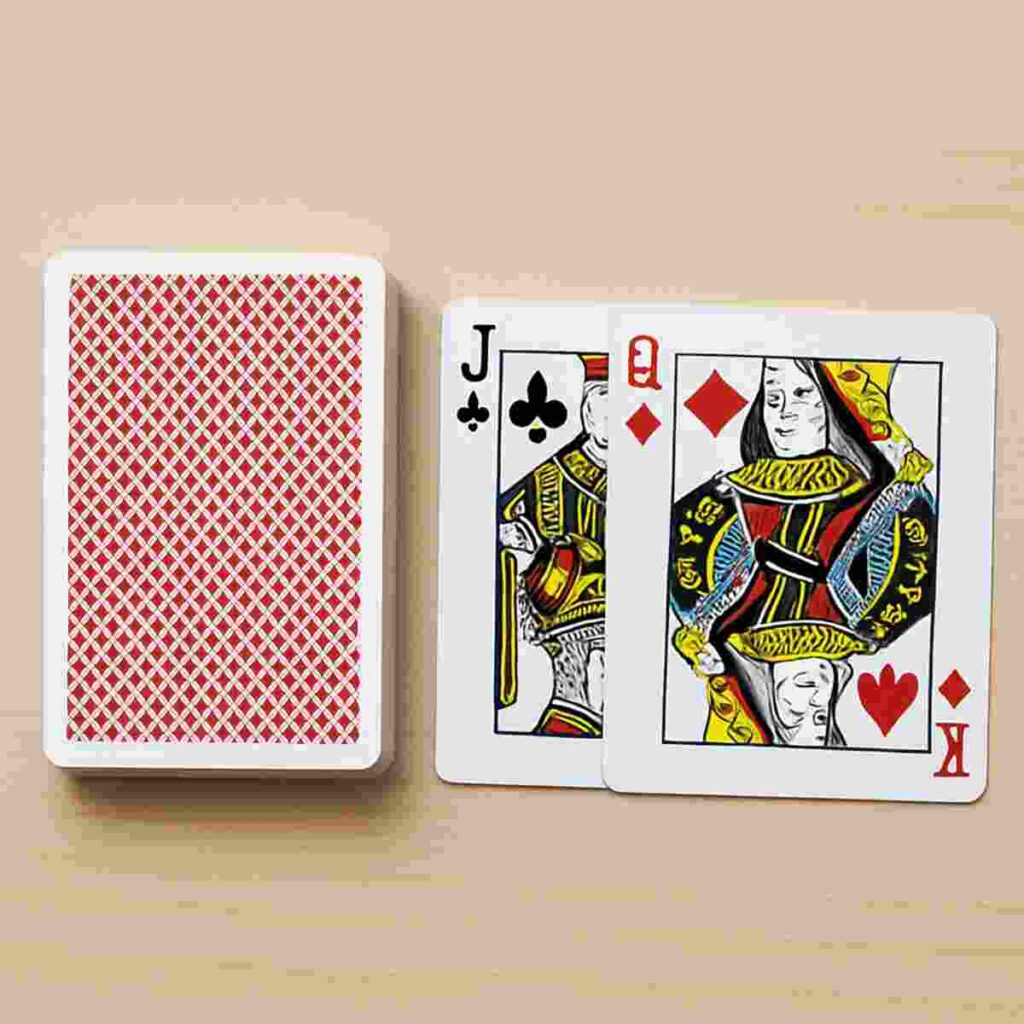
One of the best things about easy math games with a deck of cards is how quickly you can start. The only decision you need to make beforehand is how to handle the face cards—the Jacks, Queens, and Kings. Agreeing on a rule before you deal keeps the game fair and fun for everyone.
You have two simple options for the face cards. Just pick one before you begin:
- Option 1 (Easiest): Remove all Jacks, Queens, and Kings from the deck. This is a great way to start, as it keeps the game focused on the numbers 1 through 10.
- Option 2 (More Numbers): Agree on a value for each face card. The most common choice is Jack = 11, Queen = 12, and King = 13.
What about the Ace? Think of the Ace as your flexible friend. It can have a value of 1 or 11—whichever helps you solve the puzzle! This little bit of choice adds a fun strategic twist to the game. For example, if you need a small number, your Ace is a 1. If you need a bigger one, it can become an 11.
Once you’ve made your choice for the face cards and remembered the dual power of the Ace, your deck is ready. That’s it! You’re all set to deal a hand and walk through your first round.
How to Play Your First Round of ‘Target Number’
With your deck all set, you’re ready for the exciting part. The game, which we’ll call “Target Number,” is a fast-paced puzzle where everyone plays at once. The goal is simple: be the first player to use your cards and some basic math to hit the number on a special “Target Card.” It’s a fun race for your brain!
The flow of each round follows four easy steps:
- Deal the Hand: Give each player five cards, dealt face down. Don’t look at them yet!
- Set the Target: Flip one card from the top of the remaining deck and place it in the center of the table. This is your Target Card—the number everyone is trying to make.
- Start the Race: Everyone flips their five cards over at the same time. Now, race to find a way to make the Target number using your cards and any combination of addition, subtraction, multiplication, or division.
- Shout It Out: The first person to find a solution shouts, “I’ve got it!” or “Target!” They then show the other players how they did it.
For example, imagine the Target Card is a 7. You flip your five cards and see: 2, 4, 5, 9, and an Ace. You quickly spot a solution and shout, “I’ve got it! 9 minus 2 equals 7!” You only used two of your five cards, and that’s perfectly fine. You don’t have to use them all.
Once you’ve shared your solution and everyone agrees it’s correct, you win the round! You can keep score by collecting the cards used to make the solution (in this case, the 9 and the 2). Then, simply shuffle all the cards back into the deck and deal a new round.
Finding the right combination isn’t always instant, and that’s part of the fun. Sometimes the solution requires a bit more creativity. Thinking about the numbers in different ways can help you spot solutions faster.
Three Simple Strategies to Find Solutions Faster
Spotting a solution often feels like a flash of insight, but you can train your brain to see them more easily. The simplest trick is to quickly scan for “obvious pairs.” Before trying complex combinations, just look for any two cards that add up to or subtract to the target. If the Target Card is an 8 and you have a 6 and a 2 in your hand, you’ve found an instant win with 6 + 2 = 8. This first-glance check is often the fastest way to win a round.
When your hand is full of high-value cards, your first instinct might not be addition. Instead, try starting with your largest card and subtracting. This mental math trick simplifies the problem by breaking a big number down. For instance, if your target is a lowly 3 but your hand includes a Jack (11) and a 7, subtraction is your best friend: 11 – 7 = 3. Thinking “down” from a big number is just as powerful as building “up.”
Finally, don’t forget about the power of multiplication, especially when the Target Card is a large number like an 8, 9, or 10. Trying to reach a target of 24 by adding small cards is slow and complicated. But if you have a 6 and a 4, you can get there in one move: 6 x 4 = 24. Thinking in terms of multiplication is one of the key strategies for winning when the target number seems far away.
By looking for pairs, subtracting from large cards, and using multiplication, you’ll start to see solutions pop out at you. But what happens when a hand is truly stumped, and nobody at the table can find a way to make the target number? Don’t worry, there’s a simple rule for that, too.
What if Nobody Can Find a Solution?
It’s bound to happen: everyone has stared at the cards, tried every combination they can think of, and there’s just no way to make the target number. When the game gets stuck, the last thing you want is for the fun to stop. The simplest and most common house rule is to declare a “wash.” All players agree that no solution exists for that hand, shuffle the played cards back into the deck, and simply deal a new round. This keeps the game moving quickly and fairly.
For a different twist that rewards some clever thinking, you can play with a “closest wins” rule. If no one can hit the target number exactly, the player who can get the closest wins the round instead. For example, if the target is 10 but the best anyone can do is make a 9 (perhaps with 6 + 3), that player would claim the point. This variation encourages players to keep trying even when a perfect solution seems out of reach.
Both of these options are excellent ways to handle a stalemate, so just pick the one that sounds best for your group before you start. The “wash” rule is great for speed, while “closest wins” adds a small strategic layer. Once you know how to handle any situation, you might want to turn this friendly brain-teaser into a real competition.
Making It a Competition: 3 Simple Ways to Keep Score
While the game is plenty of fun on its own, adding a scoring system can turn this friendly puzzle into a lighthearted competition. This small addition makes it one of the most adaptable educational card games for families, as you can adjust the rules to fit any group.
For those who thrive on a bit of friendly rivalry, here are three easy ways to keep score:
- The Card Collector: This method is perfect for a visual and simple way to track victory. The winner of each round collects the cards they used to find the solution. At the end of the game, everyone counts their collected cards. The player with the most cards wins!
- Simple Point System: For a more traditional game night feel, give the winner of each round one point. The first player to reach a set number, like 5 or 10 points, is crowned the champion. This is a great way to structure a longer-term game.
- Target Value Scoring: To add a fun layer of risk and reward, the winner of a round earns points equal to the value of the Target Card. Successfully hitting a 9 gets you 9 points, while hitting a 3 only gets you 3. This makes rounds with face cards (Jack=11, Queen=12, King=13) especially exciting!
Each method offers a slightly different feel. The Card Collector is tangible and great for keeping young kids engaged, while Target Value Scoring adds a dash of strategy. Once you’re comfortable with the game, you might be ready for an even bigger twist.
Ready for a Challenge? 3 Fun Variations to Spice Up Your Game
Once you’ve got a few rounds under your belt, you might find yourself looking for a new twist. These variations are perfect for raising the difficulty and keeping the game fresh. The first and most common challenge is the “Must Use All Cards” rule. Instead of finding the quickest solution, you must find a way to incorporate every single one of your dealt cards into the equation. Suddenly, a simple target becomes a much more complex and satisfying puzzle.
For a different kind of mental workout, you can try limiting which operations are allowed. Before a round starts, agree that players can only use addition and subtraction, or perhaps only multiplication and division. This is a fantastic way to target specific skills, making it one of the best card games for practicing multiplication in a low-pressure environment. This constraint forces players to find new and unexpected pathways to the target number.
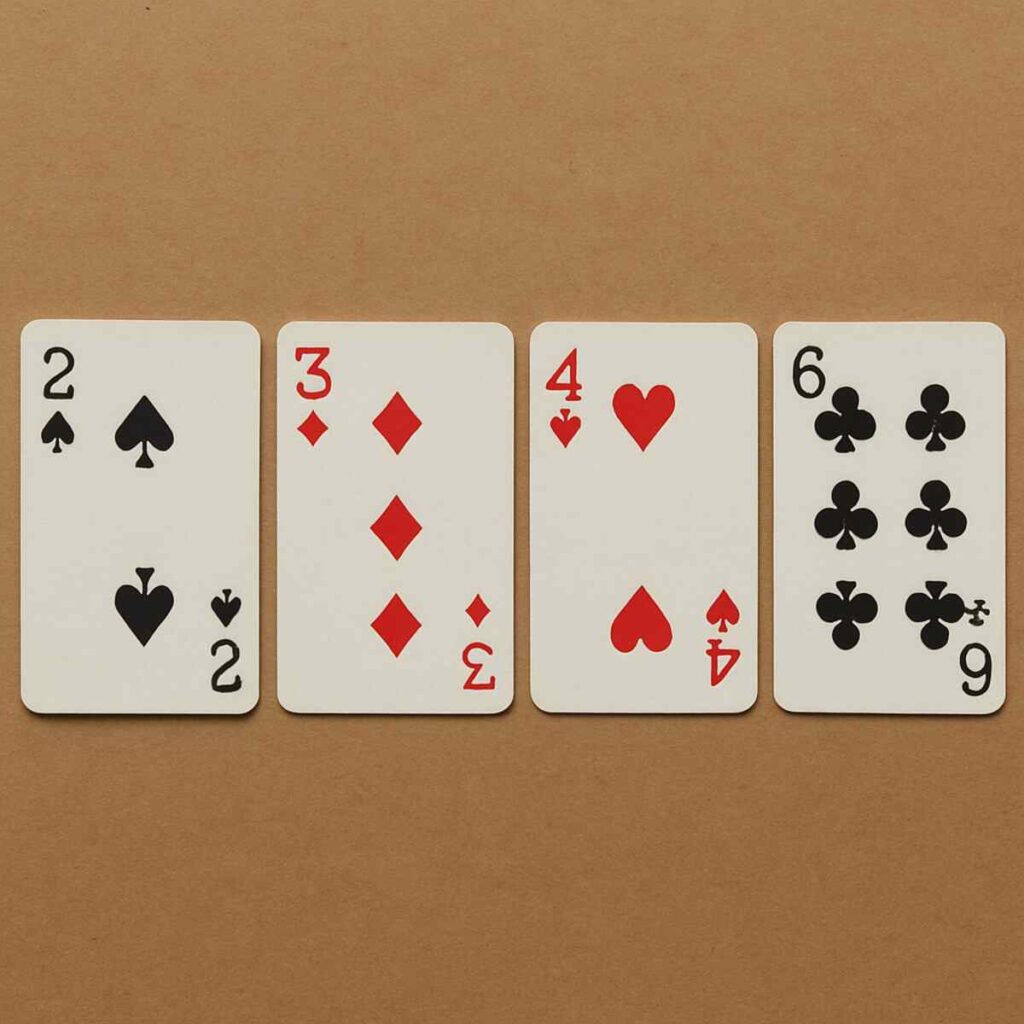
Perhaps the most classic version of this challenge is the famous 24 Game. The target number is always 24. You deal four cards and everyone races to make 24 using all four cards, once and only once. Imagine you deal a 2, 3, 4, and 6. The solution isn’t immediately obvious, but with some thought, you might find something like: 6 x 3 + 4 + 2 = 24. This fixed-target version is a brilliant way to improve mental math skills as your brain becomes trained to see combinations you never noticed before.
These rule changes do more than just make the game harder; they transform it into a powerful tool for cognitive flexibility. By forcing your brain out of its usual patterns, you’re building new mental muscles.
Are Card Games Really Good for Learning Math?
Are card games good for learning math? Absolutely, but not in the way a flashcard is. Instead of just drilling memorization, these games build something far more valuable: number sense. It’s the ability to see a 6, a 4, and a 2 and not just see three separate digits, but to instantly recognize that they can combine to make 12, 8, or even 22. This mental flexibility is the foundation of all higher-level math.
The secret ingredient is the fun. When math is presented as a game instead of a test, the pressure vanishes. This creates an environment of low-stakes practice, where it’s safe to try a weird combination or make a mistake without fear of failure. There are no red marks on a worksheet, just another flip of the cards. This approach is key to making math fun with cards, turning what could be a chore into an activity kids—and adults—genuinely want to play.
When considering math card games vs board games, the difference is the mental workout. Many board games involve simple counting or basic addition to move a piece. Calculation games, however, demand that you actively manipulate numbers with addition, subtraction, multiplication, and division, often all within a single turn. This rapid, creative problem-solving provides a much more potent way to improve mental math skills.
Ultimately, these games succeed because they train your brain to be agile. They encourage you to see numbers not as static figures but as flexible tools you can combine in endless ways. You’re not just learning math; you’re learning how to think like a creative problem-solver.
Your New Go-To Game for Family and Friends
You now have a complete blueprint for turning any deck of cards into a secret workout for your brain. That deck sitting in a drawer is a tool for creating a fun, fast-paced challenge anywhere, anytime.
The core rhythm is wonderfully simple: agree on values for the face cards, deal your hand and set a target, then race to find a solution. This simple flow is what makes this calculation card game one of the most effective educational card games for families. It effortlessly combines the thrill of competition with the quiet confidence that comes from practice.
So, the next time you have a deck of cards and a few friends or family members, try dealing a round. It’s a wonderful way to challenge your mind, share a few laughs, and connect with the people around your table.