

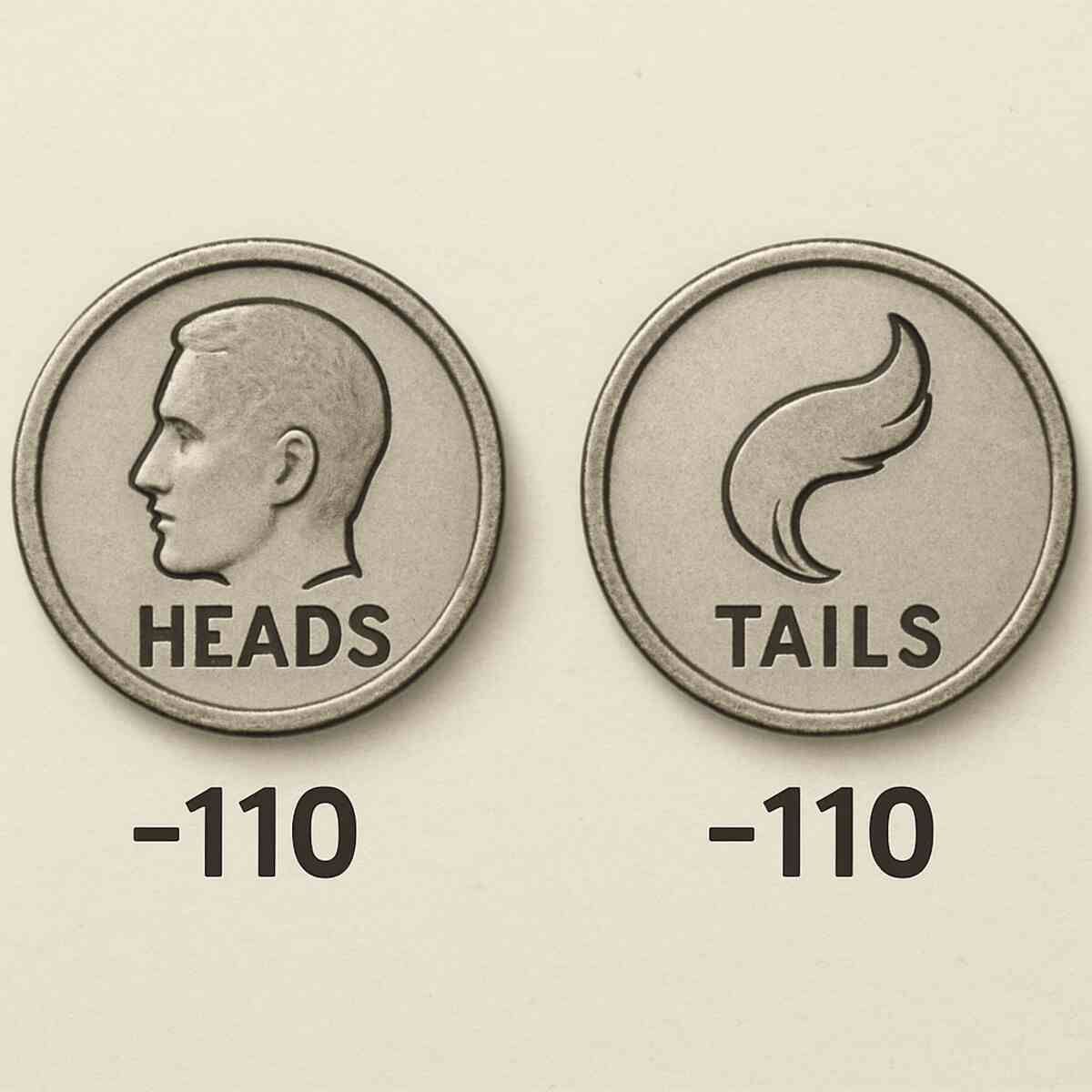

You’ve seen it on the screen during a game: Team A is -7, and you know that means they’re favored to win by more than seven points. But what about that other number that’s always lurking beside it: -110? Ever wonder why you have to bet $11 to win $10 on what seems like an even proposition? That isn’t a mistake; it’s the most important number in sports betting. The Amazing fact about ufabet.
That small detail is the key to understanding the real logic of sports betting. It’s the hidden engine that powers the entire industry, acting as the sportsbook’s built-in commission. In practice, this tiny “fee” is how sportsbooks ensure they turn a profit, regardless of which team wins. By ignoring it, you’re missing the fundamental rule of the game you’re playing.
This recognition shifts your entire perspective. You’ll begin to see that successful betting is less about having a crystal ball and more about understanding the price of a bet. It’s the difference between being a fan who hopes their team wins and an informed bettor who knows if the odds offer good value. By gaining a framework to look at odds like a professional, you’re about to learn the game behind the game.
Beyond Picking Winners: What Are You Actually Betting On?
When you look at betting odds, you’re seeing more than just who is supposed to win. The numbers tell a story about how a team is expected to perform. The two most common ways to bet are the Moneyline and the Point Spread, and understanding the difference is the first step to decoding the action.
A moneyline bet is the most straightforward: you are simply picking which team will win the game, period. The team with a minus sign (e.g., Lakers -200) is the favorite, the squad expected to win. Conversely, the team with a plus sign (e.g., Celtics +170) is the underdog. If you bet on the favorite, they just have to win; if you bet on the underdog, they just have to win.
The point spread, however, completely changes the goal. Think of it as a handicap given to the underdog to even the playing field. If the Chiefs are favored by 7 points (-7), they must win the game by more than 7 for your bet to cash. A bet on the underdog Raiders (+7) wins if they win the game outright OR if they lose by 6 points or fewer. They’ve been given a 7-point cushion.
This handicap creates an interesting third possibility. If the favored team wins by the exact number of the spread—for instance, if the Chiefs win by exactly 7 points—it’s a tie, or a “push.” In this case, neither side wins the bet, and your original wager is simply refunded. Now you know what the main numbers mean, but what about that small -110 that’s always lurking nearby?
The Hidden Fee: Why You Bet $11 to Win $10
You’ve noticed that little -110 number that often sits next to a point spread. It seems odd, right? If a point spread is designed to create a 50/50 proposition, shouldn’t you get paid even money? The answer to that question reveals the fundamental business model of every sportsbook and is the most important concept for a new bettor to understand.
Think of it this way: imagine you and a friend are betting on a coin flip. The true odds are perfectly even. If you bet $10 on heads and your friend bets $10 on tails, the winner simply takes the loser’s $10. But a sportsbook isn’t your friend; it’s a business that needs to make money for facilitating the bet. They do this by charging a small commission, which is known in the industry as the “vig” (short for vigorish) or the “juice.”
This vig is represented by that -110 line. Instead of betting $10 to win $10, the sportsbook requires you to bet $11 to win $10 on either side of a point spread bet. Let’s follow the money: if one person bets $11 on the Chiefs (-7) and another bets $11 on the Raiders (+7), the sportsbook has collected $22. No matter who wins, the book pays the winner $21 (their original $11 stake plus their $10 in winnings) and keeps the remaining $1 as its fee.
By building in this small commission, the bookmaker aims to make a profit regardless of which team actually wins the game, so long as they attract a balanced amount of money on both sides. This “price” of placing a bet is the cost of doing business. You can now use this price to uncover what the sportsbook is really thinking about each team’s chances.
How to Read a Sportsbook’s Mind: Turning Odds into Percentages
The “price” of a bet holds a hidden secret. Every betting line isn’t just about a potential payout; it’s a direct statement about how likely the sportsbook thinks an outcome is. By learning to translate odds into percentages, you can start to see the game the way a bookmaker does. This gives you a massive advantage over simply betting on gut instinct.
The core concept is called “implied probability”—the percentage chance of winning that is implied by the odds. The easiest way to grasp this is with +100 odds, which represent an even-money bet. If a team is listed at +100, the sportsbook is telling you it believes that team has a 50% chance of winning. It’s the betting world’s equivalent of a coin flip. The number is a code, and you’re learning how to crack it.
While there’s math to convert any line, you don’t need a calculator to understand what betting odds mean. You can get a great feel for it with a few mental shortcuts. For underdogs, as the number gets bigger, the implied chance of winning gets smaller.
- +100 odds = 50% chance (wins 1 out of 2 times)
- +200 odds = 33.3% chance (wins 1 out of 3 times)
- +300 odds = 25% chance (wins 1 out of 4 times)
- -110 odds = 52.4% chance (Remember the vig? That’s why it’s over 50%.)
Implied probability is the key that unlocks everything in betting. It allows you to move beyond asking, “Who do I think will win?” and start asking a much more powerful question: “Is this team’s real chance of winning better than the percentage the odds are giving them?” Answering that is the first step toward finding a true “value” bet.
Finding a “Value Bet”: The Core of Smart Betting
You’ve cracked the sportsbook’s code and know that +300 odds mean they’re giving a team about a 25% chance to win. That’s a great start, but it’s only half the battle. The real magic, and the secret to making smart wagers, happens when you compare that implied percentage to your own common-sense assessment of the game.
Imagine someone offered to pay you 3-to-1 odds (+300) on a simple coin flip. You know a coin flip has a 50% chance of landing on heads or tails. Getting paid as if it were a rare, 25% event is an incredible deal. You’d take that bet every single time, right? Even though you’d still lose about half your flips, the generous payout on your wins would more than make up for the losses over the long run. This, in a nutshell, is the entire concept of a “value bet.”
This same logic applies directly to sports. Let’s go back to that team with +300 odds (implying a 25% chance). After doing your own homework—perhaps you know the star player on the other team is injured or that your team plays exceptionally well in the rain—you might conclude their actual chance to win is closer to 35%. Suddenly, the sportsbook’s odds don’t look right. They are paying you for a massive longshot, but you believe the team’s chances are significantly better than that. You have found value.
This idea of finding a favorable mismatch between the odds and reality is the core of finding “positive expected value,” or +EV, in sports betting. A +EV bet doesn’t guarantee a win. The key insight is that over time, the profitable payouts from your well-priced winning wagers will outweigh the losses. This disciplined approach of hunting for a good price, rather than just picking who you think will win, is the fundamental difference between a casual fan and a truly strategic bettor.
The Two Betting Mindsets: Are You a “Sharp” or a “Square”?
Since the goal is to find value, it’s useful to see how different people approach betting. In the sports betting world, there are essentially two types of mindsets: the “square” and the “sharp.” A square, also known as the public, is a casual bettor who typically wagers based on gut feelings, team loyalty, or media headlines. In contrast, sharp bettors are the professionals who treat betting like a market, making decisions based on math and identifying valuable odds, not favorite teams.
The core difference comes down to the question they ask before placing a bet. A square asks, “Who do I think will win this game?” Their focus is entirely on the teams and the outcome. A sharp, however, asks, “Which side offers the best price relative to its true probability?” For professional bettors, the teams are almost secondary; they are betting on numbers, not jerseys.
Imagine a heavily publicized team like the Dallas Cowboys is playing on national television. The public (squares) will likely bet on them simply because they are popular and well-known. A sharp sees this trend and knows the sportsbook might adjust the odds to make a bet on the Cowboys a worse value. The sharp may then find value by betting against the Cowboys, not because they believe Dallas will lose, but because the price on the other side has become too good to ignore.
Adopting a sharper mindset isn’t about having secret information; it’s about discipline and shifting your focus from the on-field narrative to the numbers on the screen. This is harder than it sounds, as our brains are wired to favor stories and shortcuts. Learning to recognize these mental blind spots is the next crucial step in avoiding common traps.
Don’t Let Your Brain Trick You: Three Mental Traps to Avoid
Thinking like a sharp bettor means fighting your own brain’s worst instincts. Our minds are built to take shortcuts, and these mental shortcuts, or cognitive biases, can lead to poor decisions when money is on the line. By learning to spot these common traps, you can avoid betting with your emotions and start seeing the board more clearly.
The first and most common trap is Confirmation Bias: the tendency to search for and favor information that confirms what you already believe. If you’re a huge fan of a certain quarterback, you’ll naturally notice all his great throws and conveniently forget his costly interceptions. To counter this, play devil’s advocate before placing a bet. Force yourself to find one or two strong arguments for why the other side might win.
A similar mental shortcut is Recency Bias, which is giving too much importance to what just happened. When a typically average team pulls off a huge upset win on national TV, casual bettors often rush to bet on them the following week, assuming that one game reflects a new reality. Instead, zoom out. Is that victory an outlier, or does it fit their performance over the last ten games? A single game rarely tells the whole story.
Finally, there’s the seductive logic of the Gambler’s Fallacy—the belief that something is “due” to happen. You see it when a star player has gone three games without a touchdown, and you think, “He’s definitely scoring this week.” But each game is an independent event. The football doesn’t know the player is in a slump. Treat every game as a clean slate, because the odds do.
Recognizing these biases is half the battle. The other half is having the discipline to manage your money, regardless of how confident you feel. Even the sharpest mind needs a smart financial strategy, which is the single most important rule of sports betting.
The Single Most Important Rule: A Simple Bankroll Management Strategy
The most successful bettors aren’t just great at picking winners; they are masters of managing their money. Before you ever place a bet, the first and most critical step is to establish your bankroll. Think of this as your entertainment budget for the season—an amount of money set aside exclusively for betting that you are fully prepared to lose. This isn’t rent money or grocery money; it’s a fund for fun. Separating it from your daily finances is the foundation of betting responsibly and staying in control.
Without a plan, it’s easy to fall into a dangerous cycle. You might bet big on a “sure thing” because you feel confident, then bet even bigger the next day to chase your losses after an upset. This emotional rollercoaster is the quickest way to empty your account. A bankroll management strategy protects you from your own worst instincts—like the biases we just discussed—by setting the rules for how much you risk before emotion has a chance to take over.
To solve this, bettors use a simple but powerful system built around the concept of a “unit.” A unit is just a consistent, default bet size based on your total bankroll. For example, if your bankroll for the NFL season is $200, you might decide that one unit is $5. This becomes your standard wager. A bet you feel very confident about might be two units ($10), but you never risk a huge chunk of your bankroll on a single game.
The purpose of this strategy is simple: survival. Using a unit system ensures that no single loss can wipe you out, allowing you to withstand the inevitable losing streaks. It forces discipline, removes the emotional guesswork from bet sizing, and turns betting from a frantic chase into a sustainable hobby. With this financial discipline in place, you can finally focus on the fun part: finding value and making smart picks.
From Guessing to Strategy: Your New Blueprint for Smart Betting
You once saw numbers like -110 next to a point spread and likely just shrugged. That confusion is gone. You can now see those odds not as random digits, but as the price of placing a bet—a price that includes the sportsbook’s built-in fee, the “vig.” You have successfully moved from simply seeing who is favored to understanding the cost of the wager itself.
This new lens transforms the entire landscape. You now know that odds are more than a payout; they represent an “implied probability.” This directly answers the question of whether sports betting is skill or chance: the house uses mathematical skill, and you are now equipped to do the same. This is the heart of smart betting—using your own knowledge to find “value” where a team’s real chance to win is greater than the odds suggest.
The next time you’re about to watch a game, put this knowledge into action without risking a dime. Look up the moneyline odds and ask yourself one simple question: “Does this team’s actual chance of winning feel higher than the percentage these odds imply?” This single mental check is the first step toward developing a betting system that works for you, replacing gut feelings with a logical framework.
You are no longer just a fan guessing at outcomes; you are an analyst who can decode the logic of the line. This empowers you to understand the conversation, evaluate wagers with newfound clarity, and make truly informed decisions. By always treating betting as entertainment and wagering responsibly, you can fully enjoy the strategic challenge of the game behind the game.
