


Tired of searching for the perfect card game when you have exactly three people? If you’re ready for a challenge that blends strategy, risk, and shifting alliances, it’s time you met Skat. For over 200 years, this has been Germany’s national card game, a favorite that has delighted and challenged generations. While it has a reputation for being complicated, this guide breaks down everything you need to know. To find more, check on qqdewa
At its core, the game pits one player against the other two. Before each hand, players hold a quick auction to determine who will be the solo player, or “declarer.” This person then takes on the other two, who form a temporary team of “defenders” with the shared goal of stopping the declarer. This dynamic is what makes the Skat card game so compelling; your opponent in one hand could be your partner in the next.
Winning a hand isn’t just about taking the most tricks. Success hinges on capturing tricks that contain high-value cards. In a fascinating twist, some cards are worth more points than their rank might suggest—the 10, for example, is more valuable than the King or Queen. The declarer’s goal is to win tricks totaling at least 61 out of 120 possible points, making every card played a critical decision.
This guide will walk you through every phase of the game, from setting up to counting your final score. You will learn how bidding works, what it means to choose a trump suit, and how to play your first few tricks with confidence. You’ll have a solid foundation to deal a hand and try your first game with friends.
Getting Started: The Cards and Player Roles You Need to Know
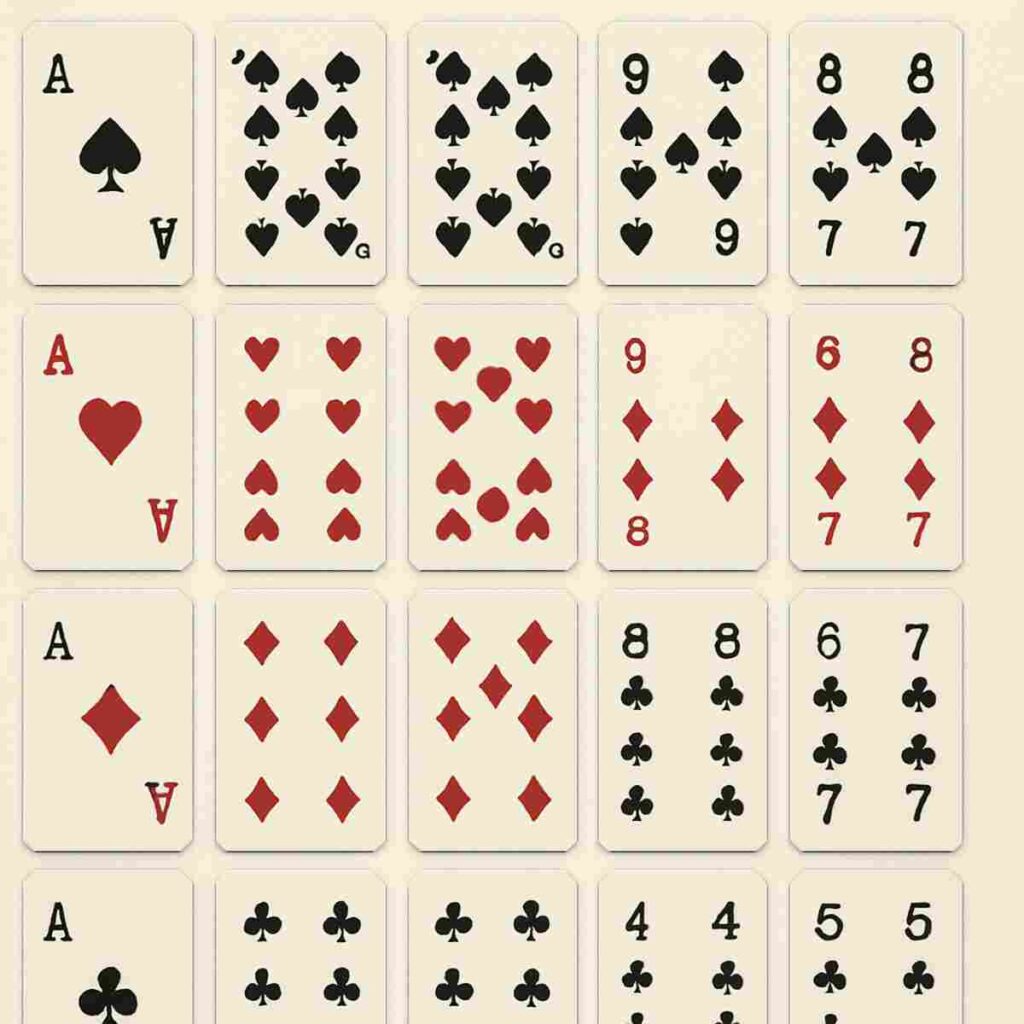
Before you can play, you’ll need the right set of cards. Skat uses a 32-card deck, which you can create from a standard 52-card pack by removing all cards from 2 through 6. This leaves you with eight ranks in each of the four suits:
- Ace, 10, King, Queen, Jack, 9, 8, 7
In Skat, your position relative to the dealer is very important, as each seat has a specific name and role. Once the dealer shuffles and deals, the three players are known as the Forehand (to the dealer’s left), the Middlehand (the next player in turn), and the Rearhand (the dealer themselves). These names determine the order of bidding and play for the entire round.
With the cards dealt and roles established, the game moves clockwise. The Forehand is the first to bid and will also be the first to play a card to start the game’s first “trick.”
The Core Objective: How to Win a Hand by Reaching 61 Points
In Skat, winning isn’t about taking the most tricks—it’s about capturing the most valuable cards within those tricks. One player becomes the “soloist” and plays against the other two, who form a temporary team. The soloist’s primary goal is to win tricks containing a total of at least 61 card points. This “magic number” represents just over half of the 120 total points available in the deck.
The team of defenders tries to stop the soloist from reaching 61 by collecting their own card points along the way.
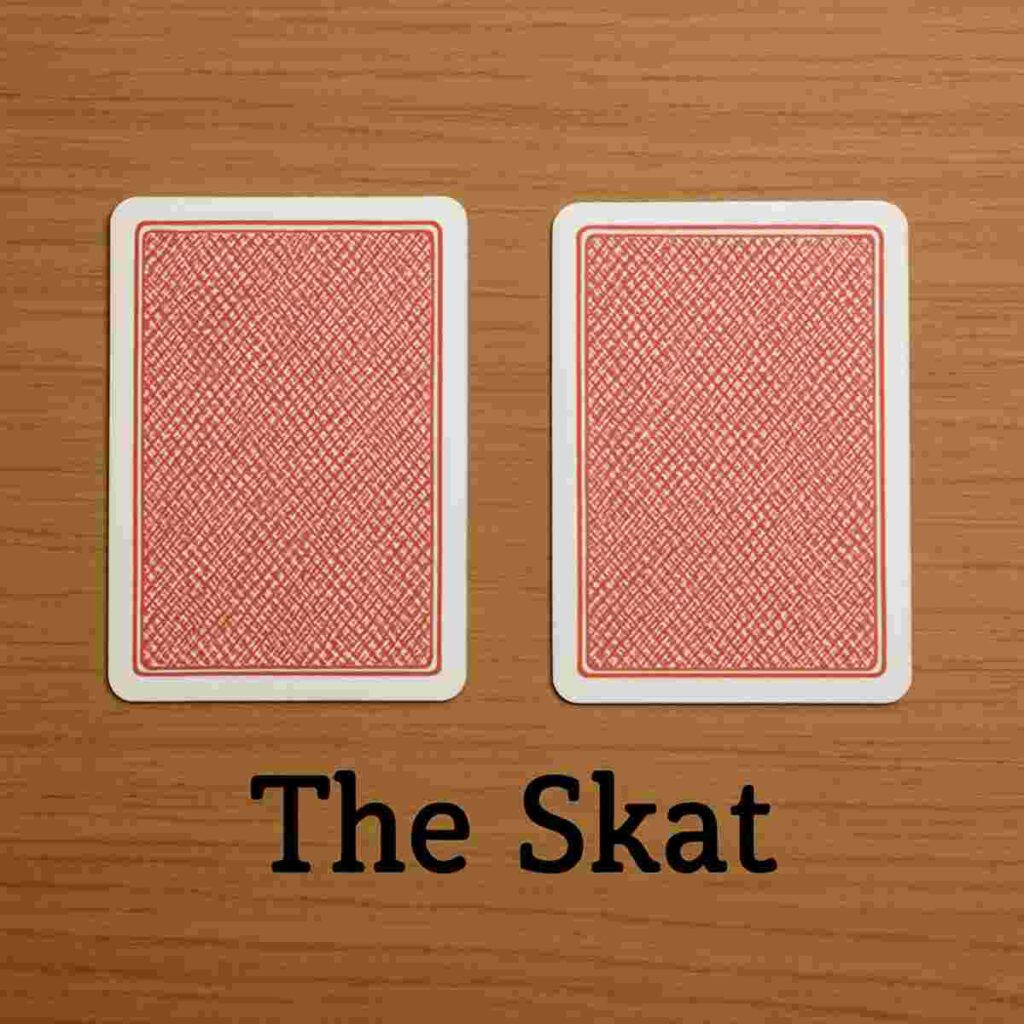
Remember those two extra cards set aside during the deal? They have a special name and purpose. These two face-down cards are called the Skat. They are a powerful advantage awarded to the player who wins the pre-game auction and becomes the soloist. This player gets to secretly look at the Skat and exchange them with two cards from their hand, helping them build a stronger hand to reach that 61-point goal.
The Two Kinds of Power: Understanding Card Ranks vs. Card Points
In a trick-taking game like Skat, a card’s point value and its trick-taking power (its rank) are two very different things. It’s crucial to distinguish between them to evaluate your hand.
Card points are used for scoring at the end of a hand. The goal is to collect cards totaling at least 61 points. Their values are not intuitive:
- Ace: 11 points
- 10: 10 points
- King: 4 points
- Queen: 3 points
- Jack: 2 points
- 9, 8, 7: 0 points
Notice that the 10 is more valuable in points than both the King and Queen.
Card ranks determine which card wins a trick. In Skat, the Jacks are the permanent, undisputed top trump cards. They form their own powerful hierarchy, always outranking every other card. This fixed order of strength is: Jack of Clubs (highest), then Spades, then Hearts, and finally Diamonds (lowest). When a player chooses to play a “Grand” hand, these four Jacks are the only trumps in the game.
After the all-powerful Jacks, the cards within each suit also follow a specific, non-intuitive ranking. The Ace is still the highest card of its suit, but the 10 comes right after it, beating both the King and Queen. The full trick-taking order for any non-trump suit is: Ace, 10, King, Queen, 9, 8, 7. This means if an opponent leads a ♦K and you play your ♦10, your 10 wins the trick and you capture their 4 points.
The Bidding Process: How to Earn the Right to Be the Solo Player
Before any cards are played, the three players enter an auction to determine who will be the solo player. This is a bid for the right to take on the other two players, use the extra two cards (the Skat), and choose the type of game to be played. The goal of this auction isn’t to spend money but to declare the minimum value you believe your hand is worth. If your hand is weak, you simply stay out of the auction by “passing.”
The bidding process is very structured. It always begins with the Middlehand (to the dealer’s left) being challenged by the Forehand (to their left). The Forehand acts as the initial auctioneer, offering bids. The Middlehand can either accept the bids by saying “Yes” or “I hold,” or they can drop out by saying “Pass.” This continues until one of them passes.
The Forehand starts by offering the lowest possible bid: “18?” If the Middlehand thinks their hand is worth at least 18 points, they’ll say “Yes.” The Forehand must then offer a higher bid (“20?”) or pass. This exchange provides a step-by-step way to find the highest bidder between the first two players. Once one passes, the winner of that duel then turns to the dealer (Rearhand) and the process repeats.
The numbers themselves follow a set sequence (18, 20, 22, 23, 24, etc.). They represent increasing hand strengths. The highest bidder at the table wins the auction, becoming the solo player (or “declarer”) for that round.
A Bidding Example: See a Step-by-Step Auction in Action
To see how this works, imagine Ann has just dealt the cards, making her the dealer (Rearhand). To her left is Bob (Middlehand), and to his left is Chris (Forehand). The bidding now begins between Chris and Bob. Chris, as the Forehand, must make the first offer.
The conversation would sound something like this. Chris looks at his hand and decides it’s worth a try, so he starts the auction with the lowest bid.
- Chris says to Bob: “18?”
- Bob looks at his own hand and thinks it’s worth at least that much, so he replies: “I hold.” (This is the standard way of saying “Yes, I accept your bid.”)
- Chris, now required to offer a higher value, says: “20?”
- Bob re-evaluates. His hand isn’t strong enough to risk a 20-point game, so he says: “Pass.”
Once a player passes, they are out of the auction for the rest of the hand. With Bob out, Chris has won that round and must now bid against the final player, the dealer, Ann. Since Chris’s last successful bid was 18 (the last one Bob held), he must now offer Ann a higher bid of at least 20.
However, Ann looks at her hand and sees it’s very weak. She has no interest in being the solo player. When Chris turns to her, ready to continue the auction, she simply says, “Pass.” With that, Chris has won the entire auction at the value of 18. He is now the declarer and gets to pick up the Skat and decide which game to play.
You Won the Bid! Now You Must Choose Your Game
Congratulations, you’ve won the auction! As the declarer, your first action is to secretly pick up the two face-down cards, the Skat. You add them to your hand, giving you twelve cards to assess. These two cards can often turn a good hand into a great one. You must now choose any two cards from your hand to discard, placing them face-down where the Skat was. A crucial rule: these discarded cards count towards your final score, so it’s wise to “press” high-point cards you don’t need for winning tricks.
With your final 10-card hand set, you must declare the game type. Based on the strength of your cards, you will choose one of three fundamental options:
- Suit Game: The most common choice. You declare one of the four suits (Clubs, Spades, Hearts, or Diamonds) as the trump suit for the hand.
- Grand Game: A more powerful option where only the four Jacks are trumps. What is a grand hand in skat? It’s one where you believe your Jacks and high-value Aces/10s can win without needing a full trump suit.
- Null Game: A complete reversal of normal play. In a Null game, your goal is to not win a single trick. There are no trumps and no card points; it’s all about avoidance.
After evaluating your new hand, you confidently announce your choice—for example, “I’ll play a Grand”—to the other two players. This declaration locks in the rules for the hand. The other two players now officially form the defending team, and their shared goal is to stop you from succeeding.
Let’s Play: How a Skat Trick Works from Start to Finish
The forehand (the player to the dealer’s left) kicks things off by playing any card from their hand. This card “leads the trick” and sets the suit. The single most important rule in Skat is that you must follow suit. If the first player leads a Spade, the next two players must also play a Spade if they have one. It doesn’t matter if your card is higher or lower; you are required to play a card of that suit if you can.
If you don’t have a card of the suit that was led, only then are you free to make a strategic choice. You can either play a trump card in an attempt to win the trick—a powerful move called “trumping”—or you can discard an unwanted card from a different, non-trump suit, which means you cannot win. You are never allowed to trump a trick if you are holding a card of the original suit that was led.
Once all three players have played a card, the winner is determined in this order:
- The highest trump card played wins the trick.
- If no trump is played, the highest card of the suit that was led wins.
For example, imagine a player leads the ♠10. The next player follows with a ♠7, and you play the ♠A. Since no trumps were played, your ♠A is the highest-ranking card of the led suit, and you win the trick. The winner of the trick collects the three cards and leads the next trick.
Counting the Score: Did the Solo Player Make 61?
After the final trick, it’s time to see who won. The solo player gathers all the tricks they’ve taken. Before counting, they add the two cards from the Skat—the ones they put aside at the beginning—to their pile. These cards belong to the solo player for scoring purposes, a detail that can easily make or break their game.
With this combined pile, the solo player adds up the point values of every card. Since the entire deck contains 120 points, the goal is to capture more than half. To win the game they declared, the solo player’s final count must be at least 61 points.
The outcome is straightforward: 61 or more, and the solo player wins. 60 or less, and the defenders take the hand. Players can also achieve bonus conditions; for example, holding the defenders to 30 points or fewer earns a Schneider, a more decisive victory.
What if Everyone Passes? The ‘Ramsch’ (Junk) Game Explained
It’s a common scenario: you’re dealt a hand with no high cards or powerful Jacks. You pass, the next player passes, and so does the last. When no one makes a bid, the round automatically becomes a Ramsch (Junk) game, ensuring there’s never a wasted deal. This built-in rule keeps the game moving and adds an interesting twist when everyone has a “bad” hand.
The objective in Ramsch is the complete opposite of a normal game: avoid points at all costs. You still play tricks as usual, with Grand rules (only Jacks are trump), but you want to lose tricks that contain high-value cards like Aces and 10s. At the end of the hand, players count the points they’ve taken, and the person with the highest score loses the round.
This clever rule transforms potentially boring hands into a tense game of “hot potato.” Ramsch forces players to think differently, evaluating which low cards can safely exit their hand and how to force an opponent to take a costly trick.
3 Common Beginner Mistakes and How to Avoid Them
Developing good habits is how you start to win. Many common Skat mistakes happen in the first few tricks, but they are easy to correct once you know what to look for.
First, new players often forget the power of the 10. It not only carries a high point value (10 points) but also ranks higher than the King and Queen. This leads to a critical error for defenders: playing a high-point card (like an Ace or 10) on a trick your partner is already winning with a high card of their own. Doing so simply “smears” valuable points onto the pile. Always try to discard a zero-point card (a 7, 8, or 9) instead.
For the solo player, a frequent misstep is hoarding trump cards. It feels safe to save your best cards for last, but this often gives control to the defenders. One of the most effective skat card game strategies is to lead with your trump suit early. This “bleeds” the defenders of their own trumps, leaving them vulnerable and putting you in the driver’s seat for the rest of the hand.
By internalizing these core ideas—protecting your points as a defender and controlling the game’s flow as the declarer—you move beyond just playing the rules and start thinking strategically.
Ready to Play for Real? Your Next Steps to Mastering Skat
You now have a solid grasp of Germany’s national card game, from its thrilling one-vs-two dynamic and critical 61-point target to the supreme power of the Jacks and the auction that starts every hand. You have all the tools needed to sit down, deal a hand, and navigate the flow of a complete game.
The best way to turn this new knowledge into a skill is to play. Don’t worry about mastering everything at once; focus on getting comfortable with the rhythm of the game. Here is a clear plan for what to do next:
- Find a free Skat app for practice on your phone or computer. Playing against AI is a zero-pressure way to see the rules in action.
- Try an online game against real people when you feel ready. Many platforms are welcoming to newcomers.
- Re-read this guide after a few games. Concepts that seemed abstract will suddenly click into place.
- Learn the “why” behind the bids. Once you’re comfortable playing, look up the “Game Value Table” to understand how bidding numbers and official skat tournament rules work.
Each hand you play will build your confidence and reveal the deeper layers of Skat strategy. You’ve finished your first lesson and are now on the journey from simply knowing the rules to truly playing Skat. Welcome to the club.