


Ready for a fun night of the 500 card game, but the score sheet looks more confusing than a tax form? You’re not alone. Creating a DIY 500 scoring pad is incredibly simple, and understanding it is the first step to keeping score with confidence. All you need is a blank piece of paper to create a clear layout that prevents any arguments later. To find more, check on gurutoto
Let’s build your 500 score sheet layout example from scratch. This process takes about ten seconds and sets you up for the entire game.
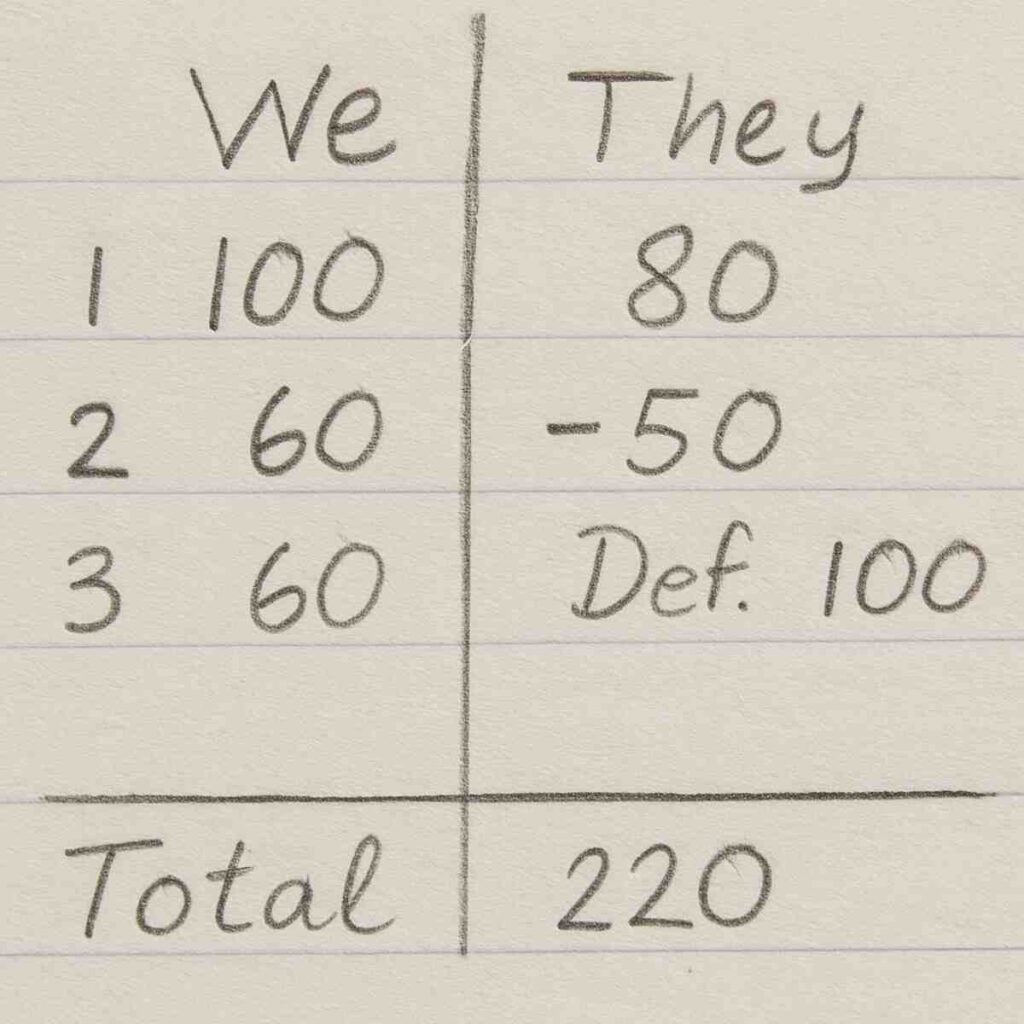
- Draw a large cross on your paper—one line down the middle and another across it.
- Label the top columns. Write “We” on the left and “They” on the right for the two teams.
- Add your team’s names in the “We” section and your opponents’ names in the “They” section.
That horizontal line is the most important part of the scoresheet, often just called “The Line.” All major points your team earns from making a bid are recorded below this line; it’s the primary way to track progress toward the 500-point goal. Any smaller points, like those the defenders earn, are typically written above it. This simple division is the key to scoring below the line in 500 and keeping the game moving smoothly.
The Core Scoring Loop: Understanding Bids, Tricks, and Points
Before any points go on the sheet, you first need to understand the goal of each hand. In the 500 card game, the main objective is to win “tricks.” A trick is simply one round of play where everyone lays down a single card. The person who plays the highest-ranking card wins that round and collects the four played cards. Every hand of 500 consists of exactly ten tricks that are up for grabs.
So, how do you know what you’re aiming for? That’s where the bid comes in. A bid is a public promise, or “contract,” made by one team to win a specific number of those ten tricks. For example, a bid of “Seven Hearts” means your team is promising to win at least seven tricks during that hand. This single action sets the entire goal for the round.
That bid also does something else that’s critically important: it establishes the trump suit. Think of the trump suit as a “power suit” for the hand. A card from the trump suit will beat any card from the other three suits, making it a powerful tool for winning tricks. This is why choosing the right suit is a huge part of the game’s strategy.
One team wins the bidding, which sets their promise and the trump suit. Next, all ten tricks are played out. After the last card is down, you compare the results to the initial bid. Did the bidding team fulfill their contract? Answering that question is the essence of scoring in 500.
How to Score a Successful Bid: Your First Points on the Board
Fulfilling the “contract” you made during the bidding phase is the primary way your team gets on the scoreboard. Every possible bid, from a humble ‘Six Spades’ to a bold ‘Ten No-Trump,’ has a predetermined point value that you earn for making your contract. This is the positive payoff you’re always aiming for.
To find out what your bid is worth, you’ll consult a 500 game points table. Think of this as the official price list for the game. For example, if your team bid “Seven Spades” and won at least seven tricks, you would look at the chart and find that the bid is worth 240 points. You simply write that number down in your team’s column on the score sheet.
But what happens if you bid seven tricks and actually win eight? This is a crucial rule that often surprises new players: you still only get 240 points. That extra trick you won is called an overtrick. While it’s tactically useful because it prevents your opponents from scoring, it does not give your team any bonus points. You only score the value of the bid you promised to make, nothing more.
After a successful hand, find your bid’s value, write that single number in your team’s column, and add it to your total. No bonus for overtricks, just the satisfaction of a contract fulfilled.
The 500 Game Points Table: Your Scoring Cheat Sheet
In 500, not all suits are created equal. The game has a built-in suit hierarchy that determines a bid’s power and point value. The ranking, from lowest to highest, is Spades, Clubs, Diamonds, and Hearts. At the very top is a special bid type called No Trump, where there is no trump suit at all, making it the most powerful and valuable bid. This order is the key to understanding why a bid of “7 Clubs” is worth more than “7 Spades.”
Here is a complete 500 bidding and scoring chart that you can use as a quick reference during your game. These values are standard for most versions, including the common Australian 500 scoring rules.
- Spades (Lowest Rank)
- 6♠: 40 | 7♠: 140 | 8♠: 240 | 9♠: 340 | 10♠: 440
- Clubs
- 6♣: 60 | 7♣: 160 | 8♣: 260 | 9♣: 360 | 10♣: 460
- Diamonds
- 6♦: 80 | 7♦: 180 | 8♦: 280 | 9♦: 380 | 10♦: 480
- Hearts
- 6♥: 100 | 7♥: 200 | 8♥: 300 | 9♥: 400 | 10♥: 500
- No Trump (Highest Rank)
- 6NT: 120 | 7NT: 220 | 8NT: 320 | 9NT: 420 | 10NT: 520
This table covers all the points you hope to win. But what happens when your team makes a promise and can’t deliver?
What Happens When You Fail a Bid? How to Score “Going Under”
Making a bid in 500 is like making a promise. If you can’t deliver, your team doesn’t just score zero; you are penalized and actually lose points. This is called going under, and it’s a critical part of the game’s strategy. Knowing how to handle negative scores is just as important as knowing how to score your victories.
The penalty for going under is straightforward: your team loses the full point value of the bid you failed to make. You find the value of your bid on the points chart and subtract it from your team’s total score. A risky bid can quickly send your score tumbling. There’s no partial credit; if you bid to win eight tricks and only take seven, you lose the points for the full eight-trick bid.
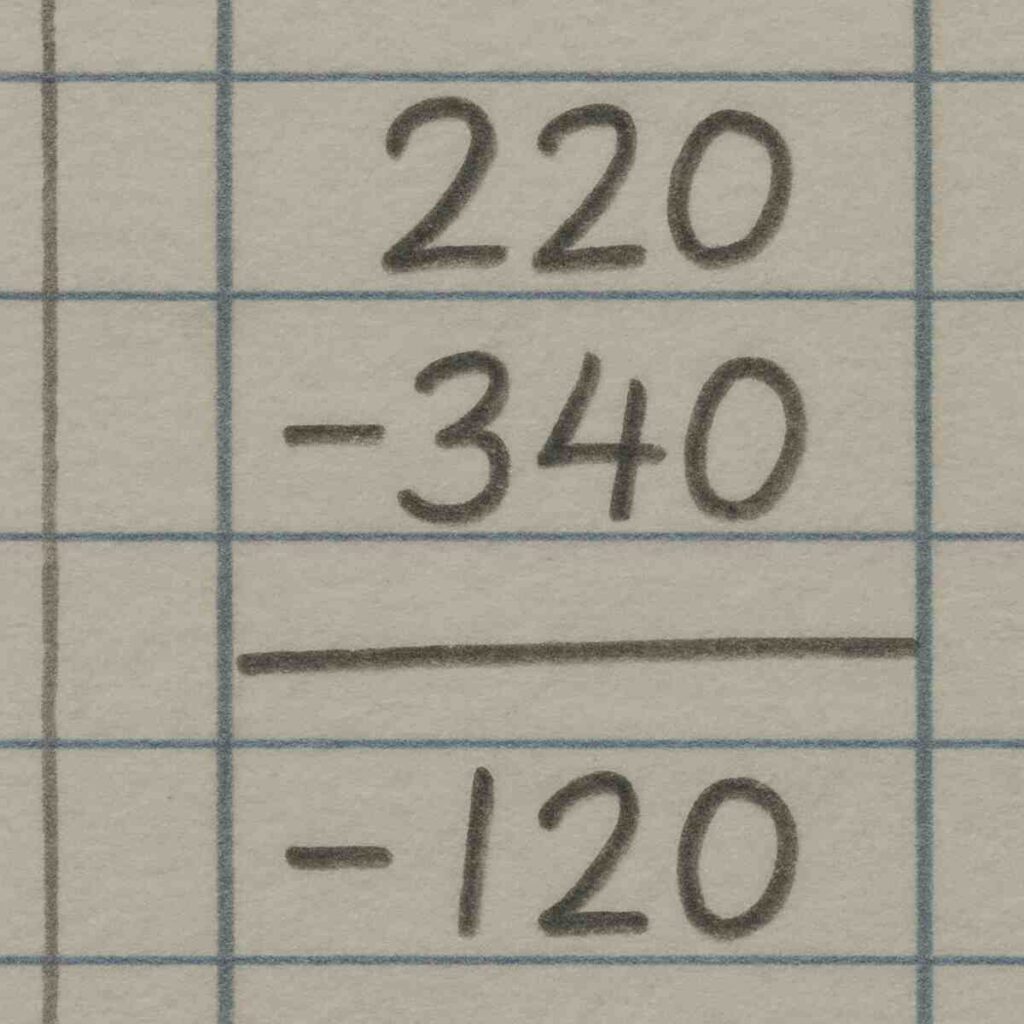
Let’s walk through an example. Imagine your team bids 8 Diamonds, which is worth 280 points. The hand is played, and you only manage to win 6 tricks. Because you didn’t win the 8 tricks you promised, you’ve gone under. Your team receives a score of -280 for that round.
On the score sheet, you would write “-280” in your team’s column and subtract that amount from your current total. If your score was 400, your new score would plummet to 120. It’s even possible to have a negative overall score! While the bidding team is either celebrating or licking their wounds, what about the other team? They were taking tricks, too.
Do the Other Team’s Tricks Count? Scoring for the Defenders
Absolutely. The tricks won by the non-bidding team—often called the “defenders”—are a crucial part of scoring the 500 card game. While they can’t win or lose hundreds of points in a single round like the bidders, they consistently add to their score. The rule is simple: the defending team scores 10 points for every single trick they win.
Let’s stick with our previous example: Your team bid 8 Diamonds but only won 6 of the 10 available tricks. While your team is taking a -280 point penalty, the defenders’ hard work pays off. They won the remaining 4 tricks and earned 40 points (4 tricks x 10 points). This holds true even if you had made your bid. If you had won 8 tricks, they would have won 2, earning them 20 points. No matter the outcome of the bid, the defenders always get their points.
On the score sheet, you’d simply write “40” in the defenders’ column and add it to their running total. Many players keep a separate tally for these 10-point gains to distinguish them from the larger bid points, but simply adding them to the main score works perfectly well.
How to Score Special Bids: Nullo, Misère, and Open Misère
Beyond bidding on suits, 500 has a fascinating twist where the goal is to lose, not win. When a player bids Nullo (also called Misère), they are making a bold promise to win zero tricks. It’s a high-risk, high-reward play that completely changes the objective for a single round.
Unlike suit bids where points change based on trick number, the scoring for these bids is fixed. According to standard Australian 500 scoring rules, the values are straightforward:
- Nullo / Misère: Succeed by winning no tricks and you get 250 points. If you fail and take even one trick, you lose 250 points.
- Open Misère: A much harder version that scores 500 points. Succeed and get 500; fail and you lose 500.
One of the most important rules for these bids is that the bidder plays alone. When a player bids any kind of Misère, their partner places their cards face-down and sits out for the entire hand. The lone bidder must then face off against both opponents. Because the round is only about the bidder’s success or failure, the defenders do not score their usual 10 points per trick.
So, what makes an Open Misère worth double the points? In this difficult bid, after the first trick is played, the bidder must lay their entire hand face-up on the table for everyone to see. The opponents then have a perfect roadmap to try and force a trick onto the bidder, making success a true accomplishment.
When Do You Win? Understanding the End of the Game
The name of the game itself is your biggest clue for how many points are needed to win. The first team to reach a cumulative score of 500 or more points instantly wins. It doesn’t matter if you clear the bar by one point or two hundred; the moment a successful bid pushes your team’s total to 500 or higher, the game is over.
On the flip side, there’s also a way to lose automatically. If a team’s score ever drops to -500 or lower from a string of failed bids, they immediately lose the game. This rule for handling negative scores means big penalties can end the game just as decisively as big wins.
These two thresholds create a “sudden death” finish. The game concludes the instant a team crosses either +500 or -500, with no need to finish the hand.
Is a Scoring App Better? Digital vs. Paper Score Pads
The choice between a modern app and a classic piece of paper comes down to convenience versus tradition. Both get the job done, but they offer very different experiences for your game night.
The classic paper score sheet has a timeless, communal feel. Everyone at the table can see the running total, and there’s a certain satisfaction in penciling in a huge, game-winning score. Using a printable 500 scoring template means you’ll never be caught without one, but you are in charge of all the math, which can slow things down.
On the other hand, a dedicated 500 card game scoring app automates everything. These apps have the point values for every possible bid built right in, so they handle all the calculations and prevent errors. The main drawback is a social one; it can put one person on their phone, which might detract from the unplugged, face-to-face fun of a card game.
Ultimately, the choice depends on the vibe of your game. If you value convenience and accuracy, an app is a fantastic tool. If you prefer a more traditional and transparent game night, paper is the way to go.
Putting It All Together: Scoring a Sample Game Round-by-Round
To see how all these rules connect, let’s walk through a few hands of a game. Imagine you are the scorekeeper for your team (“We”) playing against “They.” You have a blank score sheet, and the first hand has just been dealt.
In Round 1, your team bids 7 Hearts and successfully wins 8 tricks. Since you met your bid, you check the 500 bidding and scoring chart, find that 7 Hearts is worth 220 points, and write “220” in the “We” column. The score is now We: 220, They: 0.
For the next hand, the other team bids 8 Spades but only manages to win 7 tricks. Because they failed their bid, they “go under.” An 8 Spades bid is worth 240 points, so you mark “-240” in the “They” column. The running total is now We: 220, They: -240.
In Round 3, your team wins the bid again with 6 Clubs. You win 7 tricks, easily making your bid and adding 60 points to your score. The other team, however, won the remaining 3 tricks. For this, they earn 10 points per trick, so you add “30” to their column.
After just three rounds, your score sheet tells a story. This 500 score sheet layout example shows your team with a running total of 280 (220 + 60), while the other team is at -210 (-240 + 30). From here, you just repeat this process until one team reaches the finish line.
Your 500 Scoring Questions, Answered
Once you master the rhythm of bidding, playing, and scoring, a few common “what if” scenarios always seem to pop up. Knowing how to handle them is key to a smooth game night.
Here are quick answers to the most frequent questions:
- How does scoring for 3-player 500 work? In a three-player game, there are no permanent teams. The player who wins the bid plays alone against the other two, who form a temporary partnership. You keep score for each person individually. If the bidder makes their contract, they get the points; if not, they lose them. The two defenders each get 10 points for every trick they take together.
- What are “Australian Rules”? The Australian 500 scoring rules often involve adding a Joker to the deck as the top trump and may have different point values for Misère bids. This is a great example of a regional variation.
- What if we forget to write down a score? There’s no official penalty. The best solution is to agree as a group. Try to reconstruct the hand to remember the outcome. If you can’t, the fairest option is usually to declare it a misdeal and simply replay the hand.
The most important rule is to clarify any house rules or variations before the first card is dealt. This ensures everyone is on the same page and keeps the focus on playing the game.
Ready to Keep Score?
The 500 card game score sheet is no longer a mystery. You now know how to score the game from start to finish—tracking successful bids, subtracting penalties for failed ones, and correctly awarding points to the defenders. You have transformed a potential point of confusion into a tool for a great game.
With these skills, you can keep the game moving smoothly and ensure the focus stays on fun, not on frustrating arguments over points. Your confidence in managing the score sheet allows everyone else at the table to relax and simply enjoy the play.
So, what are you waiting for? Grab a deck of cards with some friends, deal the first hand, and get ready to keep score with confidence. You’ve got this.