


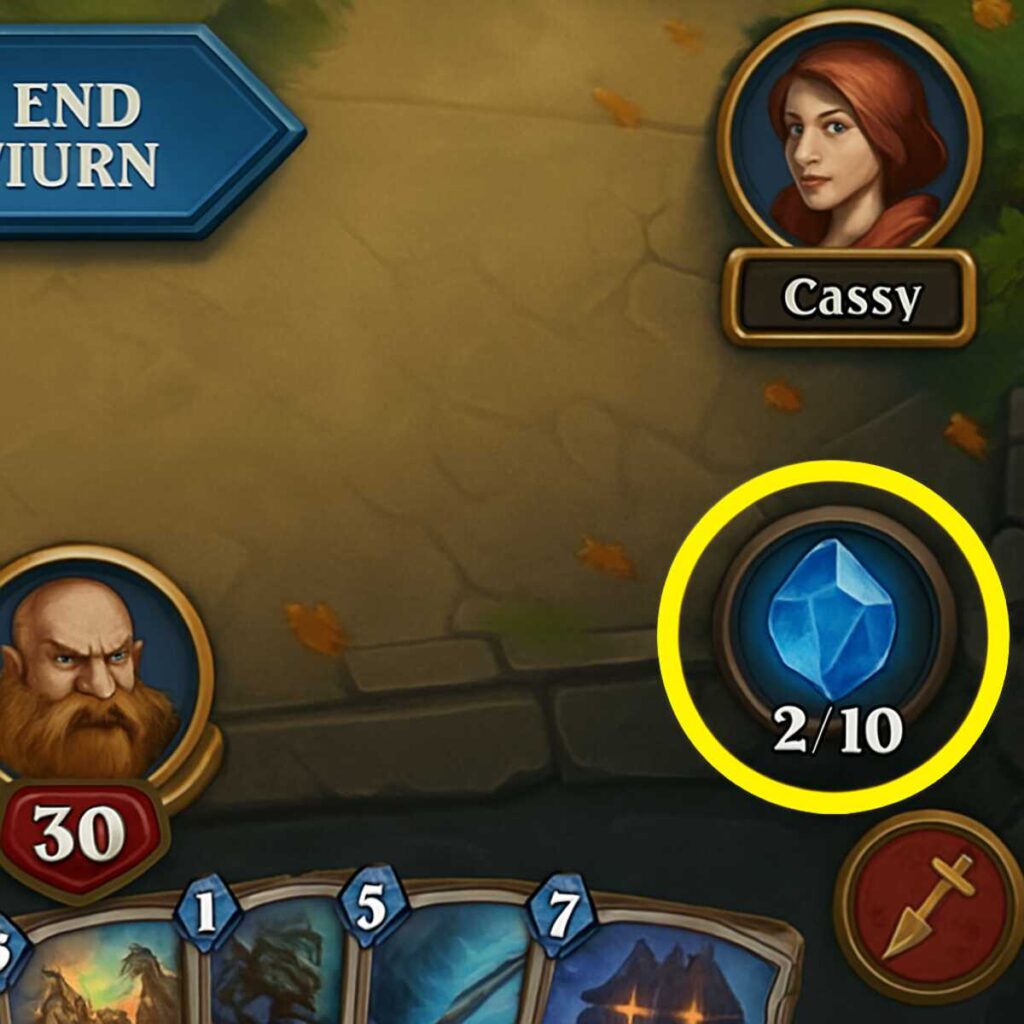
Have you ever seen a friend or a streamer playing a heroic card game like Hearthstone and felt a little dizzy? With flashing cards, glowing numbers, and dragons everywhere, it’s easy to think these games are only for experts. But what if the entire game came down to just one number? Think of it like a boxing match. The first person to get their opponent’s health down to zero wins. That’s the entire goal of any turn-based card strategy game you’ll ever play. To find more, check on UFAZEED
Both you and your opponent start with a Player Health total, usually 20 or 30, displayed prominently on screen. Every move you make, from summoning a creature to casting a spell, is designed to do one of two things: protect your own health number or chip away at your opponent’s. All the flashy animations and complex-looking cards you see are just tools to help you win that simple race to zero.
So where do these tools come from? They come from your Deck. Your deck is like your army; you don’t know which soldier will be ready for battle next, only that it contains all the warriors and spells you chose. Each turn, you draw a new card from this deck, giving you a fresh set of options for attacking your opponent or defending yourself. Understanding these three core ideas—the final goal, your health, and your deck—is all you need to play your very first match.
The Engine of Everything: How “Mana” Lets You Play Cards
So, how do you actually summon a dragon or cast a fiery spell? The answer is a resource you get every turn, most often called Mana or Energy. Think of it as your budget. It’s the ‘money’ you have to spend to play your cards. Every action, from placing a small creature on the board to unleashing a massive finisher, has a cost that you’ll pay from this turn’s budget.
Unlike a real-life budget, however, this one refills and grows automatically. On your first turn, you’ll have just 1 Mana. On your second turn, you’ll have 2. Then 3, and so on, usually up to a maximum of 10. This gradual increase paces the entire match. Early turns are for smaller plays, while the truly epic, game-changing moments are saved for later when your budget is much larger.
This simple system creates the central puzzle you’ll solve each turn. Every card in your hand has a cost, usually a number in its corner. If you have 5 Mana for your turn, you can play any card that costs 5 or less—perhaps one 5-cost card, or a 2-cost and a 3-cost card together. Making the right choice is what it’s all about. But once you’ve paid a card’s cost to get it onto the field, it’s time to see what it can actually do.
How to Read Your First Card: The Basics of Attack and Health
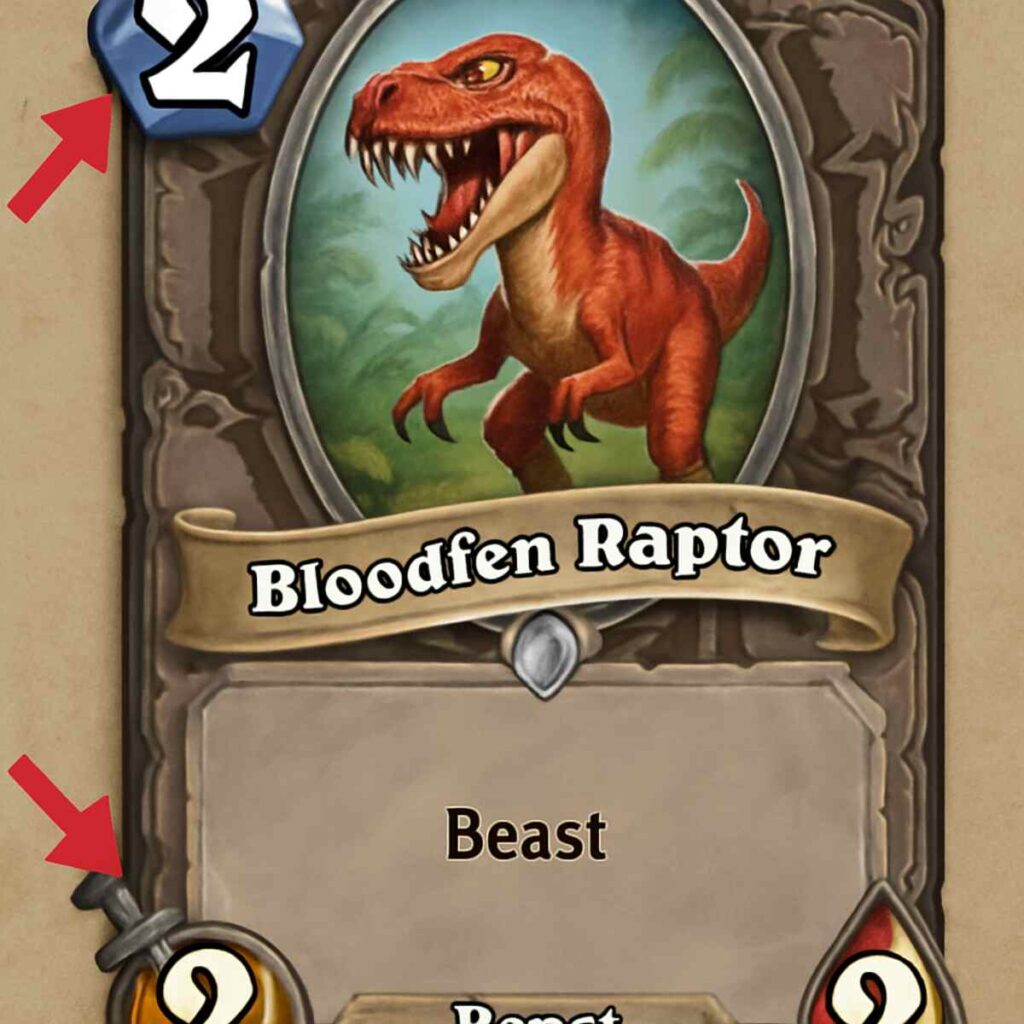
Once you spend Mana to play a card, it appears on the game area, often called the board. If that card is a creature or a character, you’ll notice it has a few important numbers on it. Let’s look at the three most common stats, which you can see highlighted on the card image here:
- Cost: The number in the top corner. We already know this one—it’s the Mana price you paid.
- Attack: The number on the bottom left. This is how much damage the creature deals when it fights.
- Health: The number on the bottom right. This is the creature’s toughness, or how much damage it can take before being defeated.
Think of these stats as a creature’s basic toolkit. Attack is its sword; Health is its shield. A creature with a high Attack value is a great damage-dealer, perfect for taking down enemy threats. On the other hand, a creature with high Health is a sturdy defender that can survive a few hits and protect your hero. Your creatures stay on the board after you play them, creating your own personal army that’s ready to follow your orders turn after turn.
So, what happens when they finally clash? It’s simple math. If your 2-Attack creature attacks an enemy creature that has 2 Health, you’ll deal exactly enough damage to defeat it. The defeated creature is then removed from the board. Importantly, damage on creatures is usually permanent. If your 5-Health creature takes 2 damage, it will remain on the board, but with only 3 Health left for the rest of its life. Now that you can read a card, you’re ready to actually play one.
Your First Turn: How to Play a Creature and Build Your Board
With Mana in your pool and a creature card in your hand, you’re ready to make your first move. In most digital card games, you simply click and drag the card from your hand into the central play area. As long as you have enough Mana, the game will let you place it down. The Mana is spent, and your creature appears on the field. This simple action—playing a card from your hand—is the foundation of every turn.
That central play area where your card lands is commonly called the board or battlefield. Think of it as the no-man’s-land between your hero and your opponent’s. Every creature you and your opponent play will exist here, creating an ever-changing landscape of threats and defenders. Your goal is to build a stronger presence on the board than your opponent, giving you the power to control the game.
There’s just one small catch to be aware of. Most creatures can’t attack on the very same turn they are played. They need a turn to get their bearings, a bit like a soldier arriving on the battlefield who needs a moment before charging. This means your new creature can block or defend if attacked, but its own attack will have to wait. Don’t worry, though—once your next turn begins, it will be fully prepared to fight.
Time to Fight! How to Use Your Creatures to Attack
Okay, your next turn has begun, and the creature you played is now ready for action. Making it attack is usually as simple as clicking it and dragging an arrow to your target. But what should you target? You have two main choices: attack your opponent directly to lower their health, or attack one of their creatures on the board.
Choosing your target is a critical part of your strategy. Hitting the opponent directly is tempting—it’s how you win, after all! But sometimes, leaving their powerful creatures on the board is more dangerous in the long run. By using your creatures to attack theirs, you can “trade” to remove a threat. This helps you control the board, preventing your opponent from building an overwhelming force. It’s a constant balance between chipping away at their hero’s health and managing the battlefield.
When one creature attacks another, the fight is swift and simultaneous. Both deal their Attack damage to each other at the exact same time. If a creature’s Health drops to zero or below, it’s defeated and removed from the board. For example, if your 4/3 creature (4 Attack, 3 Health) attacks a 2/2, your creature deals 4 damage (defeating it), while theirs deals 2 damage back. Your creature survives the battle, but with only 1 Health left!
What About “Magic”? Understanding Spell Cards
Besides creatures that stay on the battlefield, your hand will often contain powerful Spell cards. Unlike a creature that acts like a persistent soldier, a spell is a one-time event. Think of it like a magical firework: you launch it for a spectacular, immediate effect, and then it’s gone. You still pay its Mana cost, but instead of putting a character on the board, you’re creating an instant impact. This simple but crucial difference is central to game strategy.
These magical effects offer solutions that go beyond creature combat. You might draw a spell that acts like a direct blast of fire, damaging your opponent or their toughest monster without risking your own creatures in battle. Other spells can give you a strategic advantage, such as letting you draw extra cards to refill your hand with new options, or even magically healing your hero or a wounded ally. Spells are your tactical surprises, perfect for turning the tide of the game in a single moment.
After a spell’s effect happens, the card is considered used up and is moved to a special area called the “discard pile,” or more thematically, the Graveyard. This is the same place your defeated creatures go. Spells provide potent, single-use moments, but what if your hero had a repeatable ability to use every turn? This is where hero powers come in, giving you another way to gain an edge.
What Are Hero Powers? Your Hero’s Special Ability
Beyond the cards in your hand, your hero themselves brings a unique talent to the fight. This is called a Hero Power—a small, special ability you can use once every turn, usually for a low cost of 2 Mana. Think of it as your hero’s signature move. It’s not as powerful as playing a huge dragon, but it’s a reliable and consistent option that’s always available.
For example, in a game like Hearthstone, the Mage hero can spend 2 Mana to deal 1 point of damage to any target. This is perfect for finishing off a wounded enemy or when you don’t have a good card to play. Each hero’s power is designed to fit their character, giving you a hint about their overall game plan. This provides a reliable option for your strategy, especially on turns where you have unspent Mana.
Mastering your Hero Power isn’t about winning the game in one big move. It’s about gaining small, steady advantages turn after turn. Learning when to use it versus saving your Mana for a bigger card is a foundational skill. Now that you know about creatures, spells, and hero abilities, you might notice some cards in your collection just look more impressive than others.
Why Are Some Cards Shiny? A Simple Guide to Card Rarity
As you start collecting cards, you’ll quickly notice that some just look different—they might have a special glow, a colored gem, or a fancy border. This isn’t just for show; it signals the card’s rarity. Like with real-world trading cards, some are printed in huge numbers while others are incredibly scarce. This system makes opening a new pack of cards exciting because you never know when you might find a legendary hero.
Most games use a similar color-coded system to make rarity easy to spot. While the specific names can vary, the progression is a great starting point for understanding a card’s value:
- Common (White or no color)
- Rare (Blue)
- Epic (Purple)
- Legendary (Orange or Gold)
Legendary cards are often famous characters or game-changing artifacts, and you’re typically only allowed to put one copy of any single Legendary into your deck.
It’s tempting to think a deck filled with only shiny purple and orange cards is the key to victory, but that’s a common beginner’s mistake. A successful deck needs a strong foundation of Common and Rare cards to function. Think of it as an army: you need your reliable soldiers (Commons) just as much as you need your powerful general (a Legendary). This balance is a core part of building a good deck.
So, what do you do with extra copies? Nearly all modern digital card games have a crafting system. You can “disenchant” or recycle unwanted cards, breaking them down into a crafting resource (often called “Dust” or “Shards”). You can then use this resource to create the exact cards you’re missing. With this knowledge, you’re ready to learn how to put your first deck together.
How to Build Your Very First Deck: The “Rule of Tens”
Staring at a big collection of cards can feel like trying to cook a meal with a thousand random ingredients. It’s tempting to just throw in all your powerful, high-cost cards, but that often leads to a hand you can’t play in the early turns. Instead, start with a simple recipe: the “Rule of Tens.” This easy-to-remember guideline is a fantastic foundation for your first deck.
For a typical 30-card deck, this rule is your best friend. Simply pick ten cheap cards (costing 1-3 mana), ten mid-range cards (4-6 mana), and ten expensive, game-ending cards (7+ mana). This mix ensures you always have a plan. In the first few turns, you can play your cheap cards to get on the board. As the game progresses and your mana pool grows, you’ll be able to unleash your stronger threats, giving you a solid plan for every stage of the match.
This “Rule of Tens” isn’t a strict law, but it’s an amazing starting point. Think of it as training wheels. As you play more games, you’ll start to see which cards you love and which ones feel clunky. Don’t be afraid to swap them out and experiment! This process of tweaking and refining is a core part of developing your strategy and making a deck that feels truly yours. Now that you have a recipe for success, let’s explore some of the best places to test out your new creation.
Three Great Games for Your First Heroic Adventure
Now that you have a recipe for building a deck, it’s time to find the right battlefield. The world of digital card games is huge, but you don’t need to try them all. A few stand out as fantastic, welcoming places for new players.
Choosing the right one often comes down to personal taste. Each offers a unique twist on the core formula, making them great choices for beginners. To help you decide, here’s a quick look at three of the most popular choices available today.
- Hearthstone: The Polished Classic. If you want the quintessential heroic card game experience, start here. Hearthstone is famous for its friendly, cartoony fantasy art and the best new-player tutorial in the business. It holds your hand just long enough for you to feel confident.
- Marvel Snap: The Speedy Superhero Game. Don’t have 20 minutes for a full match? Marvel Snap games are over in about three. It’s a super-fast, simple, and exciting game where you slam down your favorite Marvel heroes to control different locations.
- Legends of Runeterra: The Generous Collection-Builder. For players who love earning rewards and building a huge library of cards without spending money, this is your game. It offers deep strategy with an incredibly generous reward system.
Ultimately, your best bet is to pick the theme that excites you most—be it classic fantasy, superheroes, or the rich world of League of Legends. All of these are excellent starting points and are available on mobile. But what if you’re not quite ready to face a real opponent just yet?
Don’t Want to Play People Yet? Try Single-Player Modes
The idea of facing another person online can be daunting, especially when you’re just learning. What if you make a mistake or feel too slow? Fortunately, every major heroic card game has a perfect answer for this: solo play. It’s a fantastic, stress-free training ground where you can get comfortable before ever challenging another player.
You’ll find these under names like “Adventures,” “Story Mode,” or “Campaigns.” These modes present you with a series of computer-controlled opponents, often tied together with a fun narrative and unique challenges. It’s like the story mode in any other video game, but designed to teach you the ropes, which makes them a great way to learn.
Playing through these adventures is more than just practice; it’s a guided tour. You’ll learn the core rules at your own pace, try out powerful cards without fear, and usually earn free packs and rewards just for playing. After a few of these solo missions, you won’t just understand the game—you’ll feel ready for it.
You’re Ready: Your Simple Plan to Play Your First Match
Before, a screen full of glowing cards and numbers might have looked like a foreign language. Now, you see the story of a battle unfolding. You can spot the hero’s health, the cost of a card, and the path to victory. It’s not so scary after all, is it?
Everything you’ve learned boils down to a simple rhythm. Each turn, you gain a bit more power—your Mana. You spend that power to summon allies and cast spells from your hand. Then, you use those allies to bring the enemy hero’s health to zero.
You now possess all the fundamental knowledge needed for getting started with card games. You understand the core loop and the meaning behind the numbers, which is more than enough to step onto the battlefield for the first time with confidence.
Your next step is simple: Pick one of the games that excites you, download it, and play through the tutorial. You have all the fundamentals you need. It’s your turn.