



With millions of creators online, you might wonder, “How could anyone possibly get noticed?” The secret isn’t shouting the loudest; it’s speaking to the right people. Before you even think about cameras or microphones, your most essential tool is your niche—the specific topic you decide to focus on. Think of the internet as a giant bookstore. Instead of trying to be the entire store, a niche allows you to become the go-to expert in a single, well-defined aisle, like “Historic Baking Recipes” or “Beginner Woodworking Projects.” This makes you much easier for the right audience to find. Obtain the Best information about content creator.
In practice, starting small is how you grow big. A creator making generic “cooking videos” is competing with everyone. But a creator who focuses on “30-minute vegan meals for busy parents” immediately attracts a specific audience searching for that exact solution. This is the foundation of building a personal brand online; you become the answer to a particular question or the guide for a specific interest. Your niche tells followers exactly what to expect, turning casual viewers into a loyal community.
So, how to find your content niche? It starts with looking inward. Grab a piece of paper and answer these three simple questions to brainstorm ideas:
- What topic could I talk about for hours without getting bored?
- What problems do I enjoy solving for myself or others?
- What skills or hobbies do friends already ask me for help with?
The sweet spot where your passion, skills, and an audience’s need intersect is often where your perfect niche is hiding.
Your First Creator Toolkit: Essential Gear You Already Own
When you picture someone making online content, you might imagine a room full of expensive cameras, bright lights, and fancy microphones. For most people starting out, that picture is a myth. The most essential equipment for making videos is probably already in your pocket or sitting on your desk. The barrier to entry isn’t your bank account; it’s simply knowing how to use what you have.
You only need three things to begin: a modern smartphone, a source of natural light, and a quiet space. Your phone’s camera is more than powerful enough for clear, crisp video. A quiet room, like a bedroom with the door closed, ensures your audience can actually hear what you’re saying without distracting background noise. These simple elements form the foundation of how to start making online content that people can enjoy.
For a huge boost in quality without spending a dime, use a window as your main light source. Instead of filming with a bright light or window behind you, turn around and face it. As shown in the image, you can prop your phone on a stack of books and let the soft, natural light illuminate your face. This one simple trick makes videos look dramatically more professional and inviting.
Viewers connect with ideas and personality, not expensive gear. A fascinating niche topic explained with passion on a smartphone will always outperform a boring video shot on a Hollywood-grade camera. Before worrying about upgrading your equipment, the most important question is what you want to share. Once you have an idea, the next step is deciding where to post it.
Where Should You Post? A Simple Guide to Today’s Top Platforms
Once you have an idea and a smartphone, the next question is where your content should live online. This “where” is called a content platform, which is just the website or app you use to share your work. Choosing the right one is like picking the right stage for a performance; a magic show doesn’t belong in a concert hall, and your content will thrive when it matches the audience’s expectations. Each platform has its own personality and purpose.
Think about the length and style of what you want to create. If your niche involves detailed tutorials, in-depth reviews, or storytelling—like explaining how to restore an old chair—then YouTube is your best bet. It’s the home of longer video, where viewers expect to settle in and learn something. In contrast, if your ideas are better suited for short, catchy videos—like a 30-second recipe hack or a quick comedy sketch—then TikTok and Instagram Reels are where you’ll find your audience.
Not every creator is a videographer. For those who excel with stunning photography or the written word, other platforms are a better fit. Instagram’s main feed is still a powerhouse for visual artists, designers, and food bloggers who tell stories through high-quality images. And if you love to write, starting a blog or an email newsletter gives you a direct, personal connection with readers who appreciate your insights on anything from personal finance to classic literature.
The most important piece of advice is to pick one and do it well. Trying to post everywhere at once is a recipe for burnout. The best platforms for creative professionals are the ones they can truly master. By focusing on a single platform, you give yourself the time to learn what works, build a community, and create a consistent rhythm. After all, great content isn’t about being everywhere; it’s about being valuable somewhere.
The Secret to Great Content: Simple Digital Storytelling Techniques
It doesn’t matter if you’re on YouTube or TikTok; the secret to keeping an audience’s attention follows a timeless pattern. Think of every post or video as a mini-story with a beginning, a middle, and an end. In the world of content, we call this the Hook, the Value, and the Call-to-Action. Mastering this simple flow is one of the most effective digital storytelling techniques for anyone starting out, transforming a random post into a memorable piece of content.
The Hook is the most critical part. You only have about three seconds to convince someone to stop scrolling. A great hook can be a surprising question (“Are you using your can opener wrong?”), a fascinating visual, or a bold promise (“I’ll show you how to bake perfect bread in under an hour”). This is the foundation of any good social media engagement strategy because it immediately answers the viewer’s unspoken question: “Why should I care?”
Once you’ve hooked them, you deliver the promised Value—the repair tip, the recipe, or the funny story. You finish with a Call-to-Action (CTA), a simple instruction telling your audience what to do next. It could be asking them to ‘leave a comment’ or ‘follow for more tips.’ A clear CTA is one of the best audience growth tips for beginners, as it turns a passive viewer into an active community member. And building that community is the first step toward answering the next big question…
How Do Creators Actually Make Money? The Three Main Income Streams Explained
Once a creator builds a community, the big question always follows: where does the money come from? It rarely comes from the platforms themselves. Instead, creators turn their audience’s attention into income through a process called monetization. This is just a business term for the different ways a creator can get paid for the free content they produce. The answer to how much money do online creators make almost always involves mixing and matching a few different methods.
For most creators, income doesn’t arrive as a single paycheck but flows in from several different sources. This mix of content monetization strategies is key to building a stable career. The three most common pillars of the creator economy explained in its simplest form are:
- Advertising Revenue: Money from automated ads shown with your content.
- Brand Sponsorships: A brand pays you to feature their product.
- Affiliate Marketing: You earn a commission when someone buys a product you recommend.
To make this clearer, think of it in familiar terms. Advertising revenue is like commercials on TV; creators get a small cut when ads run before or during their YouTube videos. A sponsorship is more like product placement in a movie, where a company pays a creator directly to use or review their product in a post. Finally, affiliate marketing works like a referral bonus; if a creator shares a link to a product and you buy it, they get a small percentage of that sale at no extra cost to you.
These three methods are the bedrock of earning a living as a creator, but they all rely on an intermediary—an ad network, a brand, or a retailer—to get paid. They are powerful, but they aren’t the whole story. As the relationship between a creator and their audience deepens, another powerful path to earning an income emerges: getting support directly from the community itself.
Going Deeper: Earning an Income Directly From Your Audience
Beyond relying on outside companies, many creators build a more stable career by earning an income directly from the people who love their work. This often happens through memberships, which work like a digital fan club. Using platforms like Patreon or similar Patreon alternatives for monetization, loyal followers can pledge a small amount of money each month—often just a few dollars—in exchange for bonus content, behind-the-scenes access, or a closer connection with the creator. It’s a way for the audience to say “thank you” on a regular basis while helping their favorite creator maintain a predictable income.
Another powerful part of many content monetization strategies involves selling digital products. Instead of ongoing support, this is a one-time purchase where a creator packages their expertise into something you can download. For example, a creator who teaches baking might sell a digital recipe book, while a photographer could sell a pack of their custom photo filters. This allows them to turn their knowledge directly into a product without needing to manage physical inventory, creating an income stream that can work for them even while they sleep.
These direct-to-audience methods are transforming how much money creators can make. By building an income that isn’t completely dependent on ad views or brand deals, creators gain more financial stability and creative freedom. They can focus on serving their core audience without having to chase viral trends. Whether it’s through sponsorships or selling an e-book, all these strategies rely on the same foundation: building a loyal community that trusts what you have to say.
Growing Your Audience: Three Simple Rules for Your First 100 Followers
Building that loyal community from scratch can feel daunting, but it doesn’t require a viral moment. One of the most effective audience growth tips for beginners is simply creating a content schedule. Think of it like your favorite weekly TV show; your audience learns when to expect something new from you. Whether it’s a new video every Tuesday or a blog post every Friday morning, this consistency builds anticipation and trust, encouraging people to come back on their own.
Once people start showing up, the next step is to treat them like the first guests at a party. A simple but powerful social media engagement strategy is to respond to every single comment you receive. Ask questions in your captions to invite conversation, and when someone replies, keep it going. This shows your first followers that there’s a real person behind the screen who values their input, turning passive viewers into an active community.
You don’t need a giant marketing plan to get your first handful of followers, either. Instead of shouting into the void, start by sharing your content with a few people who might genuinely enjoy it. This could be as simple as telling a few friends or posting in a small, relevant online group where you’re already an active member. The goal isn’t to reach everyone, but to reach the right people who will form the foundation of your audience.
These steps are less about chasing metrics and more about building a personal brand online through genuine connection. As this small group of followers grows and your identity takes shape, a new question often emerges: are you building a community as a “creator,” or are you becoming an “influencer?”
Creator vs. Influencer: What’s the Real Difference?
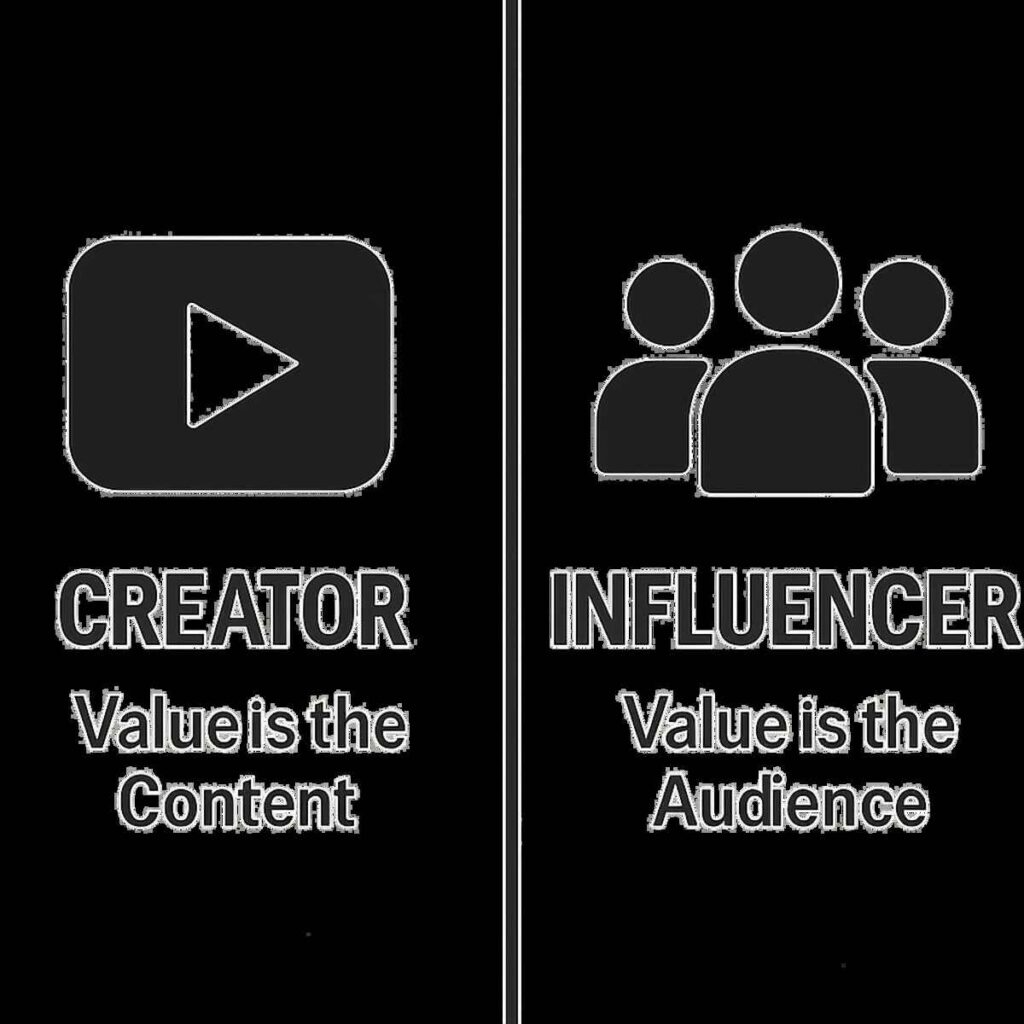
You’ve probably heard the terms “creator” and “influencer” used almost interchangeably, and it’s easy to see why the lines get blurry. The real distinction in the influencer vs digital creator debate, however, comes down to a simple question: what is the primary source of value? For a content creator, the value is the content itself—the well-edited video, the beautifully written article, or the helpful tutorial. For an influencer, the value is their audience—the trust, connection, and sway they hold with their followers.
A good way to understand this is to think about what each role “sells.” A woodworker who films her projects and sells the detailed building plans online is acting as a creator; her audience pays for the content. On the other hand, a lifestyle personality who is paid by a brand to feature a new skincare product in their morning routine is acting as an influencer; the brand is paying for access to that person’s audience and credibility. The product isn’t the content, but the influence it carries.
In today’s creator economy, explained simply, most successful people are a blend of both. A popular food blogger is a creator when they develop and share a unique recipe. They become an influencer when a grocery delivery service pays them to use their ingredients in that recipe video. Juggling these two roles—making valuable content while also managing brand partnerships—is a huge part of the job. It’s also why the unseen work behind the screen can be so demanding.
The Unseen Work: How to Avoid Creator Burnout Before You Even Start
That constant demand to be creative, engaging, and “on” can take a serious toll. Imagine having to come up with a fresh, exciting idea every single day, while also knowing that an audience is waiting to see it. This relentless pressure is what leads to creator burnout—a state of emotional and creative exhaustion that many in the field face when the passion starts to feel like a hamster wheel.
So, how can a new content creator sidestep this common trap? One of the best strategies for avoiding creator burnout is to set a realistic schedule from day one. You don’t need to post daily; consistency over a long period is far more valuable. Another key is to let go of perfection. Instead of spending 20 hours on a single “perfect” video, sometimes publishing a “good enough” one keeps the momentum going and prevents you from getting stuck in a cycle of self-doubt.
Building a personal brand online is a marathon, not a sprint. Treating content creation like a sustainable practice, rather than an endless performance, is the secret. That means scheduling breaks and giving yourself permission to rest are not signs of failure—they’re essential business decisions. An audience will always connect more with a creator who is balanced and authentic than one who is clearly exhausted. With the right mindset, you can build something that lasts.
Your Journey as a Creator Starts With a Single Idea
You’ve now pulled back the curtain on one of the most visible yet misunderstood careers of our time. Where you once might have seen someone just talking to a camera, you can now recognize the blueprint of a modern entrepreneur. You see the blend of creativity, business strategy, and community-building that turns a personal passion into the work of a content creator. The “magic” of going viral has been replaced by an appreciation for the consistent effort it takes to build something from scratch.
This new lens might spark a question: “Could I do that?” Before you think about cameras or software, the real first step on how to start making online content is much simpler. It’s about clarity, not equipment. If you wanted to start today, what is one small idea you are genuinely excited to share? It doesn’t need to be world-changing; it just needs to be yours. This is the seed from which every digital creator‘s journey grows.
You don’t need a studio or a business plan to begin. You just need one question answered, one skill shared, or one story told. The journey of every creator you now understand began with that same small spark of inspiration. So, what’s one small thing you’re curious enough to share with the world?
