


Does this sound familiar? You’re busier than ever—answering emails, serving customers, and shipping orders. You feel like you’re on a hamster wheel, working hard but with no real idea if your business is actually getting stronger. This gap between being busy and being healthy is where so many small business owners feel lost. You’re making sales, but are you making real progress? To find more, check on business health check
You wouldn’t wait for a major illness to see a doctor. You go for regular checkups to catch small problems before they become big ones, and a simple business health check works the same way. In practice, the primary benefits of a regular company review aren’t found in complex reports but in the quiet confidence that comes from knowing where you stand. It’s a proactive way for you to check your business’s pulse, spot trouble early, and prevent major problems down the road.
The goal here isn’t a stressful audit; it’s to give you a clear, non-intimidating way to assess company performance. Forget intimidating spreadsheets and financial jargon. This process is about answering a few straightforward questions to trade anxiety for clarity. It’s about finally getting a real handle on what’s working, what isn’t, and where your hard work is truly paying off.
To get this clear picture, you’ll examine four key areas of your business, just like a doctor checking your vital signs. We’ll start with the most critical: your cash. From there, we’ll look at your profit, the health of your customer relationships, and finally, how smoothly your day-to-day operations are running. By the end, you’ll have the roadmap you need to move forward with confidence.
Vital Sign #1: Your Business’s Pulse—The 5-Minute Cash Check
The most honest vital sign of your business’s health isn’t a complex report; it’s the number in your bank account. Forget spreadsheets for a moment and just ask yourself one question: “Looking back over the last three months, has my business bank balance generally been trending up or down?” A single glance can tell you if more money is coming in than going out over time. This simple trend is your business’s pulse, and checking it is the quickest way to know if you have the cash to operate tomorrow, next week, and next month.
This is crucial because cash in the bank isn’t the same thing as making sales. Imagine you run an Etsy shop and sell $500 worth of products in a great week. That feels like a win, but the platform might not deposit that money into your account for several days. In the meantime, you still have to pay for shipping supplies and new materials. You are “profitable” on paper for that week, but your cash is tied up. This timing gap is one of the most common traps for new business owners.
Ultimately, the most dangerous sign of a financially unhealthy business is a bank balance that is consistently shrinking, even when you feel busy. A steady decline is a clear signal that your expenses are outpacing your real-time income. It’s the first thing to look for when you diagnose business cash flow problems and a non-negotiable part of any small business audit. To understand why your cash balance is moving, you need to look closer at the story behind the numbers: your sales versus your costs.
Why ‘Profit’ Isn’t What You Keep: The Invoice Lag Problem
If you’re a freelancer or offer a service, you’re familiar with the “send invoice and wait” game. This waiting period is for money that clients owe you—a concept some call “accounts receivable.” For you, it’s much simpler: it’s cash that’s earned but not yet in your bank account, and that delay can cause big problems.
That 30- or 60-day wait can be a silent business killer. While you’re waiting for a client’s payment to land, your own bills for software, rent, or supplies don’t pause. This gap is a common source of cash flow issues; you’ve technically earned the money, but you can’t use it to run your business today.
A powerful first step toward improving your cash flow is to simply change your payment terms. Requiring a 50% deposit upfront is a game-changer for many small businesses. This isn’t just a financial tactic; it’s a way of signaling with confidence that your work is valuable from day one.
Getting paid sooner closes the dangerous gap between making a sale and having usable cash. But having cash in hand is only half the battle. Is each sale actually making you money in the first place? To figure that out, you need a quick way to check if your prices are right.
Vital Sign #2: The ‘Napkin Math’ Profit Test for Any Sale
Being busy is not the same as being profitable. To truly understand your business’s health, you need a quick way to check if each sale actually puts money in your pocket. This simple “napkin math” is one of the most important key business performance indicators you can track, and you don’t need a spreadsheet to do it. It tells you if your pricing is working or if you’re just spinning your wheels.
The goal is to find the profit on a single item. To do this, you only need to look at the Direct Costs—the money you spend to make or deliver that one product or service. For a coffee shop, it’s the cup, coffee, and milk. For an Etsy seller, it’s the raw materials and shipping box. The formula is beautifully simple:
- Total Sale Price
- Direct Costs
- = Your Profit (per item)
Now, try this with your most popular product or service. If you sell a handmade candle for $25, and the wax, jar, and wick cost you $10, you make $15 in profit on that sale. But what if that number is only $2? Or worse, a negative number? This is a clear warning sign: being incredibly busy selling an item that barely makes you money. Knowing this number is your first step toward making better decisions. But these direct costs aren’t the whole story. What about the hidden expenses that aren’t tied to a single sale?
Are Hidden Costs Silently Sinking Your Business?
That $15 profit you calculated on your handmade candle feels great, but it’s not the final number. Beyond the direct costs of making a product, every business has Fixed Costs—the consistent bills you pay just to keep the lights on. Think of your website hosting fee, your business phone plan, or the rent for your workspace. These are your overhead, and you pay them whether you sell one item or one thousand. They represent the baseline cost of being in business, and understanding them is crucial.
The real danger with these expenses is how quietly they add up. A $20/month software subscription here, a $15/month design tool there—it seems harmless. This “subscription creep” can slowly drain your profits without you even noticing. When these small, recurring charges multiply, they can signal cash flow problems before they become a crisis. Performing a regular review of these expenses is a simple operational check that puts you back in control of where your money is going.
Here’s a powerful 15-minute exercise: pull up your last month’s bank or credit card statement and a highlighter. Go down the list and highlight every single recurring charge. For each one, ask yourself: “Is this absolutely essential to my business right now?” This simple check-in can often reveal hundreds of dollars in annual savings. Once you’ve started plugging these financial leaks, it’s time to find another hidden drain on your success: the activities that are quietly wasting your day.
Vital Sign #3: How to Find the ‘Time Sinks’ Wasting Your Day
Financial leaks aren’t the only drain on your business; time leaks can be just as damaging. These are the repetitive, low-impact tasks that fill your day but don’t actually grow your business. Think of them as “time sinks.” Performing a quick assessment of your own schedule is as critical as reviewing your bank statements. It helps you see where your most valuable, non-renewable resource—your time—is truly going.
To understand the real cost of these tasks, consider what you could have been doing instead. Every hour you spend wrestling with a clunky spreadsheet to create invoices is an hour you aren’t spending on marketing or talking to a new client. If a new client is worth $300, then that hour of frustrating admin work didn’t just cost you sixty minutes; it potentially cost you a $300 sale. This is the hidden price of inefficiency.
Here’s how you can pinpoint your biggest time sink. For just one workday, track exactly how much time you spend on what feels like your most tedious, repetitive chore. Is it packing and shipping orders? Manually posting to social media? Answering the same customer questions via email? Be honest and write down the total time. The result might shock you, but it’s the essential first step in creating an improvement plan for your daily routine.
Once you’ve put a number on that time sink, you gain control. You can now make an informed decision: can this task be automated with software, delegated to a freelancer, or eliminated entirely? By plugging this leak, you don’t just save time; you reclaim precious hours you can reinvest into strengthening client relationships. Speaking of which, let’s check the pulse of the people who keep your business alive: your customers.
Vital Sign #4: Checking Your Customer’s Pulse—New vs. Repeat Buyers
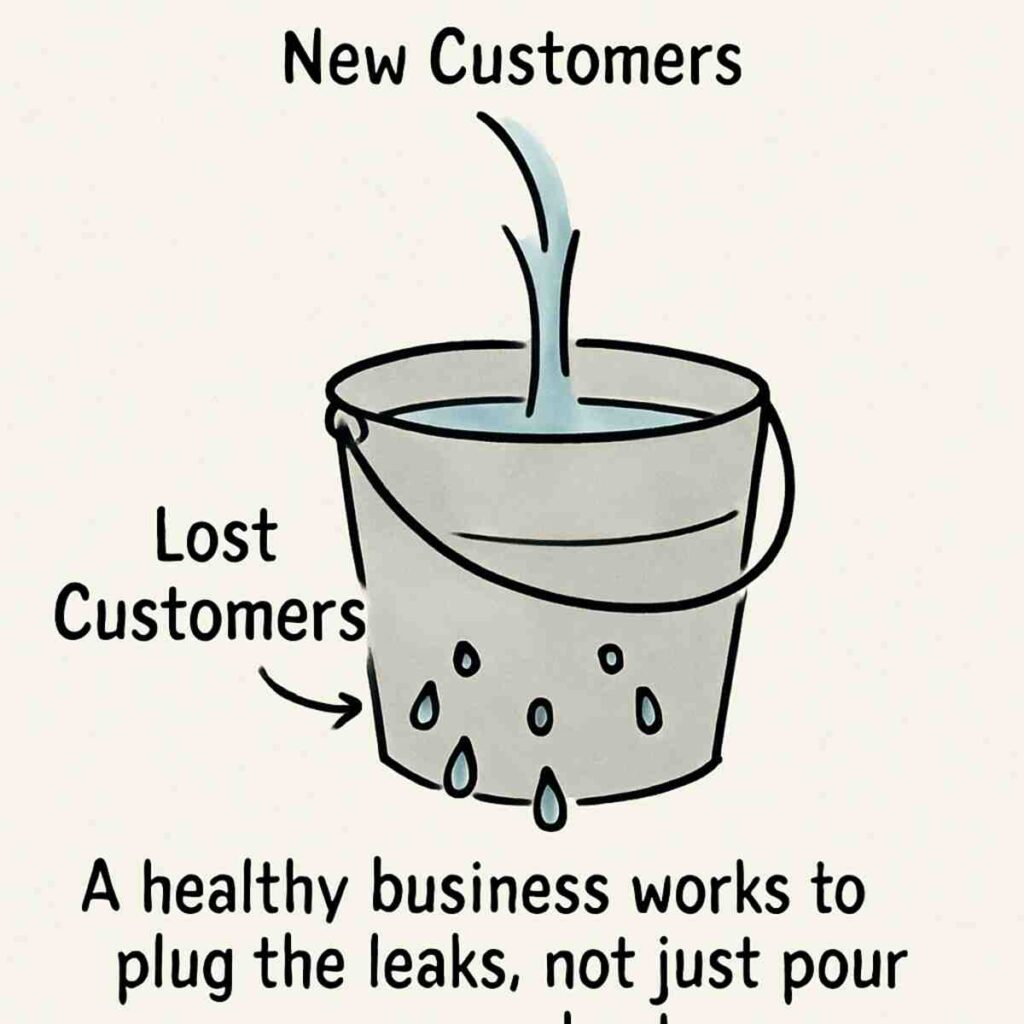
Getting a new customer feels fantastic, but the real magic for a sustainable business lies with the ones who keep coming back. Think of your business as a bucket. New customers are the water you pour in, but every customer who doesn’t return is a small leak. If you only focus on finding new people, you’ll be endlessly pouring water into a leaky bucket just to stay level. A truly healthy business works on plugging the leaks. This simple concept shows your product or service is so valuable that people can’t help but return.
You don’t need fancy software to check for these leaks. Just take a look at your sales from the last month. Go through the list of names and ask a simple question: “How many of these people are brand new, and how many have bought from me before?” Make two quick tallies on a piece of paper. This simple five-minute exercise gives you a surprisingly clear snapshot of your customer base and is a great first step in measuring business growth without complex spreadsheets.
So what does this mix tell you? If your list is almost all new names, your marketing is working, but you may need to focus more on creating an experience that encourages a second purchase. If it’s almost all familiar names, your loyal customers adore you, but you might be invisible to new audiences. Analyzing your position this way helps you decide where to focus your energy. A healthy balance is the goal. But knowing this ratio is just one piece of the puzzle. The next step is figuring out why customers are happy enough to stick around.
The Simplest Way to Know if Customers Are Happy (Without Annoying Surveys)
Knowing how many customers return is a great start, but the real power comes from understanding why. This isn’t about numbers on a spreadsheet; it’s about collecting stories and opinions. These personal insights tell you what you’re doing right and what you could do better, directly from the people who matter most. It’s the difference between seeing a fever on a thermometer and hearing a patient describe their symptoms—both are useful, but only one tells you the full story.
Forget the long, automated surveys that everyone ignores. The best approach is often the simplest: a personal email. A few days after someone makes a purchase or a project is finished, send a short, genuine note. This isn’t a marketing blast; it’s a one-to-one conversation starter that shows you care about their experience, not just their transaction, which in itself builds loyalty.
The power of this email lies in one specific, open-ended question. Instead of asking for a rating, which often gets a lazy response, try this: “Just wondering, what was the one thing that made you choose us?” This simple question avoids a generic “yes/no” answer and invites a real story. You’ll learn if it was your friendly service, your unique product design, or your fast shipping. This technique is a cornerstone of getting honest, useful answers from your customers.
When the replies come in, look for patterns. One person praising your beautiful packaging is a nice compliment; three people mentioning it means it’s a key strength to highlight in your marketing. These stories are your most direct path for assessing company performance from the outside in. By combining these customer insights with your financial vitals, you start building a complete picture, leading you to your very own business diagnosis.
Your 1-Page Business Diagnosis: What’s Working and What’s Worrying?
You’ve taken your business’s pulse—checking your cash, your profit, and what your customers are saying. But right now, those might feel like scattered notes on a desk. It’s time to organize them onto a single page to see the big picture. This simple visual summary turns disconnected facts into a clear, understandable story about where you stand today.
This process is a simplified version of a classic method, the SWOT analysis for strategic planning. Don’t let the name scare you; it’s just a way of sorting your findings into four boxes. Grab a piece of paper and divide it into these four sections, then jot down what you’ve learned:
- Strengths: What’s working well inside your business? (e.g., “Customers rave about my fast replies.”)
- Weaknesses: What’s a problem you can control? (e.g., “My material costs are too high.”)
- Opportunities: What’s a positive trend you could jump on? (e.g., “A local farmers market is looking for vendors.”)
- Threats: What outside risks could hurt you? (e.g., “Shipping costs are going up again.”)
With your diagnosis complete, you are now in a powerful position. Look at your four boxes and ask yourself two critical questions: What is the one strength I can double down on to win? And what is the single biggest weakness that I absolutely must address right now? Identifying these two points is the key to creating focused, effective change. Now you can turn that insight into a simple 30-day improvement goal.
From Diagnosis to Action: How to Create a 30-Day Improvement Goal
Staring at your page of notes, it’s easy to feel overwhelmed. You might see ten problems that all seem urgent, but the biggest mistake is trying to fix everything at once. Real, lasting change comes from focused effort, not scattered energy. A good business improvement plan doesn’t lead to burnout. For the next 30 days, your mission is to pick just one thing to improve.
So, which one do you choose? Look at the Weaknesses and Opportunities you identified. For each one, ask: “How much positive impact would this have?” and “How much effort will this realistically take?” Your best bet is the sweet spot—an action with high impact that feels achievable. This quick assessment helps you focus your limited time where it truly matters most.
Once you have your priority, turn it from a vague idea into a concrete goal. A problem is “My profit on each sale is too low.” A goal is: “This month, I will increase the price of my best-selling product by $2 and track the impact on sales.” See the difference? A great goal is specific and measurable, creating a simple guidepost that tells you exactly when you’ve won.
Committing to one small, specific goal is incredibly powerful. It builds momentum and proves you can make meaningful changes without turning your life upside down. This single focus is your north star for the month. But how do you ensure you stay on course? You need a simple way to check in on your progress, which is where your new weekly habit comes in.
Your 5-Minute Weekly Health Checklist to Stay on Track
Before, the question “Is my business okay?” might have felt huge and unanswerable. You were likely running on instinct, reacting to problems as they arose. Now, you have the power to check your business’s pulse. You’ve traded that vague anxiety for a clear understanding of the vital signs that truly matter—cash, profit, operations, and customers.
To turn this knowledge into a powerful habit, use this 5-minute checklist at the end of each week. Think of it like brushing your teeth; this quick, regular review prevents major problems down the road.
- Cash Check: Is my bank balance trending up or down this week?
- Profit Check: Did I sell anything this week at a low margin?
- Operations Check: What was the biggest time-waster this week?
- Customer Check: Did I get any feedback, good or bad?
This simple ritual is more than just a list. The benefits of a regular company review compound over time, transforming you from a reactive operator into a confident owner. A weekly business health check is your system for staying in control, spotting trouble early, and ensuring the business you’re building is not just surviving, but truly serving you.