

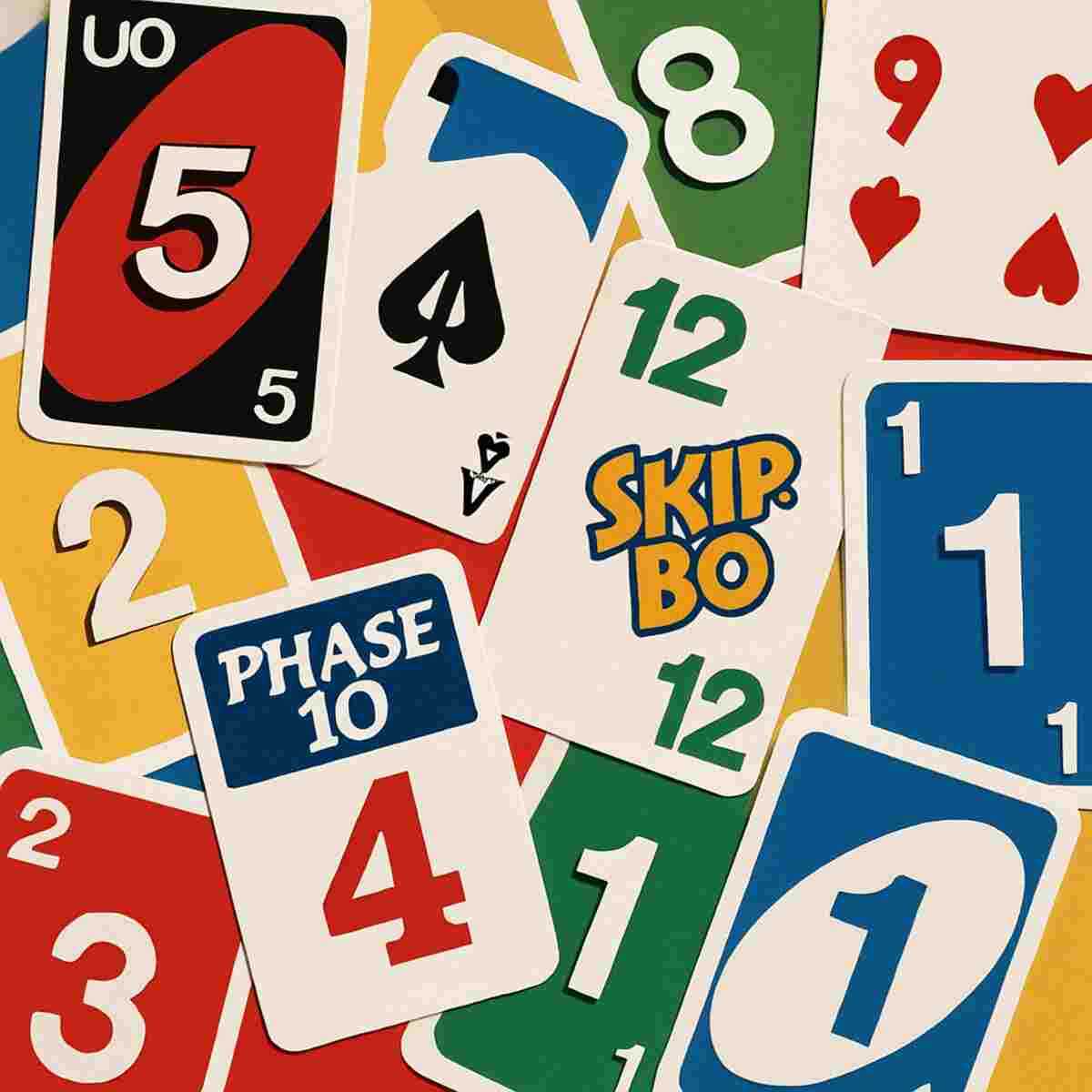

To most of us, the numbers on game cards are just… numbers. A 7 is bigger than a 6, and in Uno, a Draw 4 is a delightful catastrophe. But to a game designer, those numbers are a secret language. They are a powerful tool used to control a game’s pace, create drama, and quietly guide every choice you make without you even noticing. The feeling of triumph when you complete a run isn’t an accident; it’s by design. To find more, check on gurutoto
Those simple digits are the hidden engine of countless card games. Every detail, from a game using a range of 1-10 instead of 1-100, to how many 5s are in the deck, is a deliberate choice made to shape your experience. This is where the fun is engineered. Industry practice shows that designers use these carefully chosen numbered game cards to build the rules for collecting sets, create the tension of a climbing sequence, and make certain cards feel rare and powerful.
This guide will teach you to read that language. You will learn to identify the core mechanics behind your favorite games, understand why some feel fast while others feel strategic, and spot these clever tricks at your next game night. By the end, you won’t just play the game; you’ll see the elegant design behind it, giving you the foundation to create a simple game of your own.
The Two Foundational ‘Moves’ in Any Number Card Game: Sets vs. Runs
Have you ever stared at a fresh hand of cards, automatically sorting them into groups? That instinct is the key to understanding how nearly every numbered card game works. Beneath the unique rules of games like Rummy, Canasta, or Phase 10, designers are almost always asking you to do one of two simple things.
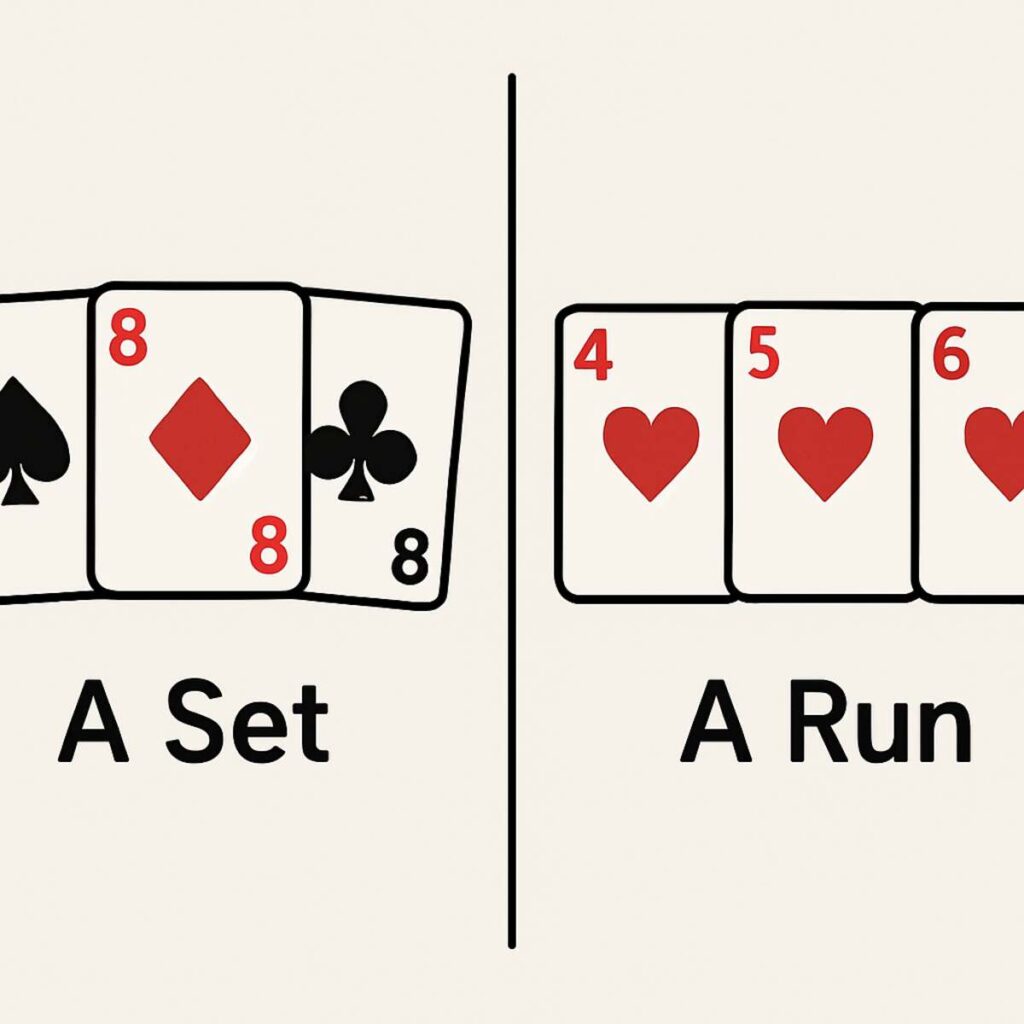
The first, and most common, is to collect cards that share the same number. For example, gathering three 7s or four 10s. Game players and designers call this a “set.” The second goal is to collect numbers in an unbroken sequence, like 2, 3, 4, and 5. This is called a “run.” Games like Phase 10 explicitly build their challenges around creating specific sets and runs to win.
Spotting the difference makes learning new games much faster. The next time you sit down to play, listen to whether the goal is to build sets, runs, or a combination of both. Recognizing this core pattern gives you an immediate head start on strategy. Of course, the types of numbers available for your sets and runs play an equally important role in a game’s design.
Why Do Some Games Use 1-10 While Others Go to 100? The ‘Volume Knob’ of Fun
Understanding sets and runs raises a new question: why is it so much easier to collect them in a game like Skip-Bo than in others? The answer lies in a secret tool designers use to control a game’s entire feel. Think of the range of numbers on the cards—whether they go from 1 to 12 or 1 to 100—as a kind of volume knob for strategy versus luck.
A small number range, like the 1-12 cards used in Skip-Bo, means you’ll bump into the same numbers over and over. This repetition makes collecting what you need more predictable and less about pure luck. You can hold onto a card with confidence, knowing another ‘7’ or ‘8’ is likely to appear soon. This focus on building sequences is what makes many of the best sequential card games for adults feel so engaging and strategic.
In contrast, a massive number range dials up the luck and tension. In a game like Rack-O, where cards go up to 60, each draw is a surprise. Waiting for the exact ‘37’ you need is a losing battle. The core Rack-O card game strategy shifts from planning to adapting, forcing you to make the best of whatever random number comes your way. The fun comes from the thrill of the draw, not a master plan.
So the next time you open a new game, just glancing at the number range gives you a powerful clue. If you’re looking for alternatives to the Uno card game, checking the highest number can tell you if you’re in for a thoughtful puzzle or a wild ride of chance. Of course, the range is only half the story; the quantity of each number in the deck adds another fascinating twist.
What Makes a Card ‘Rare’? The Secret of Card Distribution
Ever get the feeling that you’re swimming in low numbers but can’t find a high one to save your life? That’s not just bad luck—it’s by design. Beyond choosing a number range, game designers carefully decide how many of each number to print. Think of it like a bakery deciding to bake one hundred simple sugar cookies but only a dozen fancy, decorated ones. In the world of numbered game cards, this deliberate imbalance is a powerful tool used to make certain cards feel scarce and special.
This manufactured scarcity is all about creating value and excitement. If a deck has ten ‘1’ cards but only two ‘12’ cards, drawing a ‘12’ naturally feels like a bigger accomplishment. You instinctively know it’s harder to come by, making it more powerful in your hand and more painful to discard. This becomes obvious in many card games with a discard pile; as you watch the common numbers get tossed aside, the tension builds for the rare, game-changing cards that have yet to appear.
The thrill of a card isn’t just about the number printed on it, but about how many identical cards are still hiding in the deck. This principle is so fundamental, it’s one of the first rules to consider if you were to create your own playable number cards. This intentional imbalance is also a key reason why two seemingly similar games can feel worlds apart.
Case Study: Why Skip-Bo Feels Different From Phase 10
With these building blocks in mind, we can test that knowledge. Many of us have played both Phase 10 and Skip-Bo, and while they both involve collecting numbered cards, they create very different feelings of tension and strategy. This difference comes down to how they use sets, runs, and card pools.
At its core, Phase 10 is a game about shifting goals. One round you might be collecting sets (three 4s), and the next you’re hunting for what is a run in card games (a sequence like 5, 6, 7, 8). You’re essentially solving a different puzzle each hand. Skip-Bo, on the other hand, has one single, relentless goal: get rid of your personal stockpile by playing cards in sequential order from 1 to 12. It’s less of a puzzle and more of a race.
These opposing philosophies are clear when you compare the Skip-Bo vs Phase 10 rules directly:
| | Phase 10 | Skip-Bo | |:— |:— |:— | | Goal | Both sets and runs, in a specific order per “phase.” | Only runs (sequential order 1–12). | | Deck| You hold all your cards in a private hand. | Your main obstacle is your personal, face-up stockpile. | | Wild Cards| ‘Wild’ cards can replace any number. | The ‘Skip-Bo’ card can be any number from 1 to 12. |
Ultimately, this is why they feel so distinct. Phase 10 creates private tension—”Can I collect my cards before anyone else does?” In contrast, Skip-Bo creates public tension. As one of the most popular family card games with a discard pile system, everyone is fighting over the same four build piles, creating direct competition and opportunities to block your opponents. But what happens when the numbers aren’t used for competition, but for cooperation?
When You Play With the Numbers: A Look at Cooperative Card Games
Numbers don’t only have to create competition. A growing category of modern games flips this idea on its head. What if instead of trying to beat your friends, you had to work together, with the deck itself as your only opponent? These are cooperative number-based card games, and in them, the entire table wins or loses as a single team. The goal shifts from personal victory to shared success.
A fantastic example is a popular title simply called The Game. The team’s goal is to play every card from 1 to 100 onto four piles—two that must go up in value and two that must go down. The twist? You are not allowed to tell your teammates what numbers you’re holding. This single, simple rule creates incredible suspense. You might have a ‘7’ and desperately hope no one plays a ‘6’ on the ascending pile, but you can only sit and watch, trusting your team to make the right move.
This clever design transforms a straightforward sequence into a thrilling exercise in group intuition. Learning how to play the card game The Game is less about complex strategy and more about reading the room and developing a shared wavelength with your partners. The tension and shared sighs of relief make these some of the best sequential card games for adults looking for a fresh, collaborative experience. It proves that numbers don’t just have to be weapons; they can be the very language of teamwork. But this power to communicate isn’t just for fun; it can also turn a number deck into a powerful learning tool.
Turn a Number Deck into a Classroom: Simple Math Games for Kids
That same power that builds suspense in games can also make learning feel like play. Instead of a worksheet, a child holding physical cards is engaged in a puzzle with a delightful moment of surprise. This simple shift transforms practice from a chore into a fun activity, making cards perfect for creating simple math card games for elementary students.
For the youngest learners, try a game of “Number War.” Each player flips over a card; the person with the higher number wins both. This incredibly simple contest is a fast-paced, zero-pressure way to strengthen number recognition and internalize the concepts of “greater than” and “less than.” It’s one of the classic card games that teach counting and comparison without feeling like a lesson.
To level up the challenge, play “Addition Face-Off.” Here, each player flips two cards and adds their values together. The player with the higher sum wins the round. You can use a standard deck or find printable number cards 1-100 for games online to practice with bigger numbers, turning quick addition into a friendly competition.
The effectiveness of these games comes from removing the pressure of being “right” or “wrong” and replacing it with the simple fun of play. The physical cards hold a child’s attention far better than a list of problems. Seeing how these simple rules create learning might get you thinking: what if you could create your own?
Your First Game Design: Create a Fun, Playable Number Game in 30 Minutes
Inspired to create an activity of your own? The jump from playing a game to designing one is shorter than you think. You don’t need complex software or artistic skills; you just need to make a few simple decisions. Here’s a straightforward guide on how to create your own playable number cards game that you can test with friends in less than an hour.
Believe it or not, every game, from a simple children’s contest to a complex strategy epic, is built on three core questions. Answering them is the secret to design. You just need to decide on a goal, define your tools, and write the rules.
Here is a simple recipe for a classic set-collection game. All you need are some index cards or printable number cards 1-100 for games that you can find online.
- Choose Your Goal: The winner is the first person to collect two “sets of 3” (for example, three 4s and three 10s).
- Define Your Deck: Create a 40-card deck by writing the numbers 1 through 10 on four cards each. This makes sets possible but not guaranteed.
- Write the Rules: These are classic rules for matching number card games: start with a hand of five cards, draw one card on your turn, and discard one.
You’ve designed a complete, playable game. The fun emerges from the simple choice on each turn: which card do you discard to get closer to your goal without helping your opponent? Understanding how a designer thinks prepares you to see your favourite games in a whole new light.
You’re Officially a Game Decoder: See Your Favorite Games in a New Light
You might have once seen a ‘7’ as just one more than a ‘6’. Now, you see the designer’s fingerprint. You can recognize how a simple deck of numbered game cards is intentionally crafted—whether a narrow range of numbers makes collecting sets easier, or how a single rare, high number creates a moment of high drama. You’ve moved from just playing the game to seeing the invisible architecture behind it.
This new lens is yours to keep. The next time you sit down for a game night, as you draw your first hand, just notice the numbers. In the various card games based on number sequence, are they low or high? Are some more common than others? By simply paying attention, you’ll start to feel the game’s rhythm in a way you never have before, building confidence with every observation you make.
A simple number card is no longer just a piece of cardboard; it’s a clue. You now have the key to decode why some games feel tense, others frantic, and some deeply strategic. So go ahead—deal the cards. You’re not just playing anymore; you’re appreciating the craft, ready to see the secrets hiding in plain sight.
